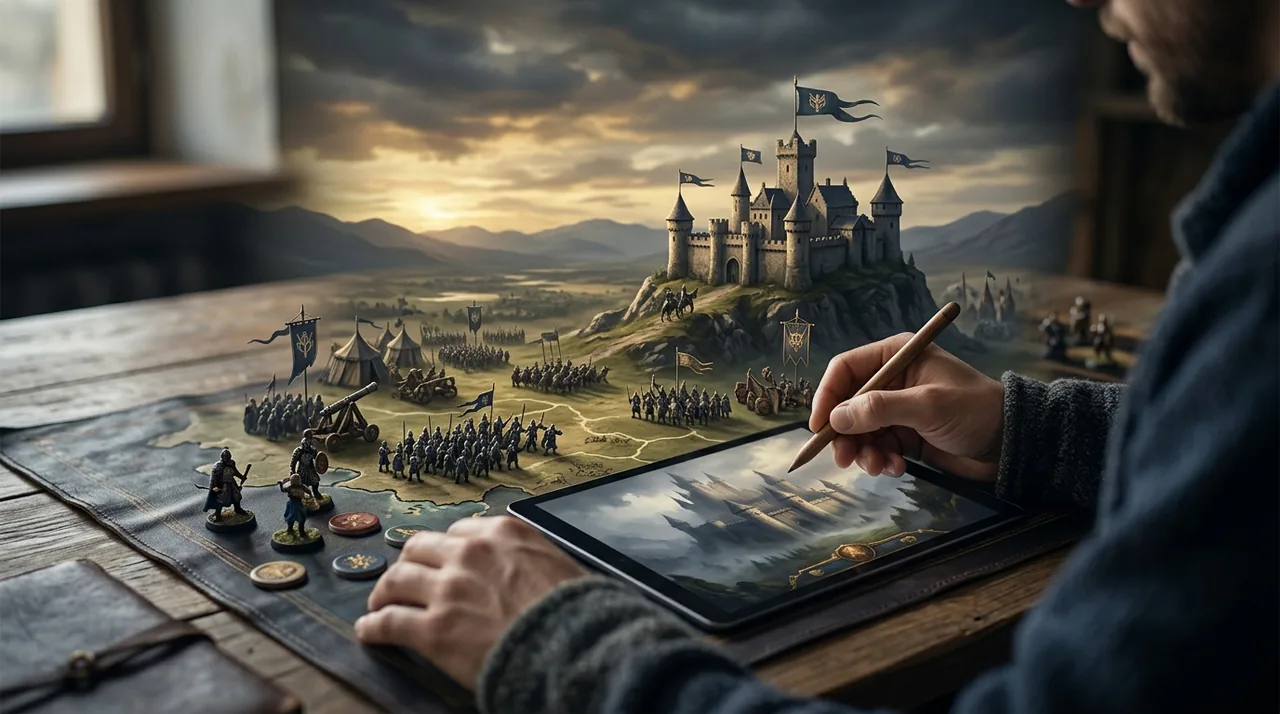
Daily quests can enhance your progress, but it’s easy to start viewing them as an obligation. Learn how to enjoy playing browser games, Ezostylia Kingdoms, and taking quizzes regularly without feeling pressured or fatigued.
Daily quests: how to play consistently without burnout
Daily quests are one of the most compelling mechanics found in modern browser games. They provide a sense of rhythm to your gameplay, organize your goals, and help you return to the game in a peaceful manner. However, the very system designed to support consistency can feel draining after a few weeks. What once brought satisfaction can turn into pressure; instead of enjoying the game, you might find yourself merely checking tasks off a list. Whether you play Ezostylia Kingdoms, relish strategic challenges, are developing your character in an MMO game model, or simply engage in short quiz for entertainment and knowledge, it is beneficial to establish your own rules for how you play.
The key point is simple: quests are designed to serve you, not the other way around. A well-structured daily gaming strategy isn’t about maximizing every activity; it’s about maintaining a pace you can sustain for many weeks. This is precisely why consistency triumphs over a fleeting burst of enthusiasm that lasts only two days. In online games, it’s more effective to take a few meaningful steps each day than to attempt to accomplish everything at once, only to disappear from the game for a week.
In Ezostylia’s Mystic Games section, this approach is particularly effective, as alongside dynamic activities, you’ll find calmer strategies and shorter formats like casual game options or quizzes. This gives you ample freedom, but also necessitates careful selection. Below, you’ll discover a practical plan for regularly completing daily quests, without overexertion, guilt, or falling into the trap of endlessly catching up.
Why daily quests are effective, but only to a certain extent
Daily tasks are useful because they streamline decision-making. You don’t have to come up with a new plan every day in the game. You simply open the panel, see the goals, and start taking action. From a habit perspective, that’s very convenient. The American Psychological Association’s materials on stress and routines emphasize that predictability can alleviate decision fatigue, but an overload of obligations, even minor ones, can increase anxiety when someone feels out of control. This principle applies to gaming as well.
In practice, burnout doesn’t typically occur because you play too much on a single day; rather, it results from playing under a sense of obligation over an extended period. If every day feels like a chore where you need to log in, collect rewards, click through various tasks, complete quests, and watch timers, what was once entertainment becomes a duty. This issue is particularly prevalent in browser games, as access is easy and progression systems encourage frequent visits.
That’s why a healthy strategy doesn’t involve doing everything. It’s about differentiating between important tasks and those that merely seem urgent.
Establish your minimum daily package
The most effective way to play consistently without burnout is to create a minimum set of actions that requires little time but yields substantial progress. In Ezostylia Kingdoms, this might involve developing one building, collecting key resources, checking alliance statuses, and completing one high-value quest. In other formats, such as a quiz or a more casual MMO game, this could consist of a single session lasting just a few minutes.
Your minimum package should meet three criteria:
- it should be short, ideally 10 to 15 minutes,
- it should produce a noticeable effect on your progress,
- it should still be manageable on a challenging day.
The third criterion is vital. If a plan only functions when you’re in an optimal mood and have plenty of free time, it’s not truly a plan — it’s merely a wish. During regular gameplay, what truly matters is how well your system adapts to ordinary life, work, study, fatigue, and other responsibilities.
In browser games, the 70 percent rule is particularly effective. If you complete about 70 percent of the most critical actions, you usually maintain your development. The remaining 30 percent often consists of the least rewarding and most tiring tasks, making it easy to lose the joy of gaming.
Select quests based on time investment
Not every quest holds the same value. Time is your most precious resource, so it’s wise to view tasks as investments. A sound game strategy focuses not only on maximizing rewards but also on the interplay between reward, time, and energy.
You can categorize quests into three groups:
- Essential quests, which provide key advancements, resources, event points, or support long-term development.
- Occasional quests, which are worth pursuing when you have extra time or when they align well with your existing plans.
- Optional quests, which involve low value, require too much time, or are simply unfocused or tedious.
If you're playing Ezostylia Kingdoms, this kind of discernment is incredibly important. When a game combines development, a map, alliance dynamics, and strategic elements, it’s easy to get drawn into a series of tasks that seem urgent but don't contribute to an advantage. It’s more effective to strengthen the core of your development than to dilute your focus across multiple activities each day.
The same principle applies to shorter formats. In a quiz, for instance, you don’t need to participate in multiple rounds in a single day to feel fulfilled. Often, one thoughtfully chosen quiz yields better results than five rushed attempts that lack focus.
Plan a weekly rhythm, not just a single day
One common pitfall for players is thinking solely in daily terms. In reality, consistency is much more effectively built on a weekly scale. Not every day needs to look the same. You can alternate between light, medium, and intense days. This approach is more realistic and less mentally taxing.
A sample weekly rhythm might look like this:
- 2 to 3 light days, focusing only on the minimum package,
- 2 standard days, tackling the minimum package plus one extra quest,
- 1 strategic day, engaging in a longer session, cleanup, development planning, and alliance management,
- 1 day off or nearly off.
This structure allows you to stay connected to the game while ensuring that your daily life doesn’t turn into an endless routine. According to WHO 2020, prolonged sitting should be regularly interrupted with movement, and this is a helpful tip for players as well. Even during a short session, it’s worthwhile to stand up after completing your quests, take a brief walk, and avoid associating gaming with hours of inactivity.
In practice, this means adhering to a simple guideline: don't stretch your daily session just because there's always one more thing to accomplish.
Be wary of the streak and FOMO trap.
Many browser games implement login streaks and daily bonuses. While this can be motivating, it can also lead to FOMO, or the fear of missing out. If you find yourself playing only to maintain the streak, it's a clear warning sign.
Research on well-being and gaming is complex, and the findings are not always definitive, but recent work by academic teams affiliated with the University of Oxford suggests that what truly matters is not gaming itself, but its context, motivation, and how it’s utilized. This serves as a valuable reminder: not every form of consistency is beneficial. Positive consistency enhances enjoyment rather than builds tension.
If you sense that you're logging in purely out of obligation, consider one of three options:
- shorten your minimum playtime to the absolute bare minimum,
- intentionally skip one day and observe if the game retains its enjoyment,
- shift your focus from grinding to engaging in social activities, such as joining an alliance or participating in ranked competitions.
Sometimes, changing your aim is sufficient. Instead of tackling every quest, concentrate on a single event, one developmental path, or a shared task with your group.
Alliances can be helpful, provided they don’t create pressure.
In games like Ezostylia Kingdoms, alliances are incredibly valuable. They offer coordination, support, and a sense of belonging to something larger. However, alliances can also foster overload if the group expects constant availability and high-level activity every day.
Clear communication is key. If you know you can play regularly, but only for brief sessions, make that clear. A consistent player with a realistic pace is more valuable than someone who gives their all for a week and then disappears. From a team strategy standpoint, predictability often surpasses a fleeting burst of effort.
If you're still seeking your place, look for an alliance that matches your style. Some players thrive on ambitious competition and leaderboard., while others favor a more relaxed approach to development and collaboration without pressure. Both styles can be enjoyable, as long as expectations are set clearly.
Cultivate an environment that supports short sessions.
Consistency seldom originates from sheer willpower. More frequently, it results from setting up your environment effectively. If you wish to play sensibly, establish a straightforward method for entering and exiting the game. It may seem basic, but it works exceptionally well.
Practical recommendations:
- play at a consistent time, such as after breakfast or in the evening,
- set a time limit for each session,
- conclude the game after finishing a specific list, rather than succumbing to every new temptation,
- disable unnecessary notifications if they increase stress,
- write down one priority for your next login.
This approach aligns with user-centered design principles promoted by institutions such as NIST, meaning that it simplifies the action path and reduces sensory overload. For a player, this translates to less chaos, fewer transitions between screens, and a lower risk of 10 minutes turning into 50.
When to take a break before feelings of discouragement arise
Don’t wait until you start disliking the game. It's better to recognize the earlier signs. The most common ones include feeling irritated when logging in, guilt after skipping a quest, mechanical clicking without satisfaction, and extending sessions even when you’re tired. If that resonates with you, your plan needs adjusting.
According to Cleveland Clinic educational materials on sleep hygiene and screen exposure, using devices late at night can hinder your ability to fall asleep and diminish the quality of your rest. If your daily quests frequently extend into the night, that’s a sign you should either start your session earlier or shorten your goal list. A rested player makes better strategic decisions than a tired one who is merely finishing what they began.
A break doesn’t have to mean abandoning the game. Sometimes all it takes is a weekend without mandatory logins, a change in activity mode, or shifting from an intense strategy to a lighter format like magic chess or a quiz. It’s still entertainment, just at a different pace.
A sustainable regular-play model
If you want to play for a long time and enjoy it, think like a practical player, not a perfectionist. Choose a few activities you genuinely enjoy, organize quests by value, and build a rhythm that works even on an ordinary, imperfect day. Then, browser games stop being a source of pressure and become what they were meant to be from the outset: smart entertainment, decision training, and a pleasant part of your day.
In Ezostylia Kingdoms, a phased approach works particularly well. First, secure the foundations of development, then support alliance goals, and only afterward add additional activities. This strategy is more resilient to fatigue and scales better over time. You don’t need to win everything every day. It’s enough to make a few sensible moves each day.
Also, remember that Ezostylia is a Business, Life, Growth platform available in three languages and 18 sections, but in this article, we are strictly focusing on the Games section. This is important because good gameplay requires focus. In practice, what matters is your session plan, quest selection, cooperation style, and smart time management. When you establish these four elements, consistency becomes easier, and the risk of burnout noticeably decreases.
FAQ
Do daily quests have to be completed every day?
No. If the reward system encourages daily activity, it's important to stay consistent, but not at the cost of your well-being. A plan you can sustain for months is better than achieving perfection for just a few days.
How long should a daily gaming session last?
It depends on the game and your goal, but typically a short session of 10 to 15 minutes works well for an ordinary day. Longer sessions are better reserved for one or two planned days each week.
How can I avoid falling behind in Ezostylia Kingdoms?
Focus on the highest-value actions, develop the fundamentals, gather essential resources, and maintain communication with your alliance. Don’t pressure yourself to complete everything daily, as this is the quickest path to boredom.
Can a quiz also feel exhausting like an MMO game?
Yes, if you turn it into a chore. Even a brief quiz is best approached as a mindful activity, rather than a task to check off. The enjoyment you experience depends not just on the format, but also on your mindset and time constraints.
Sources
- World Health Organization, Guidelines on physical activity and sedentary behaviour, 2020, https://www.who.int/publications/i/item/9789240015128
- American Psychological Association, Stress in America, materials and reports, 2023, https://www.apa.org/news/press/releases/stress
- NIST, public resources on human-centered design and usability, 2023, https://www.nist.gov/
- Cleveland Clinic, educational materials on screen time and sleep hygiene, 2024, https://health.clevelandclinic.org/
- University of Oxford, Oxford Internet Institute, research on gaming and well-being, 2021, https://www.oii.ox.ac.uk/
This article is for educational purposes and does not substitute for professional advice if excessive gaming impacts your sleep, work, studies, or relationships.