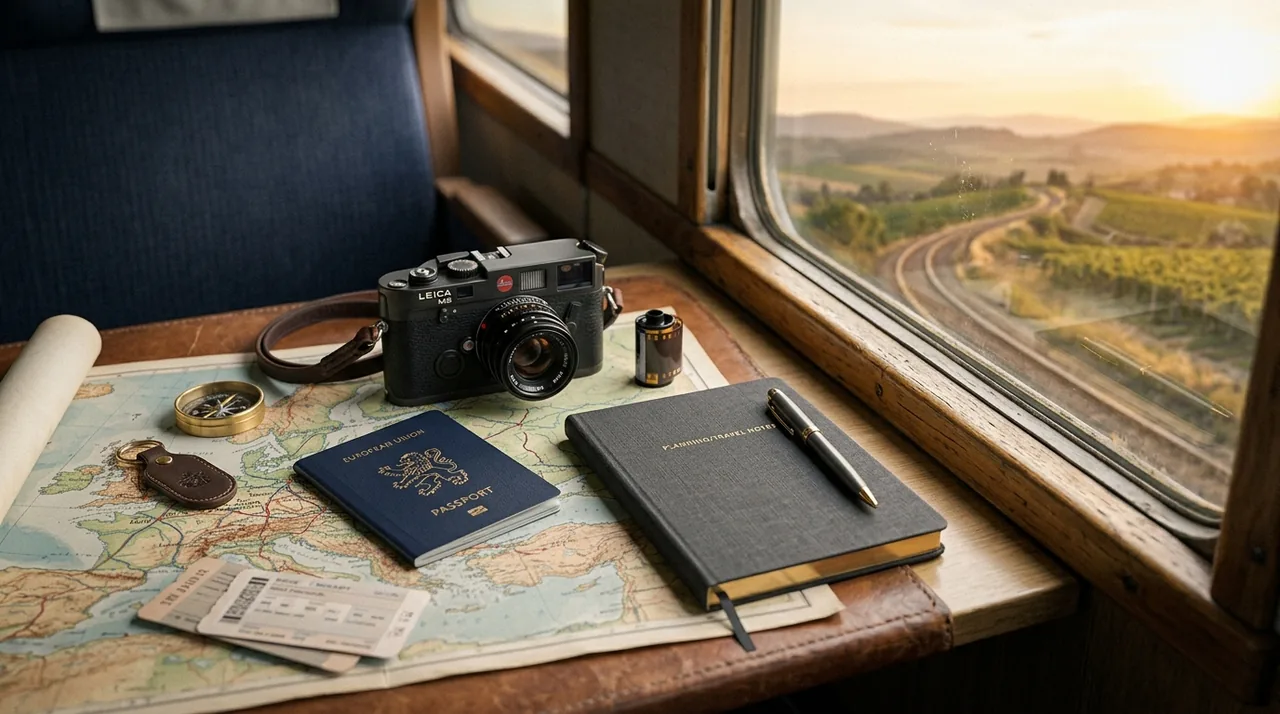
Effective trip planning minimizes pre-travel chaos and helps you evade costly errors. Check out this simple checklist that will allow you to plan your journey calmly and sensibly.
How to Plan a Trip Without Stress: A Step-by-Step Checklist
Good trip planning isn't about controlling every minute. It's about minimizing the number of foreseeable surprises and creating space to truly enjoy the journey. In practice, this distinction is what separates chaotic trips from those where you return feeling that your time and money were well spent.
If you want to travel more peacefully, it helps to treat it like a project with a simple to-do list. This approach works for a quick city break, an extended vacation, trips with children, and even when you are drawn to power places, nature, and slow travels. Importantly, trip planning doesn't have to equate to an overloaded schedule. A well-prepared journey can be both organized and adaptable.
According to WHO and the CDC, travel preparation should include checking health conditions, safety, documents, and current travel recommendations. Moreover, the responsible travel principles championed by UN Tourism emphasize respect for local communities, the environment, and culture. This is significant, as modern travel is not just logistics, but also conscious choices.
If you're seeking inspiration for destinations, take a look at the travel catalog. And if you're interested in calmer trips focused on nature and mindfulness, the map of places can also be beneficial, making it easier to find locations that foster tranquility.
1. Start with the purpose of your trip, not the cost.
One of the most common mistakes is purchasing a cheap ticket without first addressing the fundamental question of why you actually want to go. Do you need rest, adventure, a connection with nature, city exploration, or are you drawn to power places and peaceful areas off the main tourist path? Only after defining your purpose is it easier to choose your destination, pace, and budget.
This also has implications for stress levels. The better the trip aligns with your needs, the lower the risk of disappointment. Someone seeking rejuvenation is unlikely to relax with an itinerary packed with five attractions a day. Conversely, someone who thrives on intense exploration may find a loosely structured schedule boring. Therefore, it's worth starting your trip planning with three questions:
- What is the main purpose of your trip?
- How much time do you really have, including travel to and from your destination?
- What pace feels comfortable for you?
If you value slow travel, opt for fewer destinations and spend more time in each. This model reduces travel fatigue, allows for a deeper understanding of local life, and usually decreases impulse spending.
2. Set a budget with a safety margin.
Pre-trip stress often stems from financial uncertainty. That's why trip planning should encompass not only accommodation and transportation costs but also the total expenditure. Practically, it's best to categorize expenses and add a buffer. A sensible safety margin is particularly crucial for international travel, where currency fluctuations, extra baggage fees, local transportation, or higher food prices in tourist spots may arise.
The simplest budget model includes:
- Transportation, such as flights, trains, fuel, parking, and transfers.
- Accommodation, including local taxes and additional fees.
- Food, covering dining out and grocery shopping.
- Entrance tickets and attractions.
- Insurance, documentation, internet, and SIM cards.
- An emergency reserve, ideally at least 10 to 15 percent of the total.
If you're traveling with a sense of responsibility, also consider expenses that support the local economy, like family-run guesthouses, local guides, or small restaurants. This choice isn't always more expensive, and it often provides a richer experience than mass tourism.
3. Check documents, insurance, and formalities.
This stage is worth addressing sooner rather than in the last week. Depending on your destination, you may require an ID card, passport, visa, parental consent for a child, booking confirmations, and insurance documents. In EU countries, the EHIC can be useful, but Gov.pl reminds travelers that the card does not replace comprehensive travel insurance and does not cover all costs, such as rescue services or medical transport.
Before departure, create a straightforward checklist:
- validity of your ID card or passport,
- entry requirements for your destination,
- travel insurance and its coverage,
- copies of documents on your phone and in the cloud,
- contact details for accommodation and transportation providers,
- emergency numbers and the address of the nearest consular office if you're traveling further away.
According to WHO and CDC, health conditions and travel requirements can change, so it's best to check official notices shortly before departure. This text is for educational purposes and does not substitute for individual medical, legal, or insurance advice.
4. Book only what genuinely needs to be reserved in advance.
Many people fall into the trap of over-planning. When every hour is accounted for, one delayed train or unexpected weather can unravel your entire itinerary. A less stressful approach is to categorize trip elements into two groups: things that must be booked ahead of time, and those that can be decided upon spontaneously.
It's typically wise to secure transportation for the main segments, the first night, seasonal hot spots, and attractions with limited entry. The rest, such as picking a specific café, discovering lesser-known beaches, local walks, or part of the museums, can be left until you arrive. This strategy works particularly well for slow travel, as it preserves your sense of freedom.
If you prefer trips that are reflective and nature-oriented, plan for one or two activities per day instead of five. This way, you're more likely to engage with the place deeply rather than merely checking off another stop. An excellent strategy could also be seeking less crowded routes in the Travel section instead of copying ready-made lists from social media.
5. Create a simple daily plan that includes time for rest.
Effective trip planning involves not only logistics but also energy management. Fatigue can diminish the enjoyment of a journey just as much as inclement weather. Therefore, when crafting your daily itinerary, consider transit times, queues, meal times, and the essential need to rest.
A practical guideline is to plan one main attraction for the day, supplemented by one or two smaller ones. If you're traveling between cities, treat transfer days as a separate category and avoid cramming too many activities into them. This is especially crucial when traveling with children or elderly individuals.
It's also wise to leave an open slot in your schedule. This allows you to adapt to the weather, take local recommendations, or respond to your own well-being. Trips do not lose value by allowing for flexibility; in fact, it's often during these moments that the most cherished memories are made.
6. Pack according to a list, not emotions.
Last-minute packing is one of the greatest sources of anxiety before your departure. Instead of randomly tossing items into your bag, create a concise list of categories and check off each item one by one. This method minimizes the risk of forgetting essentials like chargers, medications, or important documents, while also reducing excess baggage.
A universal packing list includes:
- documents and payment methods,
- phone, chargers, power bank, adapter,
- clothing suitable for the weather and planned activities,
- regular medications and a basic first-aid kit,
- travel-sized toiletries,
- water, snacks, and initial day supplies,
- comfortable shoes and a small daypack.
If you opt for responsible travel, consider using a reusable water bottle, a lightweight fabric bag, toiletries in small reusable containers, and clothes that can be layered. Less luggage enhances mobility and usually results in reduced stress.
7. Think responsibly, locally, and with respect.
Modern travel increasingly blends comfort with responsibility. The UN Tourism Organization has long emphasized that tourists impact the places they visit. Consequently, it's worthwhile to choose solutions that lessen environmental strain and support local communities. Practically, this doesn't require major sacrifices.
Responsible travel can involve opting for a train instead of a car for part of your journey, staying in a local guesthouse, purchasing from regional suppliers, or adhering to the guidelines in natural areas. If you visit sacred spaces, tranquil nature sanctuaries, or culturally significant sites, be especially considerate. Avoid leaving litter, creating noise, stepping off marked paths, or treating such locations as mere backdrops for quick photos.
This is where slow travel and mindful travel intersect beautifully. Less haste often translates to greater respect for the locale. This fosters a deeper experience that lingers longer than a hurried checklist of attractions. If you're interested in exploring such destinations, you can find inspiration on the map of places. Even if you regard them simply as beautiful, serene spots, they can become the heart of a thoughtfully planned trip.
8. Prepare a backup plan, but not a catastrophic one.
Stress-free trip planning does not entail expecting the worst at every turn. It's more about implementing a few sensible precautions. Save your accommodation details offline, keep your insurance information accessible, download offline maps, explore alternative routes, and stash a portion of your cash in a different place than your wallet. These straightforward actions provide a genuine sense of security.
If you're traveling abroad, it's also wise to inform a loved one about your itinerary and key bookings. For more solitary journeys, particularly those centered on trekking or more remote spiritual sites, leave someone with a rough outline of your travel plans. This does not curtail freedom; it enhances safety.
9. The last 48 hours before departure: a brief checklist.
The most stress typically arises right before you leave home. That's why it's helpful to have a simple checklist for the last two days. Keep it concise and specific:
- Check the weather and adjust your packing accordingly.
- Confirm transportation and check-in times.
- Charge your phone, power bank, and headphones.
- Download tickets, maps, and reservations for offline access.
- Organize your documents in one folder.
- Take care of your home, plants, pets, bills, and keys.
- Gather your travel items in one spot so you won't have to search for anything in the morning.
If you enjoy organizing trips from a personal motivation and direction perspective, you can visit the Destiny or Witch's Path section for inspiration from the site’s growth-oriented content, but the trip itself is best planned based on your actual needs, budget, time, and local conditions.
Summary
Stress-free trip planning is founded on a few simple pillars: the purpose of the trip, a realistic budget, confirmed formalities, a flexible schedule, and sensible packing. When you incorporate responsible travel and an element of slow travel, you not only gain more peace but also an enhanced quality of experience. This is especially valuable when you seek nature, silence, and powerful places that require a more mindful connection with your surroundings.
The most important thing is not to plan for the sake of planning. A good checklist is meant to lighten your load, not constrain you. If it helps you sleep more peacefully before departure, spend less impulsively, and create more space to truly experience the journey, then it's doing its job.
FAQ
How early should you start planning a trip?
For a short trip, 2 to 6 weeks is usually sufficient, while for an international trip or during high season, it's best to start planning 2 to 6 months in advance. The more popular the destination, the more critical early booking for transportation and accommodation becomes.
How can you reduce stress before traveling?
A brief checklist, a budget breakdown, organizing documents in advance, and allowing some time buffer on departure day work best. In practice, stress increases when you leave too many things to the last minute.
Is slow travel more expensive?
Not necessarily. Slow travel often minimizes the number of transfers and impulsive spending on attractions. The cost depends on the destination and standard of accommodation, but slower trips can be more economical than intense road trips.
How should you choose power places responsibly?
Regard them as valuable natural or cultural spaces. Honor the silence, follow local rules, avoid leaving trash, and refrain from entering protected areas. Responsible travel in such places is fundamentally about mindfulness and respect for the location.