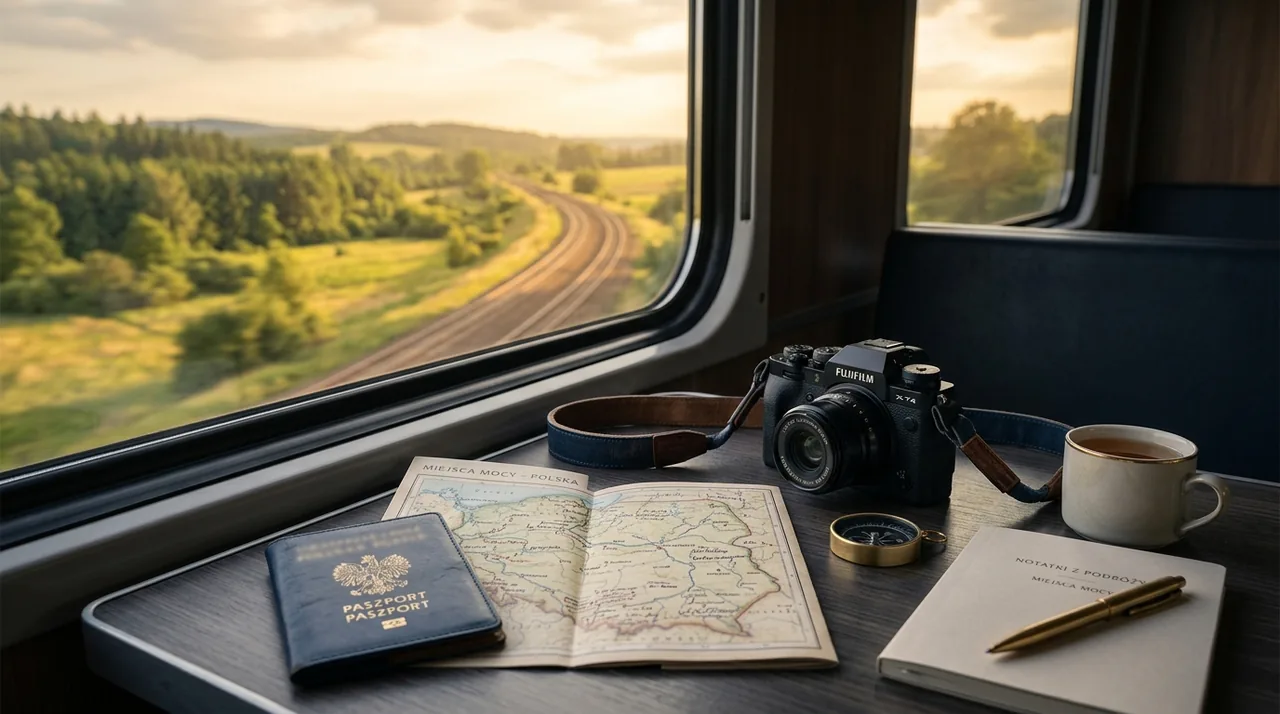
Are you seeking specific places of power in Poland for a 1–2 day trip? Explore 6 locations, get practical access tips, visiting guidelines, and a slow travel itinerary.
Places of Power in Poland Worth Visiting
Poland offers an abundance of opportunities for mindful travel that connects you with the landscape, history, and local culture. If you're interested in places of power, you don't need to plan a lengthy trip immediately. Across various regions of the country, you will discover locations that have long drawn those seeking peace, symbolism, breathtaking nature, or simply a profound sense of place. In this article, I will explore this topic practically, focusing on travel planning, route selection, logistics, seasonality, and responsible travel rather than sensational promises.
It's also important to note one thing: the term 'place of power' is subjective. For some, it may be a mountain with an exceptional view; for others, an ancient forest, a sanctuary, stone circles, or an area of significant historical importance. This perspective is perfectly valid. In practice, slow travel is about what you can genuinely experience on-site: tranquility, presence, a connection with nature, and mindful exploration of a region. According to UNESCO and Polish institutions responsible for heritage protection, the value of such locations arises from their natural, cultural, and historical importance, rather than from easily measurable claims regarding their supposed effects on health or the mind.
If you're planning mindful travel in Poland, be sure to visit the travel inspiration catalog and check out the map of unique places. This will serve as an excellent starting point for crafting your own itinerary and combining several locations into a singular, peaceful journey.
Understanding Places of Power While Traveling
In the Travel section, it's essential to approach this subject with sincerity. Places of power are not a scientific or official category. Rather, it's a term embraced by travelers, guides, and local communities to describe locations that stir strong emotions and associations. These often include sacred hills, ancient stone circles, primordial forests, sanctuaries, springs, or lookout points. Their significance commonly stems from a blend of several layers: landscape, history, community rituals, and a unique atmosphere.
From a travel planning standpoint, it’s wise to ask yourself specific questions. Does the location have tourist facilities? Can you access it without a car? Is tourist traffic heavy during long weekends? Is access restricted to marked trails? Is the area protected by nature conservation? Posing such questions helps you design trips that are truly serene and resonate with the principles of responsible travel.
1. Mount Ślęża: A Classic in Lower Silesia
Mount Ślęża is one of the most frequently mentioned examples when discussing places of power in Poland. The mountain stands tall over the surrounding landscape, boasting a distinctive silhouette and long having held cultural significance within the regional imagination. Today, it draws tourists, hikers, and those seeking an intense connection with the landscape. It's also an excellent destination for those wishing to combine active travel with a day trip from Wrocław. If you're planning a journey from the city center, allow yourself at least 4–6 hours for the ascent, a break, and the descent. In summer, add extra time for parking and navigating busy trails.
In practice, it's best to schedule your hike outside peak season or early in the morning. This way, you will enjoy peace and have a greater opportunity to experience slow travel. Bring water, check the weather, and stick to marked trails. In protected areas, straying from the path can harm vegetation and increase strain on the environment. According to the General Directorate for Environmental Protection, safeguarding valuable natural sites requires limiting human impact, especially in heavily trafficked areas.
2. Łysa Góra and the Świętokrzyskie Mountains
If you're interested in places of power tied to history and the ancient symbolism of mountains, Łysa Góra is a natural choice. The Świętokrzyskie Mountains region boasts a strong cultural identity and excellent potential for slow travel. The routes don’t have to be extensive, but it’s worth allowing yourself time for reflective sightseeing, interactions with locals, and learning about local stories. A good practice is to pair one hike with an overnight stay in the area, rather than trying to 'check off' multiple points in just a few hours.
It's crucial not to reduce your trip to a mere quick ascent and descent. Planning travel around just one goal often leads to hurriedness, which diminishes the meaning of such places. It's better to stay overnight, opt for local accommodations, and also explore other highlights in the area, such as small museums, scenic viewpoints, or towns with artisanal traditions. This represents true responsible travel: supporting the local economy and not viewing the place merely as another item on your checklist.
3. St. Anne’s Mountain: Landscape and Memory of Place
St. Anne’s Mountain in the Opole region is a captivating example of a location that intertwines landscape, religious, and historical value. For many, the profound essence of this place arises precisely from its multilayered character. You don't need grand words to feel that this is a special point on Poland's map. Such places of power are best experienced outside peak hours, preferably with a mindset of walking and observing. If this is your first visit, allocate 2–3 hours for the site itself, plus an additional hour for access, photography, and quiet reflection.
If you're driving, choose the designated parking area for tourist traffic. If using public transport, check service connections in advance, as smaller towns often have limited options. When planning visits to such locations, it’s wise to create a time buffer. This way, you won't turn your journey into a logistical sprint.
4. Stone Circles in Odry and Węsiory
The stone circles in Pomerania are among the most distinctive sites that frequently appear on lists of unusual travel destinations. For some, they are primarily an archaeological monument; for others, they represent a place of power. This perspective is entirely valid: first, you honor their historical significance, and only then do you ascribe personal meaning to them. It’s wise to allocate at least 1.5 to 2 hours for such a visit, especially if you wish to stroll leisurely and read the informational signs.
In these sacred locations, responsible travel is especially crucial. Please refrain from stepping on archaeological features, moving stones, or leaving behind candles, ribbons, or other items. The National Heritage Board of Poland emphasizes that archaeological monuments are an irreplaceable source of knowledge about the past. Even seemingly harmless actions can lead to long-term damage. If you want to connect more deeply, sit nearby, walk the route slowly, and take the time to read the information boards.
5. Białowieża Forest: the power of silence and nature
Not every place of power needs to be associated with a hill or an ancient cult. Many travelers find their greatest strength in old forests. Białowieża Forest is a particularly significant example. It is an area of exceptional natural value and a UNESCO World Heritage site. According to the UNESCO World Heritage Centre, it is one of the best-preserved forests with natural characteristics in Europe’s lowlands. This designation is not merely a recognition, but entails a commitment to care from visitors.
If you wish to truly experience this region, opt for a longer stay instead of a brief visit. Slow travel is particularly effective here. A guided walk, an overnight stay nearby, local cuisine, and mindful observation of nature will offer you far more than a quick drive-through. Also, remember that rules for navigating protected areas may change. Always consult the latest information from the area’s management.
6. Grabarka and places of quiet reflection
On the map of conscious travel, it’s worthwhile to include places of quiet reflection, rooted in communal spirituality and pilgrimage traditions, even if you are not traveling for religious reasons. Grabarka is a perfect example of a location that many find imbued with a unique atmosphere of contemplation. In practice, such a visit requires a special sensitivity. Respect for those who are praying, for local customs, and for silence is essential here. If you plan to stay, set aside at least 1 to 2 hours for a peaceful walk and unhurried observation.
This serves as an important lesson for those interested in places of power. Not everything is meant to be photographed and shared immediately. Sometimes, the most enriching travel experience is private, quiet, and not aimed at an immediate social media post.
How to plan a trip to a place of power
Effective travel planning is fundamental if you truly wish to gain from your journey. Rather than crafting a list of ten attractions for a single weekend, select two or three places and allow yourself ample time. This approach aligns beautifully with the idea of slow travel and usually results in greater satisfaction than an intense road trip. The best strategy is to treat your entire journey as a simple 5-step plan.
- Check the status of the site: is it a national park, nature reserve, archaeological monument, or sanctuary?
- Verify access, parking, schedules, and the walking distance from the parking area.
- Choose a date outside of peak season if you desire peace and less tourist congestion.
- Book local accommodations, ideally at a small establishment run by locals.
- Read the rules of the area and the latest notices from the managing institution.
- Plan your time without haste, allowing for walking, resting, and indulging in local cuisine.
If you enjoy planning themed trips, you can combine several highlights within one region. The map of places worth discovering can be beneficial, and you will also find additional directions in the Travel section.However, the most important factor is that your plan remains realistic.
Rules for visiting such places responsibly
Responsible travel is not just a trendy addition; it is a foundation, particularly regarding places of power. Many of them are situated in protected areas or hold significance in local memory. According to Statistics Poland, domestic tourism constitutes an important aspect of Poles’ activities, which creates real pressure on popular regions. The more renowned the site, the greater the need for good practices.
- Stay on marked trails.
- Leave nothing behind, including symbolic objects.
- Honor silence, especially in forests, sanctuaries, and small communities.
- Buy local, stay local, eat local—this way, your travels support the region.
- Do not disclose the exact locations of environmentally sensitive sites if it could increase pressure on the area.
- Take your trash with you, even if the nearest bin is full.
These small choices are what make slow travel truly meaningful. It’s not merely about a slower pace, but about a more conscious presence.
How to choose a place of power for yourself
If you are just beginning your journey, refrain from searching for the most spectacular destination on the map. Reflect on what you seek from the experience. What resonates with you more: an open panorama, a forest, a lake, a historical site, or a space of silence? Some people feel most at home on mountain trails, while others thrive in ancient forests. Selecting according to your temperament is more vital than the notoriety of a location.
You might also consider keeping a simple travel journal. Note where you found it easiest to slow down, which places fostered mindfulness, and where you wished to linger. This practice aids you in planning future trips more wisely. If you seek further inspiration for conscious travel planning and your personal journey of discovery, you can also explore the development and inspiration pathsbut always base your trip plans on practical logistics, nature conservation rules, and your personal capabilities.
In the end, what truly matters is not how many points you check off, but how you experience the journey. The most captivating places of power in Poland are often those that are quieter, deserving of your time. This is why conscious travel, thoughtful planning, responsible travel, and slow travel harmonize beautifully with exploring Poland. You travel closer, slower, and with greater mindfulness. And then the place itself begins to work its magic—not through promises, but through its landscape, history, and your presence.
FAQ
Are places of power in Poland an officially recognized tourist category?
No. It is a colloquial term used by travelers and local communities. In practice, it's worthwhile to check if a particular place has protected-area status, monument status, or significant cultural value.
How should you begin planning a trip to such places?
It is best to choose one region and two or three sites rather than a long list of attractions. Check access, regulations, seasonality, and accommodation options. This is the foundation for those interested in slow travel and responsible travel.
Can you visit places of power with children?
Yes, as long as you adapt the route to the children's age and fitness level. It's best to select shorter walks, avoid the heat, and bring water, snacks, and rain gear. In protected areas, it is especially important to stay on designated trails.
How should you act in environmentally or culturally sensitive places?
Maintain silence, do not leave any objects behind, stay on the trails, and adhere to the rules. This information is educational and does not substitute for guidance from site managers or a guide's instructions.
Sources
1. UNESCO World Heritage Centre, Białowieża Forest, 2024, https://whc.unesco.org/en/list/33/
2. National Heritage Board of Poland, Monuments of History, 2024, https://nid.pl
3. General Directorate for Environmental Protection, Forms of Nature Protection in Poland, 2024, https://www.gov.pl/web/gdos
4. Polish National Commission for UNESCO, World Heritage List in Poland, 2024, https://www.unesco.pl
5. Statistics Poland, Tourism in 2023, signal information, 2024, https://stat.gov.pl