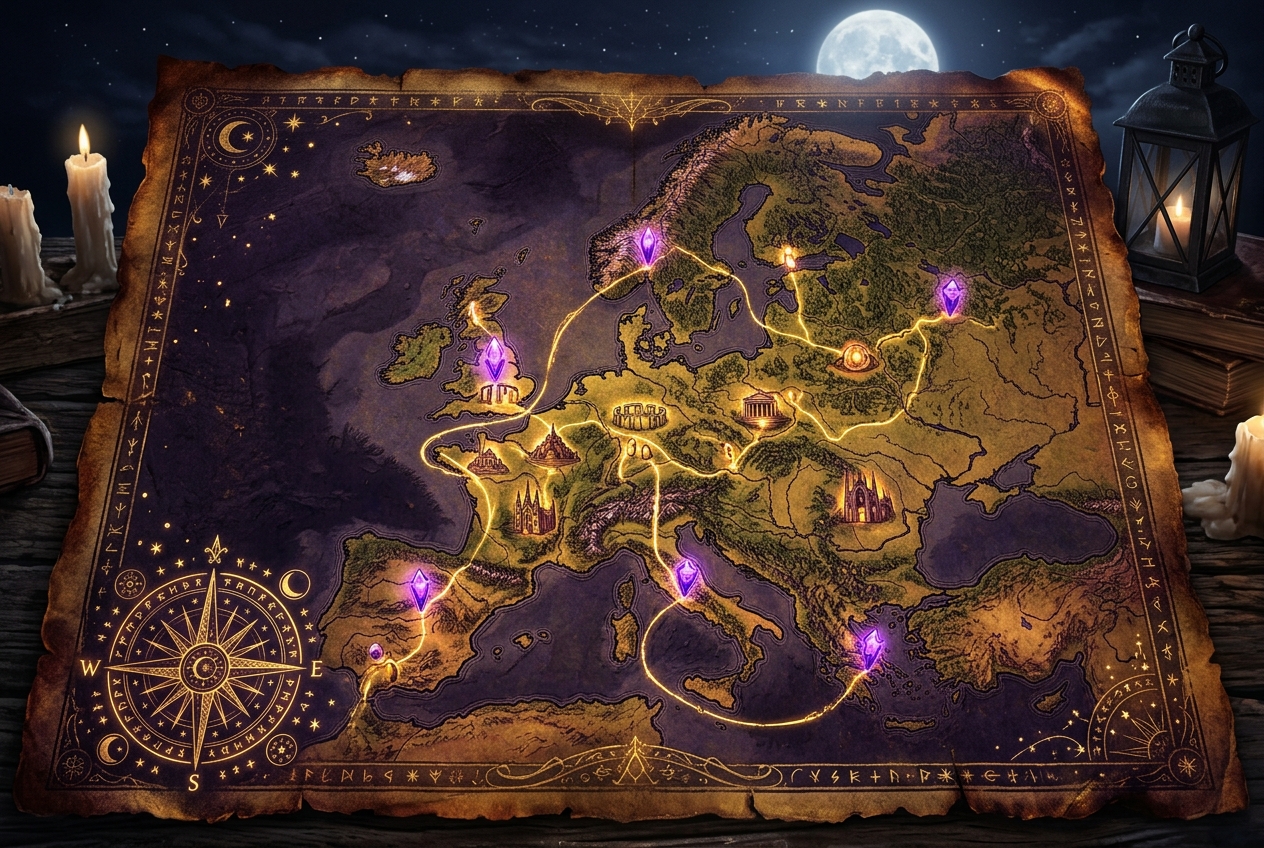
Slow travel is a way to journey without rush, with better planning, greater mindfulness and respect for places. Check practical tips, budget and responsible choices.
Slow travel, or traveling slower and deeper
Slow travel is an approach to travel where the experience of a place, the rhythm of the day and the quality of experiences matter more than ticking off attractions. If you wonder what is slow travel actually means, the answer is simple: it’s about traveling slowly, with greater mindfulness, fewer itinerary points and a plan that fits your real energy, budget and trip purpose. In practice this means less hurry, fewer random transfers and more time for walking, local food, conversation and rest.
At Ezostylia, in the Travel section, we look at travel broadly, as part of everyday life, development and conscious choices. Therefore slow travel in Polish is not a trendy slogan but a real strategy that helps you travel smarter. This is especially important if you are just starting and looking for content in the style of travel for beginners, or when you want to combine budget, comfort and care for the destination you are heading to.
Why slow travel makes sense
A rushed sightseeing style often ends in fatigue, chaos and the feeling that “we were everywhere but experienced nothing”. Slow travel flips that script. Instead of five cities in five days, you pick one or two places and really get to know them. This makes it easier to build memories while reducing logistical pressure. It also answers the need for more conscious trip planning, because every stage, from transport to accommodation, is thought through.
From a responsibility perspective, traveling slower usually supports better environmental and social choices. According to UN Tourism in its 2023 sustainable tourism materials, key decisions are those that reduce pressure on local resources and support host communities. The European Environment Agency in 2024 highlighted the impact of transport and tourist concentration on the environment. This does not mean every trip must be perfect. It rather means it’s worth choosing more sensibly and without excess.
Slow travel in Polish, or how to plan without hurry
If you are interested in slow travel in Polish, start with a simple question: why are you traveling? A city weekend is planned differently than a week‑long seaside stay, and a mountain trek is yet another story. Slow‑travel planning should consider three things: pace, distances and the places you truly want to feel, not just see.
In practice the following scheme works well:
- Choose one main travel goal, e.g., a city district, a region, a lake or a mountain range.
- Limit the number of overnight stays and transfers, because each move takes energy.
- Leave empty windows in the schedule, with no mandatory attractions.
- Check local opening hours, transport options and weather conditions before you go.
- Add one “no‑goal” activity, such as a long walk, coffee at a market or watching the sunset.
This way of organizing makes it easier to keep a daily rhythm. For many people this is the essence of slow travel: less tension, more presence. If you need inspiration for your plan, also visit the Ezostylia blog, where you’ll find practical content on lifestyle, planning and conscious choices.
Responsible travel and responsive travel in practice
Terms like responsible travel and responsive travel often sound similar, but it helps to understand them practically. Responsibility is respect for the place, its people and resources. Responsiveness is the ability to react to conditions without clinging to a rigid plan that doesn’t fit the weather, crowds or local rhythm. In travel this is crucial, because the best decisions are not always the most obvious.
In practice, responsible travel means, among other things:
- choosing local services whenever possible,
- respecting silence, nature and rules in sacred sites and in power places,
- not leaving litter and reducing single‑use items,
- checking whether a destination is overloaded with tourists,
- avoiding behaviours that treat the local community as a backdrop for photos.
If you care about a more ecological journey, you can look for content in the spirit of eco travel in Polish. This does not have to mean giving up comfort. Often a smarter choice of transport, accommodation and the number of trips is enough. OECD in its publication Tourism Trends and Policies 2024 notes that tourism is increasingly linked to requirements for local system resilience and quality of visitor flow management.
Power places, nature and mindfulness while traveling
In the Travel section, the topic of power places should be understood broadly as spaces that, for different people, have a special atmosphere, energy, history or beauty. These can be mountains, forests, cliffs, old city centres, monasteries, lakes or small villages where time flows differently. You don’t need to assign a single interpretation to appreciate their impact on wellbeing. Often it is the quiet spots that help calm the mind and reconnect with your own rhythm.
If you want to use such spaces responsibly, remember simple rules: don’t make noise, stay on trails, leave no trace and don’t treat the place as a set for quick content. Slow travel is about relationship, not consumption. When you linger longer, you notice more – sounds, smells, people, light at different times of day. This depth is what separates traveling slowly from merely checking points on a map.
Travel for beginners, or how to start without stress
If you’re just beginning, slow travel is a great entry into the world of trips. It doesn’t require massive logistics or costly plans. Just pick one place, simple transport and an accommodation that lets you rest. Travel for beginners should be as light as possible, because at the start the most important thing is getting comfortable with the process, not perfection.
A helpful checklist:
- check the inbound and outbound routes in advance,
- pack fewer items than you think you need,
- write down the accommodation address and emergency numbers,
- plan only 2 or 3 daily points,
- leave room for a plan change.
This model has another advantage: it is often simply cheaper. If you want to practice budget travel in Poland, choose shorter routes, travel off‑peak and places where you can walk a lot instead of paying for extra transfers. Many Polish regions are perfect for this style, from small towns to lakes, valleys, the coast outside the main season and quieter mountain ranges.
Travel planning, budget and comfort
Good travel planning in slow travel isn’t about scripting every minute. It’s about a framework that gives peace of mind. It’s useful to set a daily budget, a range for meals out and a transport level in advance, but leave space for spontaneity. This balance makes the trip lighter mentally. According to research on tourist behaviour, decisions about pace and number of transfers affect perceived travel fatigue, although the exact scale depends on the individual and context, so it shouldn’t be reduced to a single rule.
When planning, thinking in three layers helps: what I must arrange, what I want to experience and what I can skip. This simple question protects against an overloaded schedule. If an attraction requires three hours of travel and half a day of queues, ask yourself whether it truly aligns with your goal. In slow travel, less often means better.
How to write your own slow‑travel itinerary
The best trips are often not the most intense, but the most coherent. When you travel slower, it’s easier to notice the place’s rhythm and your own needs. You might start the morning with a walk, spend noon in one café, and return to the same viewpoint in the evening. This ritual gives a sense of grounding that can be more valuable than a list of attractions.
It’s also worth remembering that responsible travel concerns not only the environment but also yourself. If you’re tired, overstimulated or have a tight schedule, less sightseeing will be more valuable than more photos. Slow travel helps you respect your own limits, which translates into better memories and greater satisfaction from the trip.
If you want to adopt this style, start with one small decision on your next journey. Stay one day longer, choose a walk instead of an extra transfer, or plan one fewer destination. That often is enough to see that traveling slowly does not mean a duller trip. It means a journey that’s more yours, calmer, more mindful and simply better remembered.
FAQ
What is slow travel in practice?
It’s a way of traveling where you choose fewer places, less rush and more time for a genuine experience of space, people and the local rhythm.
Does slow travel in Polish have to be expensive?
No. It is often even cheaper than intensive sightseeing because it limits the number of transfers, overnight stays and incidental expenses.
How to start traveling for beginners?
Pick a nearby destination, simple transport, one accommodation and at most a few program points. This makes it easier to get comfortable with the whole process.
Does responsible travel mean giving up comfort?
No. It’s about conscious choices, respect for the place and its people, and better aligning the plan with real conditions.
Sources
The content is educational and does not replace professional advice. Conclusions about health, psychology, environment and travel are based on publicly available institutional publications and scientific literature, without promises or guarantees of results.