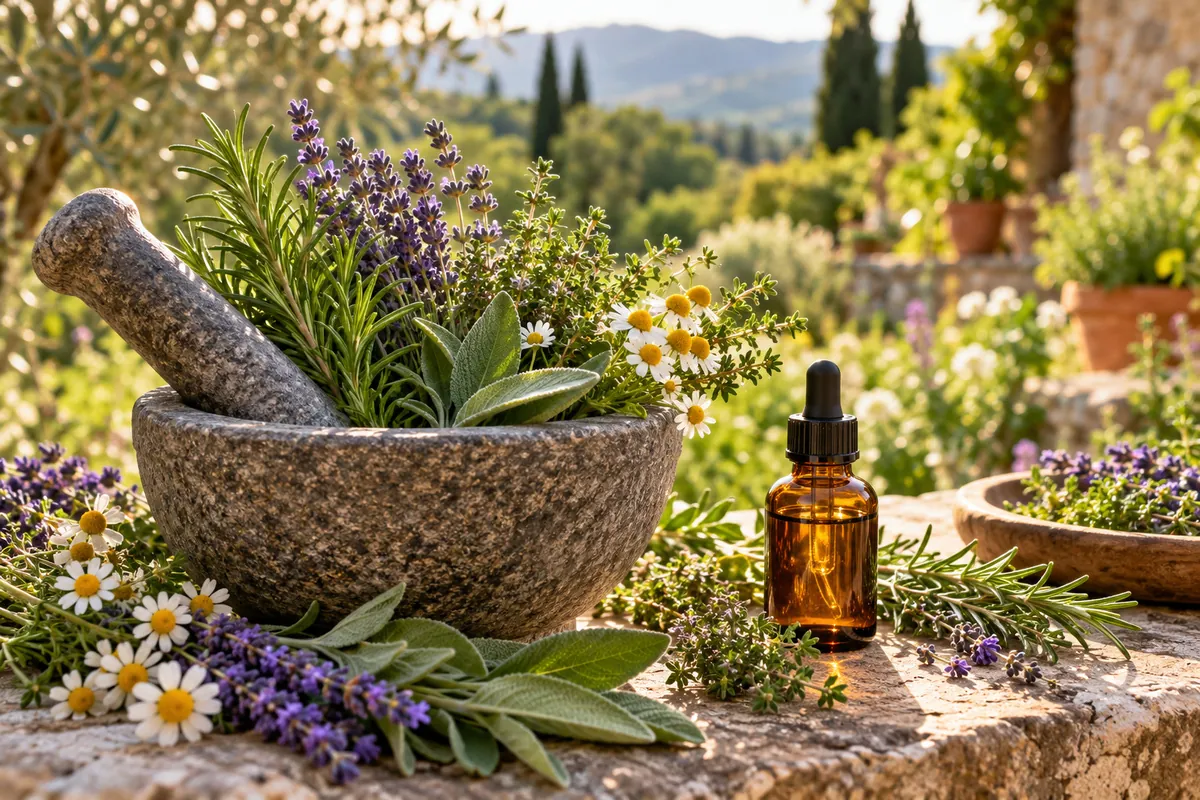
Do you run an herbal shop or a health blog? Discover how to select herbs for an evening infusion to help your readers make safe choices. A practical guide featuring expert insights.
How to Choose Herbs for an Evening Infusion?
Choosing herbs for an evening infusion should be based on their recognized relaxing properties and safety of use. The most frequently chosen species are lemon balm, chamomile, and lavender, which have been used for years to support sleep and reduce tension.
Traditional herbal medicine distinguishes several groups of plants with calming effects. In everyday practice, herbal teas made from lemon balm, German chamomile, or English lavender are most commonly used. Their action is gentle, and their safety profile is well documented in scientific literature. However, it is worth remembering that tradition alone does not guarantee the absence of drug interactions.
When selecting raw material, it is crucial to pay attention to the botanical species indicated on the packaging. Different chamomile species possess distinct properties, and confusing them may lead to unintended effects. Therefore, always check the Latin botanical name and the country of origin. The quality of herbs directly influences their effectiveness and safety.
It is also worth considering whether your goal is simply relaxation or targeting a specific issue, such as difficulty falling asleep or nervous tension. Different herbs work better for insomnia, while others are suited for anxiety. For this reason, before making a purchase, evaluate your needs in light of specific plant properties. You can consult our guide on herbs for sleep and stress, which helps make this distinction.
What Does Science Say About the Safety of Evening Herbs?
Science confirms the mild calming properties of many herbs, but emphasizes the need for caution when combining them with medications. Lemon balm, chamomile, and lavender are the best documented, boasting a long history of use for tension relief.
According to the European Food Safety Authority (EFSA), the safety of herbal supplements depends on dosage, duration of use, and the consumer's overall health status. Not all herbs are safe for every age group, especially children, pregnant women, and the elderly. Consequently, manufacturers should clearly state contraindications on the packaging.
The US National Center for Complementary and Integrative Health (NCCIH) points out that herbs are complex products containing multiple active constituents. This means their action may differ from that of purified chemical compounds. Studies published in the PubMed database indicate that lemon balm can affect the nervous system, although the precise mechanisms remain under investigation.
The European Medicines Agency (EMA) publishes herbal monographs that serve as official positions on the use of specific species. It is worthwhile to check whether a selected herb has such a monograph, as this confirms its traditional use and safety. Detailed information can be found in the EMA herbal monographs.
How to Identify High-Quality Herbal Raw Material?
Herbal quality is evaluated by appearance, aroma, place of origin, and label information. Quality raw botanical material should be free from contaminants, mold, and foreign species, and its aroma should be rich and pleasant.
When buying herbs, pay attention to the transparency of the label. It should include both the common and Latin names, country of origin, harvest date, and storage instructions. The absence of this information signals that the product may come from an unverified source. It is also good practice to check whether the manufacturer provides contact details and a physical address.
The color and texture of leaves or flowers are significant. Raw materials that are excessively pale or brown may be old or improperly dried. Conversely, a vibrant, fresh aroma indicates preserved essential oils, which are responsible for aromatherapeutic effects and flavor. You can compare the quality of different brands using our herbal directory, where we describe selection criteria.
Avoid herbs sold in bulk without labeling, unless you are purchasing them directly from a known, trusted grower. Large supermarkets frequently encounter supply chain quality control issues. Organic certifications can be an added advantage, but they do not eliminate the risk of drug interactions.
Which Herbs Pair Best in an Evening Ritual?
Single species or simple blends with known compatibility work best. Combining too many herbs can make it difficult to assess your body's response and may increase the risk of adverse reactions.
Lemon balm is frequently blended with chamomile, as both plants have mild effects and complement each other well. Such an infusion can support pre-sleep relaxation while remaining safe for most adults. It is important to avoid adding stimulating herbs to this blend, such as certain varieties of mint that may stimulate digestion without necessarily promoting sleep.
English lavender is a popular ingredient in evening infusions due to its characteristic scent and gentle action. Research suggests that lavender aromatherapy can affect mood, though its effects from infusions are milder than from inhalation. Nevertheless, as a tea ingredient, lavender is safe and pleasant to taste. You can read more about its properties in the article Lavender: Aromatherapy, Essential Oil, and Infusion — What Science Says.
If you wish to grow your own herbs, keep light and moisture conditions in mind. Certain species, such as lemon balm, grow well on a windowsill but require proper care. You will find a detailed guide in our article How to Grow Herbs on a Windowsill. Home cultivation allows you to control raw material quality from start to finish.
When Should You Consult a Specialist About Choosing Herbs?
Consulting a physician or pharmacist is recommended if you take prescription medications, suffer from chronic conditions, or are pregnant or breastfeeding. Herbs are not pharmaceuticals, but they can interact with pharmacotherapy, altering drug efficacy or exacerbating side effects.
Individuals with thyroid disorders should exercise caution with ashwagandha, as research indicates this herb can influence thyroid hormone levels. Similarly, patients taking anticoagulants should avoid herbs that affect blood clotting. A healthcare provider can help select safe alternatives that will not interfere with treatment. Detailed information on interactions can be found in our article Ashwagandha: What Science Says About Stress and Sleep.
Pregnant and breastfeeding women should avoid most herbs with uncharacterized pharmacokinetics. Certain species, like chamomile, have been used traditionally, but there is insufficient clinical research confirming their safety in these populations. Therefore, it is always advisable to consult your attending physician before using any specific herb. Maternal and child safety is paramount, and home remedies do not replace medical advice.
If you experience alarming symptoms after drinking an infusion—such as diarrhea, a rash, or shortness of breath—discontinue use immediately and seek medical attention. Allergic reactions to herbs are rare but possible, particularly in individuals with known allergies to plants in the Asteraceae family. Herbs for an evening infusion should provide safe support, not become a source of health complaints. For general information on botanical properties, visit our guide to herbs and their properties.
FAQ
Can you drink sleep herbs daily?
This depends on the specific plant and individual tolerance. Most gentle herbs, such as chamomile, can be consumed regularly, but taking periodic breaks is advisable to avoid habitual reliance on a single remedy. If in doubt, ask a pharmacist about recommended durations of use.
How should you brew herbs to preserve their properties?
Generally, brewing at approximately 80–90 degrees Celsius for 10–15 minutes is recommended. Water that is too hot can degrade delicate essential oils, while an overly brief steep will fail to extract all active compounds. Always check the manufacturer's directions on the package.
Can I mix different herbs in one infusion?
Yes, but it is best to combine herbs with complementary actions and known safety profiles. Avoid combining potent herbs with medications without professional guidance. Simple blends, such as lemon balm and chamomile, are safer than complex multi-ingredient formulas.
Where should you buy high-quality herbs?
Preferably from pharmacies, health food stores, or trusted online suppliers that disclose comprehensive sourcing and quality information. Avoid anonymous market vendors or online sellers lacking proper certification. Also, verify that the product has an expiration date and transparent labeling.
Sources
- EFSA – Food and Supplement Safety Link
- NCCIH (NIH) – Herbs at a Glance Link
- EMA – Herbal Monographs Link
- PubMed – Publication Search Link