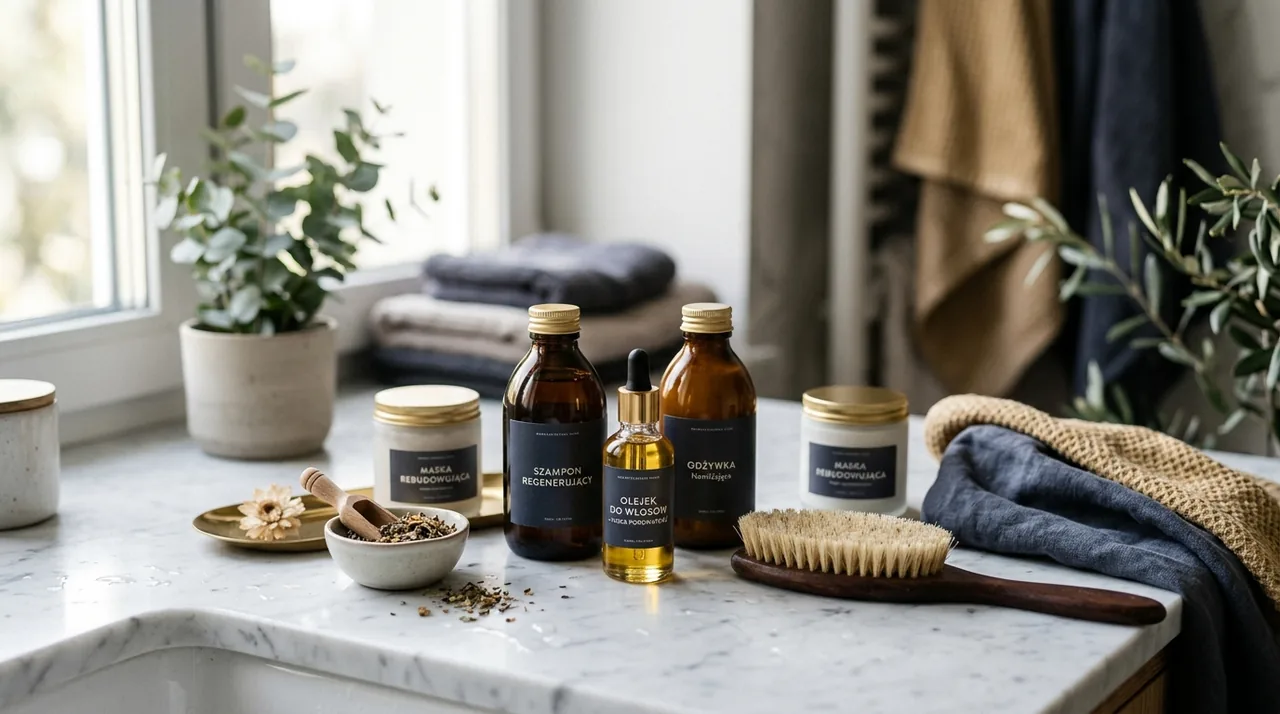
Understanding hair porosity is essential for tailoring your hair care routine, but it shouldn't replace the importance of observing your strands and scalp. Discover how to select humectants, emollients, and proteins based on dermatological insights.
Hair: Care by Porosity - How to Choose a Routine Without Guesswork
Hair porosity is a popular concept in the beauty world, but it’s important to approach it with calm and practicality. In dermatology and hair science, key factors include the structure of the hair shaft, the degree of cuticle damage, and how the strands react to washing, heat, friction, and cosmetic ingredients. In simple terms, porosity serves as a helpful shortcut for organizing hair care, but it shouldn't be the sole criterion for selecting products. According to DermNet, the health of the hair shaft and the condition of the cuticle affect shine, frizz, and breakage. Meanwhile, the American Academy of Dermatology Association (AAD) emphasizes that healthy hair care also depends on washing frequency, scalp type, and minimizing damaging treatments.
If you wish to cultivate a thoughtful care ritual, pay attention not only to the hair itself but also to the scalp. This is significant because even the best-selected cosmetic ingredients won’t deliver effective results if the scalp is irritated, dry, or overloaded with styling products. In this article, you’ll find a practical guide to understanding porosity and choosing care that aligns with dermatological principles.
If you want to enhance your conscious beauty care in the beauty section, you can consider this text as a foundation for building your personal routine. It may also help organize habits related to color and style, which is why some individuals also visit the colors section or choose visually soothing rituals, such as mandala, but the essential foundation always lies in observing the hair and skin.
What is Hair Porosity and Where Does This Concept Come From?
Porosity describes how tightly or loosely the hair cuticle is structured, meaning the outer layer composed of overlapping scales. The more damaged or uneven the hair surface is, the more readily it absorbs water, but also the quicker it loses moisture. This is why some hair types dry quickly after washing, frizz easily, and reflect light poorly.
In practice, people generally refer to low-porosity, medium-porosity, and high-porosity hair. This classification isn't an official medical standard, but it is quite helpful for organizing care. Robbins' book, “Chemical and Physical Behavior of Human Hair,” has long been a cornerstone of knowledge about hair characteristics, confirming that strand behavior is influenced by factors such as shaft structure, humidity, chemical treatments, and mechanical damage.
Porosity can be influenced by:
- genetic predisposition and the natural curl pattern of the hair,
- bleaching, coloring, and permanent styling,
- frequent use of high heat,
- friction, harsh brushing, and tight hairstyles,
- UV radiation and environmental conditions,
- unsuitable cosmetic ingredients that weigh strands down or dry them out.
How to Recognize Porosity Without Myths
At-home tests, such as dropping a hair strand into a glass of water, are often unreliable. The results can be affected by the presence of sebum, cosmetic residues, and hair thickness. Instead, it's better to observe how the strands behave over a period of 2 to 4 weeks following your usual washing and drying routine. This is simpler and closer to the reality of hair care.
Low-porosity hair is typically smooth, shiny, relatively resistant to frizz, but can be easily weighed down. It dries slowly and doesn’t always respond well to heavy masks. Medium-porosity hair is usually more balanced, fairly adaptable, yet sensitive to excessive treatments. High-porosity hair, on the other hand, often feels dry, rough, more matte, loses moisture quickly, and tangles easily. This commonly applies to curly, bleached, or frequently heat-styled hair.
AAD notes that damaged hair should be treated gently, heat exposure should be minimized, and smoothing and protective products should be utilized. This is crucial because even if you identify your hair as high porosity, improving your daily habits can significantly reduce breakage and frizz.
Care for Low-Porosity Hair
If you have low-porosity hair, the goal is to achieve lightness, volume, and protection without overloading the strands. This hair type often benefits from simple, not overly heavy formulations. Lightweight emollient conditioners and a moderate amount of film-forming ingredients work well. Overly rich masks can make the strands feel flat and lifeless.
In daily care, seek out products with lightweight emollients like esters, selective silicones that are easily wash out, or a small amount of lighter oils. Use proteins sparingly, as too much can result in a stiff feeling. Humectants such as glycerin or panthenol can be beneficial when used in a formula with an emollient that helps limit moisture loss.
An effective care ritual for this hair type might look like this: a gentle shampoo suited to the scalp, a lightweight conditioner for the lengths, heat protection before drying, and an occasional use of a stronger clarifying shampoo if the strands start to feel flat. According to StatPearls and reviews on hair cosmetics, film-forming conditioning ingredients can enhance slip and reduce friction. However, excessive residue on the hair can lead to aesthetic issues.
Care for Medium-Porosity Hair
Medium-porosity hair tends to be the most adaptable when it comes to care, but it can also be easily thrown out of balance. The ideal approach here is to find a balance between emollients, humectants, and proteins. It’s not about strict ratios, but about responding to what you observe. If the hair feels dry and frizzy, it usually requires more emollient protection. If it appears limp and lacks bounce, a gentle protein treatment may be beneficial. If it feels stiff and lifeless, simplifying the routine can be worthwhile.
This hair type often responds well to alternating a lighter conditioner after each wash with a richer mask once a week. For many, protecting the ends with a silicone serum proves to be a wise choice. This isn’t a “bad” ingredient; according to cosmetic reviews, silicones can minimize friction, enhance shine, and reduce mechanical damage, as long as they are well integrated into the overall routine.
If you dye your hair, keep in mind that chemical treatments gradually increase its porosity. That's why after coloring, you often need more protection and gentler handling. This is where it becomes clear that hair care is not a one-size-fits-all concept. The same individual may have healthier hair closer to the roots and much more porous strands at the ends.
Care for high-porosity hair
High-porosity hair primarily needs support in reducing moisture loss, minimizing friction, and reinforcing the protective barrier on the hair's surface. In practice, richer conditioners and masks, emollients, and appropriately used proteins prove beneficial. If the strands are severely damaged, consistent heat protection and gentle detangling are just as crucial as the ingredients themselves.
In a study published in the Journal of Cosmetic Science, Rele and Mohile (2003) demonstrated that coconut oil could reduce protein loss from hair more effectively than mineral oil and sunflower oil, both before and after washing, given the study's specific conditions. This is one of the most frequently referenced studies on oiling hair. However, that doesn't mean everyone must use coconut oil. If it leaves your hair feeling rough or weighed down, opt for another type of emollient.
With high porosity, the following routine often works well:
- wash with a gentle shampoo suitable for your scalp,
- apply a conditioner or mask that offers smoothing benefits,
- gently squeeze out excess water without rubbing with a towel,
- apply a leave-in product or serum to the ends,
- dry with cooler air or let it air dry if your hair and scalp tolerate it well.
Both NHS and AAD emphasize that high heat, aggressive bleaching, and harsh styling practices contribute to breakage. So, if you want to improve the appearance and health of your hair, sometimes reducing the use of flat irons has a more significant impact than purchasing yet another mask.
Cosmetic ingredients worth knowing
In conscious hair care, understanding three fundamental groups of cosmetic ingredients can be beneficial. This is not rigid theory but a practical tool.
- Humectants, such as glycerin, aloe, and panthenol, attract water. They are particularly helpful when hair is dehydrated but typically work best in combination with emollients.
- Emollients, such as oils, butters, esters, and some silicones, smooth the hair surface, reduce friction, and limit moisture loss.
- Proteins, such as hydrolyzed keratin, silk, or wheat proteins, can temporarily enhance the feeling of smoothness and elasticity, but in excess, they can make hair feel stiff.
Not every ingredient works the same for everyone. Factors like concentration, the complete formulation, frequency of use, and whether the issue pertains to the hair or scalp all play a role. If you are experiencing dandruff, itching, or increased hair loss, porosity alone is not sufficient. In such cases, a dermatological evaluation is necessary. This text is educational and does not replace a consultation with a specialist.
Scalp, washing, and styling: the factors that matter more than trendy labels
In hair care, it's easy to focus solely on the lengths and forget the scalp. However, washing frequency should primarily depend on the needs of the scalp. AAD highlights that individuals with an oily scalp may need to wash more often, while those with curly hair and drier scalps usually wash less frequently. There is no universally ideal number of washes for everyone.
For many people, a simple care ritual works well:
- wash the scalp with a shampoo suited to its needs,
- apply a conditioner or mask to the lengths based on porosity and hair condition,
- gently detangle, starting from the ends,
- protect the lengths from heat and friction,
- observe the results over several washes before changing products.
If you also want to enhance the aesthetic aspect of your daily beauty routine, some individuals find it helpful to incorporate calming elements, such as mindful breathing, aromatic scents, or a serene environment. You can also explore the aura or chakra ritual section for inspiration on creating a ritual atmosphere, but when it comes to hair care, dermatological principles and consistency remain paramount.
The most common mistakes in porosity-based care
The biggest mistake is treating porosity as a definitive label and blindly following someone else's routine. Just because someone has a similar curl pattern doesn't mean your scalp, level of damage, and reaction to cosmetic ingredients will be the same.
Common mistakes also include:
- using hair oils that are too heavy for low-porosity hair,
- overusing protein on hair that is already stiff and dry,
- skipping heat protection,
- washing infrequently despite clear scalp needs,
- constantly switching products without allowing time for observation,
- judging a product after just one use.
Good hair care is a process. Once you learn to recognize whether your hair needs more smoothing, moisture, or bounce, it becomes easier to select products without the chaos of shopping. Beauty isn't about having a perfectly stocked bathroom shelf; it's about sensible habits.
How to create your personalized care plan
If you aren't sure where to start, adopt a minimalist approach for three weeks. Choose one shampoo for your scalp, one conditioner for the lengths, one serum to protect the ends, and heat protection if you use a hairdryer. Pay attention to whether your hair feels soft, tangles less, loses volume, or gets greasy more quickly. Only then introduce a mask, oil treatment, or a protein product.
This method is safer than ongoing experimentation, as it allows you to notice the hair's true response. From a dermatological standpoint, reducing damage and promoting scalp comfort is essential. From a daily beauty perspective, convenience is crucial as well. The best care ritual is the one you can sustain consistently.
FAQ
Can hair porosity change?
Yes. Hair ends are often more damaged than new growth, and bleaching, high heat, and friction can increase porosity over time. That's why your care routine should reflect the current condition of your hair lengths, not just a single label.
Is oiling necessary for every hair type?
No. Oiling can be beneficial for some people, particularly those with dry and higher porosity hair, but it is not obligatory. If your hair feels heavy or dull after oiling, choose a lightweight emollient conditioner or a serum for the ends instead.
How often should you wash your hair based on porosity?
Not based on porosity, but primarily on the needs of the scalp. The American Academy of Dermatology notes that the frequency of washing depends on sebum production, hair type, and lifestyle. While porosity can help you select a conditioner and a length-protection strategy, it does not determine a fixed washing schedule.
Are silicones harmful to hair?
There is no evidence to suggest that they are harmful by definition. In many formulations, they enhance slip, shine, and protection against friction. The only concern might be using a product that does not suit the hair's needs, such as a formula that is too heavy for fine hair.
Sources
- American Academy of Dermatology Association, Hair care tips and shampooing guidance, 2024, https://www.aad.org
- DermNet, Hair shaft and hair disorders overview, 2024, https://dermnetnz.org
- NHS, Hair loss and hair care information, 2023, https://www.nhs.uk
- Robbins CR, Chemical and Physical Behavior of Human Hair, 2012
- Rele AS, Mohile RB, Effect of mineral oil, sunflower oil, and coconut oil on prevention of hair damage, Journal of Cosmetic Science, 2003
- StatPearls, NCBI Bookshelf, Hair Cosmetics: An Overview, 2023, https://www.ncbi.nlm.nih.gov/books/
This article is for educational purposes and does not substitute a consultation with a dermatologist or trichologist, especially if you are experiencing itching, dandruff, increased hair loss, or scalp irritation.