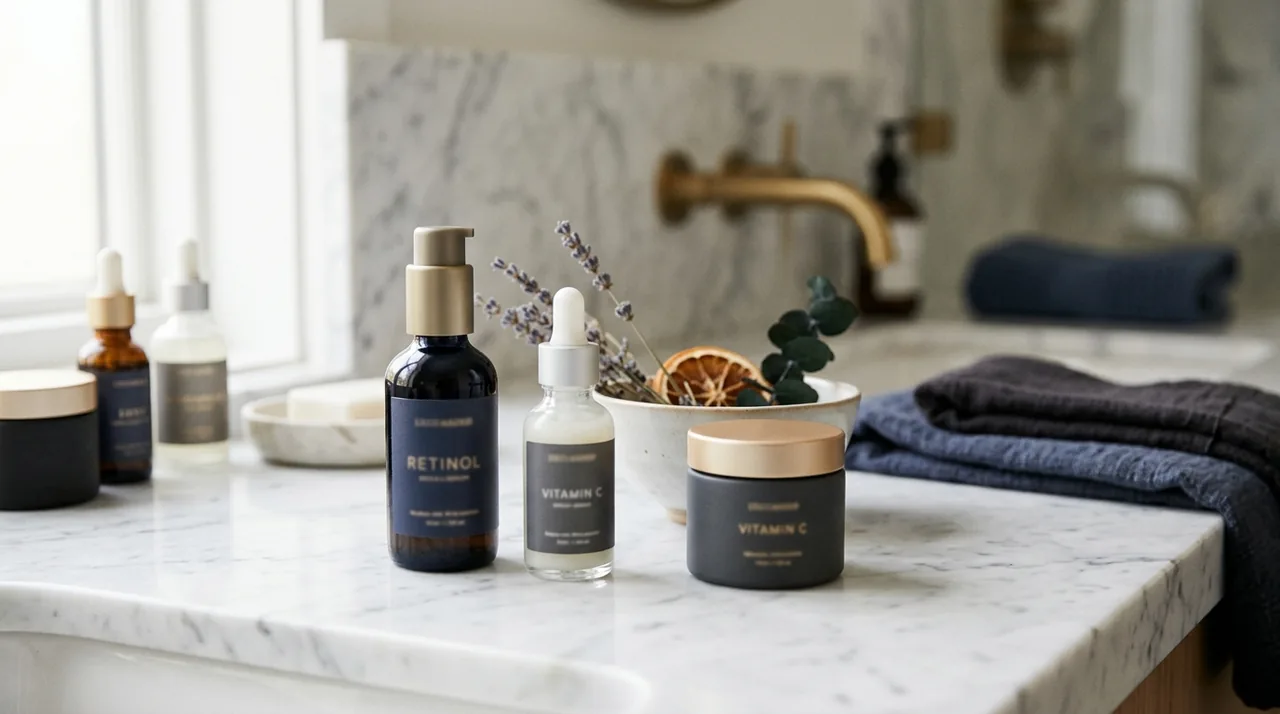
Retinol, acids, and vitamin C can yield remarkable results, but only when used wisely in combination. Uncover safe skincare guidelines, the correct application order, and practical rituals.
Retinol, acids, vitamin C: a guide to mindful skincare ingredient combinations
In the world of modern skincare, it's easy to overdo it. On your shelf, you might find a vitamin C serum next to an acid toner and further along, a retinol cream. Each of these products has the potential to genuinely enhance your skin, but using them together requires a thoughtful strategy. This is particularly important when aiming to improve skin tone, texture, fine lines, or blemishes while also caring for your skin's hydrolipid barrier.
The American Academy of Dermatology Association notes that retinoids are some of the most extensively researched topical ingredients in aesthetic dermatology, aiding in concerns like acne and signs of photoaging. Vitamin C is prized for its antioxidant properties and its ability to brighten discoloration, while chemical acids help to smooth the epidermis and enhance skin renewal. The key question is not whether these ingredients are beneficial, but rather how to effectively combine them for a comfortable skincare routine.
When creating your own skincare ritual, think of it as a training plan for your skin. It’s not about using everything at once or every day from the start; it's about allowing space for recovery. This method typically yields better results than aggressively layering multiple strong actives in one session. Practically speaking, this means sensible application, tuning in to your skin's reactions, and having patience.
If you’d like to deepen your understanding of daily skincare, you can view this article as a foundation for crafting your personalized skincare plan. True beauty care isn't about the number of products, but about the compatibility of ingredients and maintaining consistency.
The roles of retinol, vitamin C, and acids
Retinol is a derivative of vitamin A. In cosmetics, it serves as an ingredient that promotes epidermal renewal, smooths skin texture, and diminishes the appearance of fine lines. Dermatology reviews published in NCBI resources have well-documented the anti-acne and anti-aging effects of topical retinoids. However, they can also lead to dryness, stinging, peeling, and temporary irritation, particularly when first introduced.
Vitamin C, often found as ascorbic acid or its more stable derivatives, acts as an antioxidant to support the skin. Review studies in PubMed suggest that it may help shield against oxidative stress from UV radiation, aid in collagen synthesis, and improve the look of discoloration. Nonetheless, it should not replace sunscreen and works best when incorporated into a broader skincare routine.
AHA, BHA, and PHA acids primarily provide exfoliation, although their profiles differ. AHAs, such as glycolic and lactic acid, typically assist with smoothing and brightening the skin. BHA, especially salicylic acid, is highly regarded for oily and blemish-prone skin. According to StatPearls (2023), alpha hydroxy acids enhance skin texture and support epidermal renewal, but excessive usage can raise the risk of irritation.
Why these ingredients might not mix well
Many are familiar with the simple guideline that retinol, acids, and vitamin C should not be used together. However, this is an oversimplification. A more accurate statement is that it may not be beneficial to use them all within a single skincare routine, especially if your skin is sensitive, dehydrated, or if you are just beginning to explore active ingredients.
The most common issue arises from the build-up of potential irritants. Retinol quickens cell turnover, while acids exfoliate the skin. Certain forms of vitamin C, especially at high concentrations, can also cause stinging and discomfort. When you layer multiple strong products at once, your skin may react with redness, tightness, burning, and peeling. This reaction often doesn’t indicate that the skincare is more effective; instead, it can signify an overload.
In dermatology, both skin tolerance and the epidermal barrier are crucial. If you compromise the barrier, you might inadvertently worsen your complexion, heighten reactivity, and complicate the consistency of your skincare routine–the very products that could provide long-term benefits.
The safest approach: separate active ingredients
For most individuals, a sensible routine would look like this: apply vitamin C in the morning and reserve retinol or acids for the evening, on alternating days rather than combining them on the same day. This straightforward strategy helps maintain effectiveness while minimizing the risk of irritation.
- Morning: gentle cleansing, vitamin C serum, moisturizer, SPF 30 or 50.
- Evening 1: cleansing, retinol, regenerating cream.
- Evening 2: cleansing, moisturizer only or a soothing serum.
- Evening 3: cleansing, acid, regenerating cream.
- Evening 4: recovery without strong actives.
This skincare ritual is particularly beneficial if your skin is still adjusting to active ingredients. Over time, if your skin's tolerance improves, you can gradually increase the frequency of use, but there’s no need to rush. Beautiful skin typically responds better to consistency than to intensity.
How to combine vitamin C with retinol
These ingredients don’t necessarily have to exclude one another, but they typically perform best when spaced out by the time of day. Vitamin C in the morning is logical due to its antioxidant benefits, while retinol is best suited for the evening given its tolerance profile and dermatological practices. The American Academy of Dermatology Association emphasizes the importance of daily sun protection during retinoid use.
If your skin is resilient, and you choose milder formulations, some ready-made products can blend vitamin C derivatives with retinoids. However, in at-home skincare routines, it's safer not to experiment with layering from the outset. Particularly, using a high concentration of pure ascorbic acid alongside retinol in the same evening regimen may be excessive.
A prudent practice is to monitor your skin over a period of 4 to 6 weeks. If you do not experience persistent stinging, redness, or peeling, you can continue with your routine. If discomfort increases, scale back the frequency and revert to a simpler regimen.
How to combine acids with retinol
This combination requires the utmost caution. Using acids and retinol on the same evening often leads to dryness and irritation. For most skin types, a safer approach is to alternate them: retinol one evening, acids on another, with recovery evenings in between.
If you have acne-prone skin and use salicylic acid, remember that even spot treatments can increase reactivity. The same applies to toners containing glycolic or lactic acid. Over-exfoliating won't hasten results; it may actually harm the epidermal barrier. StatPearls, 2023, notes that side effects of AHAs include burning, redness, and increased sensitivity, particularly when used incorrectly.
If you really want to combine exfoliation with a retinoid, a more sensible choice is often a cleanser with a mild acid used briefly, rather than a strong peel just before applying retinol. Still, it’s best to start cautiously.
How to combine vitamin C with acids
Here, much depends on the form of the product. Pure ascorbic acid is acidic on its own, so adding another strong acid may heighten the risk of stinging. However, if you are using a gentler vitamin C derivative and your skin is resilient, some people manage to tolerate such a combination. In everyday home care, a simpler regimen is often recommended: vitamin C in the morning, acids in the evening.
If you have couperose-prone, sensitive skin or a compromised barrier, do not regard strong actives as a mandatory standard. Dermatology-aligned skincare is tailored to your skin's unique needs, not to trends. Sometimes the best results come from using fewer products and allowing for better recovery.
How to build a skincare ritual step by step
- Define your primary goal, such as treating discoloration, acne, smoothing the skin, or addressing early signs of aging.
- Choose one main active ingredient to begin with, either retinol or acids, but not both at once.
- In the morning, add vitamin C if your skin tolerates an antioxidant serum well.
- Introduce the product twice a week, then gradually increase the frequency every 2 to 3 weeks.
- Use SPF cream every day. According to the AAD, sun protection is the foundation for preventing photoaging and controlling discoloration.
- If irritation arises, reduce the frequency and allow for recovery.
In practice, it is also essential to consider the entire cosmetic formula. Skin responses are influenced not only by the active ingredient itself but also by factors such as concentration, pH, the product base, the presence of denatured alcohol, fragrance, or additional soothing ingredients. That’s why two vitamin C serums or two retinol creams can perform quite differently on the skin.
If you prefer to organize your skincare ritual visually, it can be helpful to arrange it by day or by packaging colors. You can seek inspiration for building consistent habits in sections such as colors or mandala, but always base your skincare plan on your skin’s needs and dermatological principles.
What about the scalp and hair
Although this topic primarily concerns the face, many wonder if similar rules apply to hair and the scalp. Yes, caution is equally important here. Acids in scalp products can assist in cleansing and reducing excess sebum, but overuse may exacerbate dryness or cause stinging. Retinoids are not typically included in standard daily scalp care unless explicitly recommended by a specialist.
If your goal is healthy hair, focus on the condition of your scalp, gentle cleansing, protecting the lengths, and choosing cosmetic ingredients wisely. Hair responds better to a consistent routine and protection from mechanical damage than to randomly mixing active substances.
The most common mistakes that weaken the skin
- Introducing retinol, acids, and vitamin C in the same week.
- Skipping daily SPF during retinol or acid treatments.
- Exfoliating too frequently because the skin feels rough or congested.
- Ignoring burning and redness for several days.
- Applying strong actives on damp, irritated skin without a protective base.
If you wish, you can also develop more supportive habits around skincare. For some, a fixed sequence of steps, a calming evening routine, and fewer stimuli work well. This style of beauty care fosters consistency. In that spirit, you can also explore inspirations related to everyday well-being, such as aura or chakra rituals, but remember that the effectiveness of skincare is based on dermatology, not symbolism.
When to consult a specialist
If you have active inflammation, severe acne, rosacea, eczema, significant discoloration, or highly reactive skin, it’s worth discussing your skincare plan with a dermatologist. The same goes if, after several weeks of diligent use, you still experience intense burning, peeling, and redness. An educational article can help you understand the guidelines, but it does not replace a personalized diagnosis.
So, the simplest answer to how to combine retinol, acids, and vitamin C is this: calmly and strategically. Vitamin C is usually best in the morning, with retinol or acids in the evening, on alternating days, while emphasizing recovery and SPF. This kind of skincare is gentler on the skin and therefore more effective in the long run.
Sources
- American Academy of Dermatology Association, Retinoids: What They Are and How to Use Them, 2024, https://www.aad.org
- American Academy of Dermatology Association, Vitamin C for the Skin: Benefits and How to Use It, 2024, https://www.aad.org
- StatPearls, NCBI Bookshelf, Alpha Hydroxy Acids, 2023, https://www.ncbi.nlm.nih.gov/books/
- StatPearls, NCBI Bookshelf, Topical Retinoids, 2023, https://www.ncbi.nlm.nih.gov/books/
- PubMed, Topical Vitamin C and the Skin: Mechanisms of Action and Clinical Applications, 2017, https://pubmed.ncbi.nlm.nih.gov/
- American Academy of Dermatology Association, Sunscreen FAQs, 2024, https://www.aad.org
The content is for educational purposes and does not replace consultation with a dermatologist or another specialist.
FAQ
Can retinol and vitamin C be used on the same day?
Yes, they often can be, but it’s best to separate them by time of day. Use vitamin C in the morning and retinol in the evening. This arrangement usually reduces the risk of irritation and simplifies regular skincare.
Can acids and retinol be layered?
For most people, that isn’t the best idea at the beginning. It's safer to use them alternately on different evenings. Layering can increase the risk of dryness, burning, and weakening the skin barrier.
What SPF should I use with retinol and acids?
A daily broad-spectrum SPF of 30 or 50 is typically recommended. This is crucial as the skin may become more sensitive to UV radiation during active treatment.
How can I tell if my skin is overloaded with active ingredients?
Common signs include burning, persistent redness, tightness, peeling, and excessive reactivity even to gentle products. In such cases, reduce the active ingredients and focus on recovery.