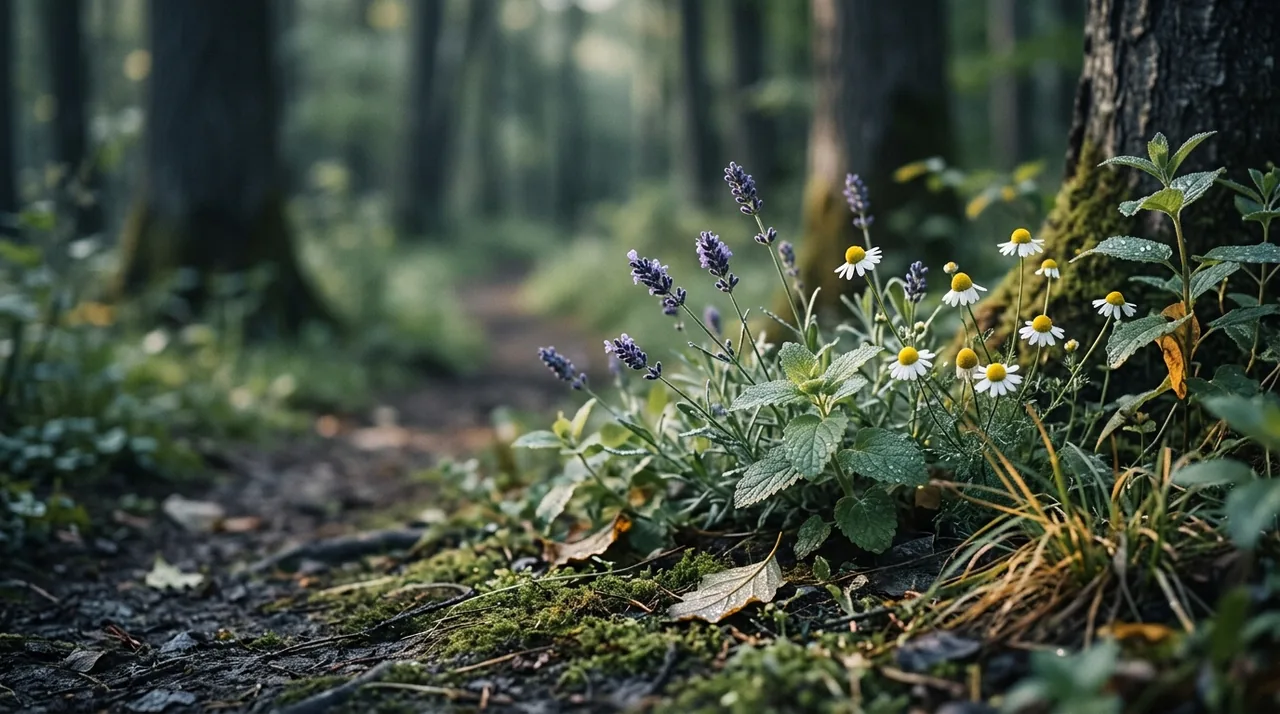
Lemon balm, lavender, and chamomile are herbs often selected for their calming properties in the evening. Learn what research shows and how to support your well-being through nature, walks, and seasonal practices.
Herbs for calm: lemon balm, lavender, chamomile, what we really know
When tension builds, many people instinctively turn to herbs. In Polish homes, lemon balm, lavender, and chamomile are the most commonly found choices. This selection is intuitive and deeply connected to how nature influences us, evoking the scent of a garden, an evening stroll, and the simple rhythm of the seasons. It’s essential to distinguish our home habits from what research can actually confirm. What do we know today about these plants, and what remains uncertain?
The most important thing to remember is this: herbs are not a magical switch for stress. They can support everyday well-being, particularly when combined with good sleep hygiene, a more relaxed evening pace, and regular contact with nature. According to the World Health Organization, in the 2016 review "Urban green spaces and health," interaction with greenery can enhance health and well-being, in part by reducing tension and promoting physical activity. Conversely, a review by Bratman et al. from 2019 suggests that nature may bolster mental health, although the mechanisms and strength of the effects depend on context, frequency of contact, and the quality of the environment.
So, if you’re seeking calm, consider herbs in a broader sense. A cup of tea is one thing, but taking a walk, being in the forest, enjoying daylight, embracing evening tranquility, and respecting the seasonal changes in daily habits are equally important. This practical, natural perspective allows us to understand the role of herbs at its best.
Lemon balm, gentle support for calming down
Lemon balm, or Melissa officinalis, is one of the most recognized herbs used to alleviate tension and aid sleep. The European Medicines Agency (EMA), in its 2013 HMPC monograph, recognizes lemon balm leaves as a traditional herbal remedy for relieving symptoms of mental stress and assisting with mild sleep problems. This wording is significant because it suggests traditional use for mild symptoms rather than indicating a strong medicinal effect.
What does this mean in practice? If you’ve had an intense day and feel overstimulated, seeking a gentle way to wind down, lemon balm tea may be a delightful addition to your evening ritual. Research on lemon balm is promising, though not always consistent. Some studies indicate a positive effect on perceived tension and sleep quality, but methodologies, dosages, and product forms vary. Therefore, it must be acknowledged honestly: while lemon balm seems beneficial, it is not a one-size-fits-all solution.
In everyday life, lemon balm complements the natural rhythms around us. It can easily be integrated into simple practices such as reducing evening noise, utilizing warm lighting, stepping outside for a brief walk after dark, or spending a few calm minutes on the balcony or in the garden. Here is where the power of nature comes into play, not only through the plant’s compounds but also through the context in which it is used.
Lavender, a scent often associated with relaxation
Lavender, most commonly known as Lavandula angustifolia, is one of the most recognizable plants linked to calm. In its 2012 HMPC monograph, EMA highlights the traditional use of lavender oil for easing symptoms of mental stress and as a supportive remedy for sleep difficulties. The NCCIH, the U.S. agency focused on complementary and integrative health, also points out that lavender is under investigation for various purposes, including anxiety and relaxation, but outcomes vary depending on the form used, such as aroma, bath, or a standardized oral preparation.
This distinction is very important. When people say, "lavender works," it’s essential to ask right away: in what form? A sachet of dried flowers in a wardrobe, a few drops of fragrance in the bedroom, and a standardized preparation are not interchangeable. In research, it is easiest to compare specific, standardized forms rather than homemade mixtures with varying concentrations. Therefore, it is wise not to make promises that science does not directly support.
Moreover, lavender beautifully illustrates how herbs engage our sensory experiences. The aroma of a garden, a warm evening, a stroll through a meadow, or a moment of respite in fresh air activate more than one mechanism. The plant itself has an effect, but so do the surroundings, the quiet, nature, and the change of pace. According to the WHO and numerous studies on green spaces, even brief encounters with greenery can aid mental recovery. Practically speaking, this means lavender does not need to work in isolation from its environment. It often harmonizes best with a quiet evening, an open window, limited screen time, and gentle interaction with nature.
Chamomile, a classic of home comfort
Chamomile, or Matricaria recutita, has long been a staple in homemade teas. The EMA, in its 2015 HMPC monograph, confirms its traditional use for mild digestive complaints as well as topical applications on skin and mucous membranes. In terms of relaxation, chamomile is frequently chosen because a warm infusion can promote evening unwinding, and the very act of drinking it is soothing. The NCCIH notes that although chamomile is widely used, the evidence for its effects on anxiety or sleep is not robust enough to suggest a clear outcome for everyone.
This does not undermine chamomile’s significance in everyday well-being. It simply sets realistic expectations. If you find yourself feeling tension in your body, racing thoughts, and a need to unwind after dinner, a cup of warm tea can signal to your system that the day is coming to a close. This serves as an essential part of a routine where nature meets habit. Sometimes, it is not just the plant that calms you but also the predictability of the ritual.
Chamomile aligns particularly well with seasonal changes. In autumn and winter, we tend to seek warmth, simplicity, and gentle flavors. In spring and summer, lighter infusions, such as a cool drink after a walk, may be more appealing. This kind of seasonality is not merely a trend but a natural adjustment to the rhythm of the year, the light, and the temperature.
What science says about nature, walking, and forests
In conversations about calming herbs, it’s easy to focus solely on a cup of tea. However, research shows that direct contact with nature itself is essential for our wellbeing. In 2016, the WHO published a review indicating that green spaces contribute to public health. Bratman et al. in 2019 highlighted connections between nature exposure and mental health, suggesting potential benefits for stress reduction and enhanced emotional regulation.
This doesn’t mean every walk has the same effect. The quality of the experience is important. A brisk walk along a busy street impacts you differently than a serene stroll through a park, forest, or by the water. For many, the forest is particularly calming as it dampens urban noise, provides repetitive visual stimuli, and creates a sense of spaciousness. To truly enhance the effects of your herbal rituals, consider combining them with time spent in natural surroundings.
- a short walk after work, ideally among trees or in a park,
- an evening reduction of excess stimulation,
- one herb infusion rather than many random blends,
- consistency, because the nervous system thrives on repetition,
- respect for seasonality, the time of day, and your own tolerance.
If you enjoy discovering places that promote calm, check out the map of interesting places, and if you’d like to read more broadly about daily contact with greenery, see the Nature section. In the rhythm of the month and light, insights into the moon cycle can also be beneficial, not as a guarantee of health effects, but as a simple calendar for mindfulness and seasonality.
How to use herbs for calm wisely
The safest approach is to consider lemon balm, lavender, and chamomile as gentle support rather than substitutes for diagnosis or treatment. If you experience chronic insomnia, severe anxiety, low mood, or are on medication, consult a doctor or pharmacist. Herbs can also interact with medications and may not be suitable for everyone. Pregnant women, individuals allergic to plants in the daisy family, and those taking sedatives should exercise caution.
In practice, it’s essential to keep a few guidelines in mind:
- Choose simplicity. Start with one herb and pay attention to your response.
- Focus on quality. Purchase ingredients from trusted sources, preferably with clear labeling.
- Avoid excessive dosing. More isn’t always better, and a very strong infusion doesn’t necessarily work more effectively.
- Pair herbs with movement. Even a gentle walk aids in tension regulation.
- Take care of your environment. A quiet evening, reduced screen time, and contact with nature amplify the calming effects.
If you wish, you can create your own simple ritual. Come home, set your phone aside, take a 15-minute peaceful walk, ideally somewhere green, and then brew a lemon balm or chamomile infusion. In summer, you might incorporate the scent of lavender into your space, while in winter you could focus on warmth, soft lighting, and silence. This approach embodies the essence of living closer to nature rather than searching for a single miraculous remedy.
Seasonality, or why the time of year is important
Seasonality influences not only the availability of plants but also our mood and needs. In spring, you’re more inclined to seek freshness and a gentle uplift; in autumn and winter, calmness and warmth. This is a natural occurrence. Nature behaves differently throughout the year, and our interaction with it shifts with variations in light, temperature, and activity levels.
During warmer months, take advantage of the opportunity for longer walks; the garden smells more fragrant, and the forest is more accessible after work. In colder seasons, establishing home rituals, maintaining regularity, and ensuring you don’t neglect movement and daylight become increasingly important. This is where seasonality intersects with wellbeing. It’s not about perfection but about adapting your habits to the actual conditions.
If you’re interested in a broader exploration of our connection with the natural world, you might also want to delve into sections dedicated to animals and observing daily life outside your home. Such practices promote mindfulness and aid in reconnecting with simpler, more stable rhythms.
What is worth remembering
Lemon balm, lavender, and chamomile are herbs with a long-standing tradition of use for mild tension and evening relaxation. The EMA acknowledges their traditional applications in specific areas, but research does not validate claims like “it will work for everyone” or “it will replace treatment.” The most honest approach is to view them as gentle support, especially when they are integrated into a broader framework: routine, movement, seasonality, and connection with nature.
If you want to cultivate a sense of calm, start with simple actions. Go for a walk. Seek out greenery. Venture into the forest if it’s nearby. In the evening, prepare an infusion and allow yourself to unwind. Nature’s effects are most profound not when you seek immediate results, but when you return to it regularly.
This material is for educational purposes and does not substitute for the advice of a doctor, psychologist, or pharmacist.
FAQ
Does lemon balm really calm you down?
According to the EMA in its 2013 monograph, lemon balm has a traditional application in alleviating symptoms of mental stress and mild sleep issues. The research is promising but not definitive, so it is best regarded as gentle support.
Does lavender work better as tea or as a scent?
It depends on the medium. Studies investigate various uses of lavender, and the results do not consistently favor infusion, aroma, or standardized preparations. It would be misleading to claim that one form is always superior for everyone.
Does chamomile help with stress?
Chamomile is commonly used in home calming rituals, but strong evidence supporting its effectiveness on stress or sleep is limited. It may foster calm as part of an evening routine, especially when combined with rest and nature exposure.
When is it advisable to consult a specialist?
If tension, insomnia, or low mood persist for an extended period, worsen, or impact work, relationships, and daily functioning, do not rely solely on herbs. It’s important to discuss your concerns with a doctor, psychologist, or pharmacist.
Sources
- European Medicines Agency, HMPC, Melissa officinalis L., folium, herbal monograph, 2013.
- European Medicines Agency, HMPC, Lavandula angustifolia Mill., essential oil, herbal monograph, 2012.
- European Medicines Agency, HMPC, Matricaria recutita L., flowers, herbal monograph, 2015.
- World Health Organization, Urban green spaces and health: a review of evidence, 2016.
- Bratman GN et al., Nature and mental health, 2019.
- National Center for Complementary and Integrative Health, Chamomile, Lavender, Lemon Balm, informational materials.