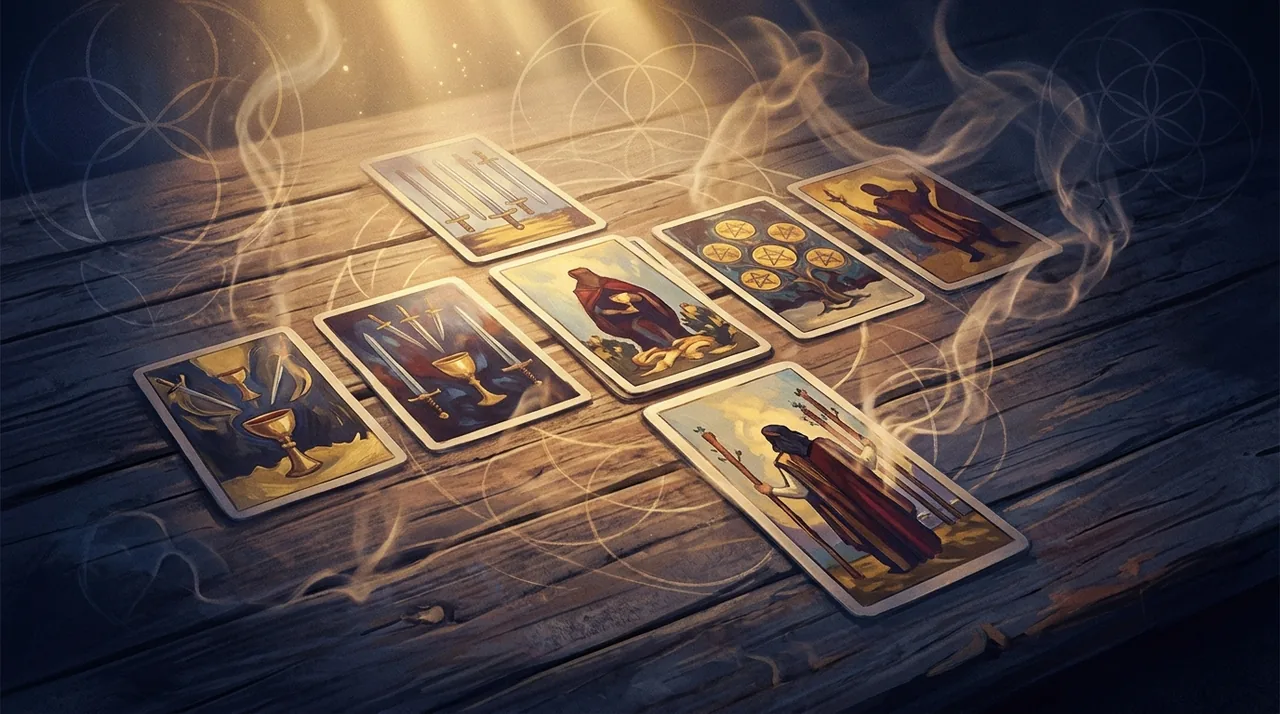
Create a page featuring a daily card, steering clear of repetitive phrases, filled with practical tips and tarot inspirations. Discover how to ensure consistency and uniqueness in your content.
How can you avoid repeating phrases in the title and meta description?
In the title and meta description, it's crucial to avoid repeating phrases. Tradition teaches that uniqueness captures the reader's attention and increases the likelihood of a click. Therefore, consider what synonyms or descriptive phrases can be employed.
For example, instead of “Card of the Day: As Cups” you could write “Daily Card – Ace of Emotions.” Variety in vocabulary keeps the content feeling fresh and less formulaic. It's also wise to ensure that the meta description doesn't feature keywords in a repetitive context.
In practice, when crafting the title and meta description, it's beneficial to use keyword analysis tools that suggest alternative phrases. This helps you avoid duplication and enhances visibility in search results.
What should be included in a unique daily card description?
The daily card description should draw from symbolism, historical context, and personal reflections. Tradition teaches that the card serves as a bridge between consciousness and the subconscious, and its interpretation hinges on the reader's context.
It's important to mention the primary card symbols, their meanings, along with any messages that might resonate with the reader's current life situation. Avoid repetitive phrases like “the card means” or “the card indicates.” Instead, opt for more descriptive phrases, such as “the card symbolizes” or “the card invites reflection.”
The description must be concise yet rich in content. A good Practically speaking, approach is to break it into short paragraphs, each highlighting a different aspect of the card. This way, the reader can more easily absorb the information without feeling overwhelmed by repetitive phrases.
How can you utilize tarot symbolism to craft engaging descriptions?
Tarot symbolism is deep and multi-layered. Tradition says that each card has numerous levels of interpretation that can be leveraged to create distinctive descriptions.
- Consider the historical context: when the card was introduced and what its original meanings were.
- Analyze the imagery: colors, figures, objects – what they signify in culture and psychology.
- Reflect on personal introspection: how the card may resonate with the reader’s daily experiences.
In practice, these elements can be combined to create a description that not only informs but also inspires further contemplation. Remember to avoid repetitive phrases and aim for a diverse vocabulary.
How can you maintain page consistency while steering clear of phrase duplication?
Maintaining consistency in page structure is vital, yet that doesn’t necessitate repeating content. Tradition teaches that a uniform header and paragraph structure is beneficial, while content should remain unique.
In practice, this means:
- Using a consistent writing style – whether formal or friendly, ensure it is cohesive.
- Applying a consistent card description format – e.g., dividing into sections: “Symbolism,” “Daily Life Significance,” “Personal Reflection.”
- Utilizing tags and categories to organize content without reiterating keywords.
It's also advisable to use Ezostylia tools, such as tarot and cards, which provide ready-made structures and prompts for content creation. This helps you avoid unconscious phrase repetition and maintain stylistic consistency.
Which Ezostylia tools can assist in creating daily cards?
Ezostylia offers a suite of tools that facilitate the preparation of a page with a daily card. Tradition teaches that utilizing the full range of resources is essential for creating authentic and valuable content.
Here are a few examples:
By leveraging these tools, you can craft a page that not only captivates readers but also upholds uniqueness and consistency.
Is there an ideal content length for a daily card page?
In practice, the optimal length depends on the page’s purpose and reader expectations. Tradition teaches that concise, clear descriptions are effective, but you can also enrich the content with additional sections if they provide value.
For daily cards, a good compromise is 300–500 words. This length provides enough information for the reader to feel engaged without overwhelming the content with repetitive phrases.
If you're planning longer articles, remember to divide them into sections, use headings, and create lists to enhance readability and maintain consistency.
How can you optimize SEO with a single tarot card?
SEO doesn't have to be complicated. The key, as tradition suggests, is to use relevant keywords, a unique title, a meta description, and internal linking.
In practice, this means:
- When selecting a keyword phrase, for example, “daily tarot” be sure to include it in both the title and the meta description.
- Utilizing tags and categories can aid in indexing.
- Linking to other articles in the section, such as Magical Herbs in Ezostylia, can enhance the value of the page.
- Optimizing images – include alternative text with the keyword phrase.
It's also important to monitor how the page is performing in search results and make small adjustments if needed.
FAQ
Does the daily card predict the future?
Traditionally, tarot is seen as a tool for reflection rather than an exact forecast.
How often should I publish the daily card?
Many believe that daily publication creates a rhythm and allows for continuous observation of symbolism.
Do I need to know the meanings of all the cards?
Many believe that a basic understanding of symbolism is enough, with further exploration done gradually.
Can I use free tarot spreads?
Yes, there are many sites, such as Best online tarot sites, that offer free spreads.
🎴 This content is intended for entertainment and personal reflection. It is not based on scientific evidence.
Everything is free until January 6. If you'd like to support the portal, visit /wesprzyj.
Connect this with another perspective: Mirror — daily reflection (psychology).
Sources
- Esoteric Tradition — tarot symbolism, runes, and numerology passed down through European culture.
- Cultural Symbolism — interpretations of archetypes and signs through a comparative lens.