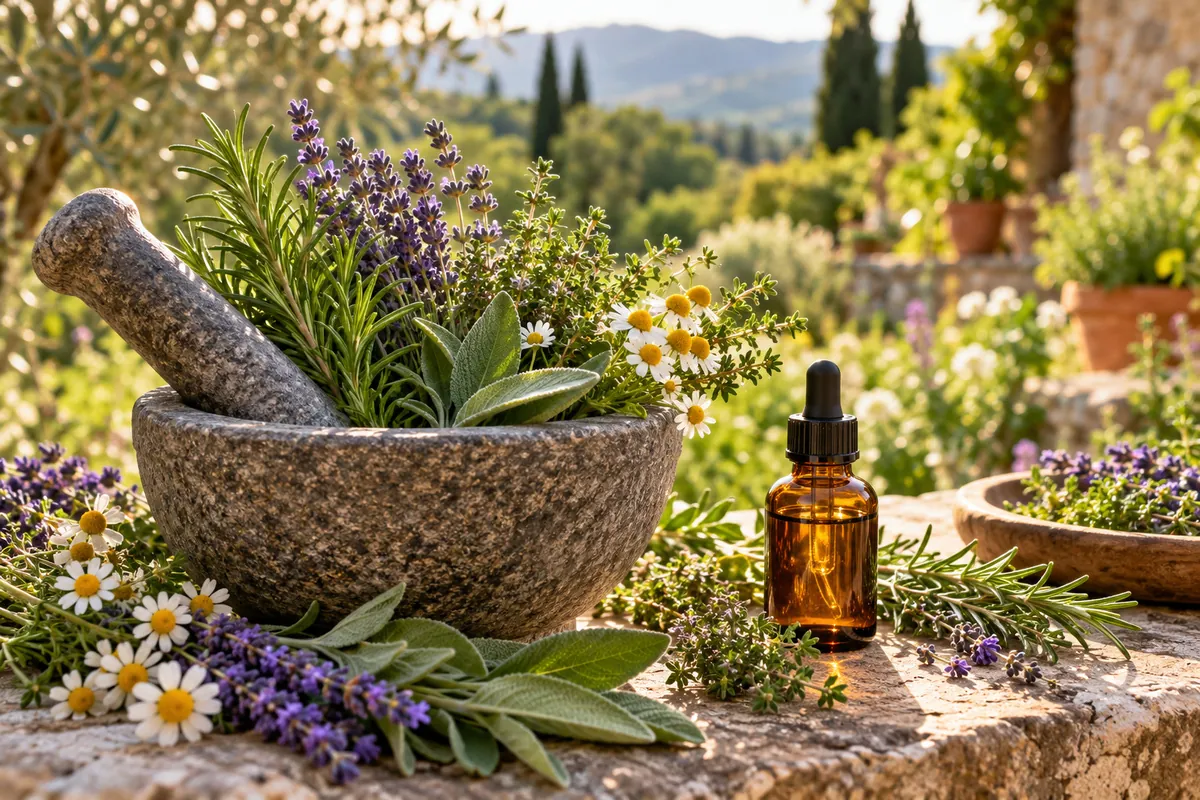
Do you run an herbal shop or a health blog? Discover how to select herbs for an evening infusion to help your readers make safe choices. A practical guide featuring expert insights.
How to Choose Herbs for an Evening Infusion?
Choosing herbs for an evening infusion should be based on their well-known relaxing properties and safety. The most commonly chosen varieties are lemon balm, chamomile, and lavender, which have been embraced for years to enhance sleep and alleviate tension.
Traditional herbal medicine recognizes several groups of plants with calming effects. In practice, herbal teas made from lemon balm, German chamomile, or English lavender are most commonly utilized. Their effects are gentle, and their safety profile is well-documented in scientific literature. However, it is important to remember that tradition alone does not guarantee the absence of drug interactions.
When selecting raw materials, it is essential to pay attention to the botanical species listed on the packaging. Different chamomile species possess unique properties, and confusing them may result in unintended effects. Therefore, always check the Latin botanical name and the country of origin. The quality of herbs directly impacts their effectiveness and safety.
It is also important to consider whether your goal is simply relaxation or if you are targeting a specific issue, such as difficulty falling asleep or nervous tension. Different herbs work better for insomnia, while others are more suited for anxiety. For this reason, before making a purchase, assess your needs in light of specific plant properties. You can refer to our guide on herbs for sleep and stress, which helps make this distinction.
What Does Science Say About the Safety of Evening Herbs?
Science affirms the mild calming properties of numerous herbs, but emphasizes the need for caution when combining them with medications. Lemon balm, chamomile, and lavender are the best documented, boasting a long history of use for alleviating tension.
According to the European Food Safety Authority (EFSA), the safety of herbal supplements depends on dosage, duration of use, and the consumer's overall health status. Not all herbs are suitable for every age group, particularly children, pregnant women, and the elderly. Thus, manufacturers should clearly state contraindications on the packaging.
The US National Center for Complementary and Integrative Health (NCCIH) indicates that herbs are complex products containing multiple active constituents. This means their effects may differ from those of purified chemical compounds. Studies published in the PubMed database indicate that lemon balm can influence the nervous system, although the precise mechanisms are still under investigation.
The European Medicines Agency (EMA) publishes herbal monographs that serve as official guidelines on the use of specific species. It is beneficial to check if a selected herb has such a monograph, as this confirms its traditional use and safety. Detailed information can be found in the EMA herbal monographs..
How to Identify High-Quality Herbal Raw Materials?
Herbal quality is assessed based on appearance, aroma, place of origin, and label information. Quality raw botanical materials should be free from contaminants, mold, and foreign species, with a rich and pleasant aroma.
When purchasing herbs, pay attention to the transparency of the label. It should list both the common and Latin names, country of origin, harvest date, and storage instructions. The lack of this information may indicate that the product comes from an unverified source. It is also advisable to check if the manufacturer provides contact details and a physical address.
The color and texture of leaves or flowers are significant indicators. Raw materials that appear excessively pale or brown may be old or improperly dried. Conversely, a vibrant, fresh aroma signifies preserved essential oils, which are responsible for aromatherapeutic effects and flavor. You can compare the quality of different brands using our herbal directory, where we outline selection criteria.
Avoid purchasing herbs sold in bulk without labeling, unless you are buying them directly from a known, trusted grower. Large supermarkets often face quality control issues in their supply chains. Organic certifications can be beneficial, but they do not eliminate the risk of drug interactions.
Which Herbs Pair Best in an Evening Ritual?
Single species or simple blends with known compatibility yield the best results. Combining too many herbs can make it challenging to assess your body's response and may elevate the risk of adverse reactions.
Lemon balm is often blended with chamomile, as both plants have mild effects and complement each other beautifully. Such an infusion can promote relaxation before sleep while remaining safe for most adults. It is crucial to avoid adding stimulating herbs to this blend, such as certain types of mint that may stimulate digestion without necessarily aiding sleep.
English lavender is a favored ingredient in evening infusions due to its distinctive aroma and gentle action. Research suggests that lavender aromatherapy can affect mood, although its effects from infusions are milder compared to inhalation. Nonetheless, as a tea ingredient, lavender is safe and has a pleasant taste. You can learn more about its properties in the article Lavender: Aromatherapy, Essential Oil, and Infusion — What Science Says..
If you wish to grow your own herbs, keep in mind the light and moisture conditions. Certain species, such as lemon balm, thrive well on a windowsill but require proper care. You will find a detailed guide in our article. How to Grow Herbs on a WindowsillHome cultivation allows you to control the quality of raw materials from start to finish.
When Should You Consult a Specialist About Choosing Herbs?
Consulting a physician or pharmacist is advisable if you are taking prescription medications, have chronic conditions, or are pregnant or breastfeeding. While herbs are not pharmaceuticals, they can interact with pharmacotherapy, affecting drug efficacy or worsening side effects.
Individuals with thyroid disorders should exercise caution with ashwagandha, as research indicates this herb can influence thyroid hormone levels. Similarly, patients taking anticoagulants should avoid herbs that affect blood clotting. A healthcare provider can help choose safe alternatives that won’t interfere with treatment. Detailed information on interactions can be found in our article. Ashwagandha: What Science Says About Stress and Sleep.
Pregnant and breastfeeding women should avoid most herbs with unknown pharmacokinetics. Certain species, like chamomile, have a history of traditional use, but there is insufficient clinical research confirming their safety for these populations. Therefore, it's always best to consult your healthcare provider before using any specific herb. The safety of both mother and child is paramount, and home remedies should not replace medical advice.
If you notice alarming symptoms after consuming an infusion—such as diarrhea, a rash, or shortness of breath—stop using it immediately and seek medical attention. Allergic reactions to herbs are rare but possible, particularly in individuals with known allergies to plants in the Asteraceae family. Herbs for evening infusions should provide supportive benefits, not lead to health complaints. For general information on botanical properties, visit our guide to herbs and their properties..
FAQ
Can you drink sleep herbs daily?
This depends on the specific plant and individual tolerance. Most gentle herbs, such as chamomile, can be consumed regularly, but it's advisable to take periodic breaks to avoid becoming overly dependent on a single remedy. If in doubt, consult a pharmacist about recommended durations of use.
How should you brew herbs to preserve their properties?
Generally, brewing at approximately 80–90 degrees Celsius for 10–15 minutes is recommended. Water that is too hot can degrade delicate essential oils, while an overly short steep will fail to extract all the active compounds. Always check the manufacturer's instructions on the package.
Can I mix different herbs in one infusion?
Yes, but it is best to combine herbs with complementary actions and established safety profiles. Avoid mixing potent herbs with medications without professional guidance. Simple blends, such as lemon balm and chamomile, are safer than complex multi-ingredient formulas.
Where should you buy high-quality herbs?
Preferably from pharmacies, health food stores, or trusted online suppliers that provide comprehensive sourcing and quality information. Avoid anonymous market vendors or online sellers lacking appropriate certification. Also, make sure that the product has an expiration date and clear labeling.
Sources
- EFSA – Food and Supplement Safety Link
- NCCIH (NIH) – Herbs at a Glance Link
- EMA – Herbal Monographs Link
- PubMed – Publication Search Link