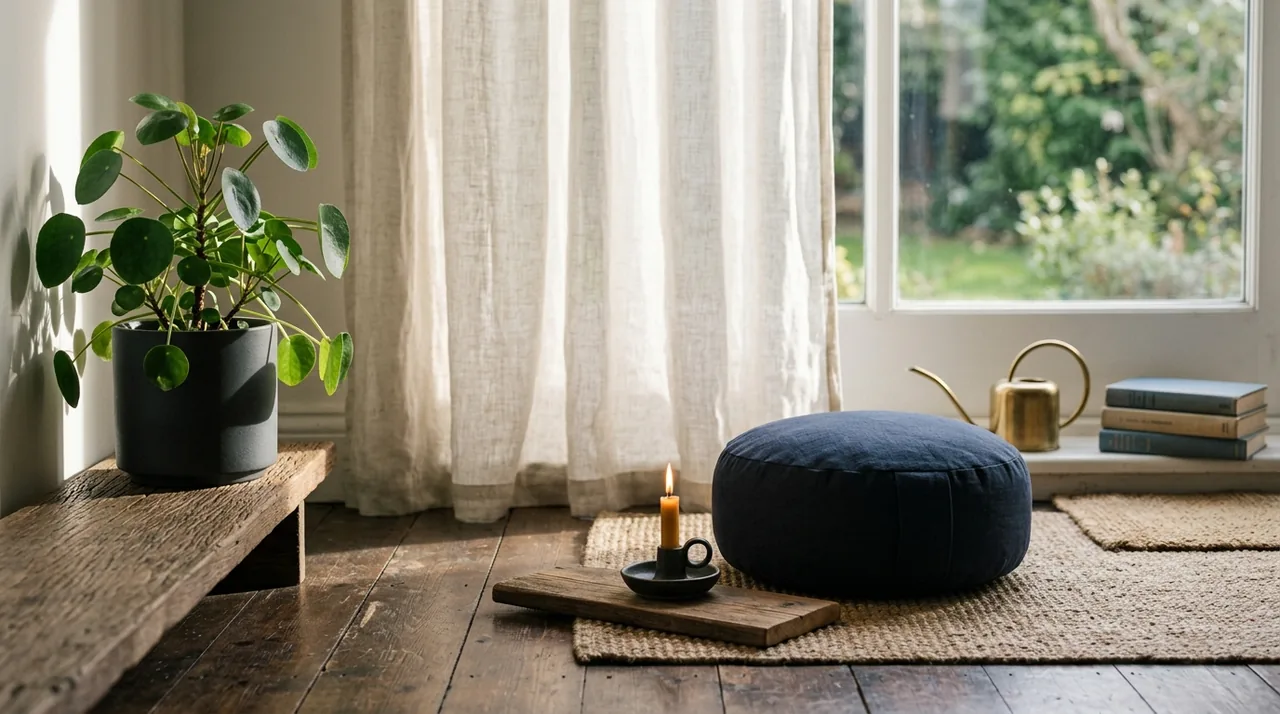
Mindfulness doesn’t require a meditation cushion or an extra hour in your schedule. Discover how to integrate mindfulness, breath, and relaxation into your ordinary daily activities.
Mindfulness in everyday activities is a practice that fits seamlessly into the flow of an ordinary day.
Mindfulness is often associated with sitting in silence, closing your eyes, and engaging in formal meditation. While this is indeed an important aspect of the practice, it’s not the only way to cultivate mindfulness. In daily life, you can also develop mindfulness while washing dishes, sipping tea, taking a walk, working on a computer, or conversing with someone. This is precisely when mindfulness becomes most beneficial, helping you return to the present moment instead of operating on autopilot.
From a scientific perspective, mindfulness is typically defined as the conscious direction of attention to present-moment experiences with an attitude of acceptance, free from automatic judgment. The American Psychological Association (APA) underscores that mindfulness practices can aid in stress reduction and enhance self-regulation, although they are not a miracle cure-all and cannot substitute for professional help when needed. Meanwhile, the National Center for Complementary and Integrative Health (NCCIH) at the NIH points out that meditation and mindfulness may enhance mental well-being and relaxation, though the benefits can vary from person to person and depend on the regularity of the practice.
This is essential if you feel overwhelmed and think you lack time for lengthy meditation sessions. Mindfulness in everyday activities isn't about adding another task to your to-do list; it's about transforming the quality of your attention. You engage in the same activity, but more slowly, more mindfully, and with a deeper connection to your breath, body, and surroundings.
Why Everyday Mindfulness Works
When you act on autopilot, your mind can easily drift to the past or the future, which is a natural tendency. However, research on meditation and mindfulness reveals that training your attention can enhance concentration, relaxation, and self-awareness. A systematic review published in Frontiers in Psychology in 2019 indicated that mindfulness practices may improve certain aspects of attention and working memory, although the authors caution that the quality of studies varies and results aren't always consistent.
In practice, this means something quite simple. If you pause several times a day for a conscious breath and return to one specific activity, you’ll find it becomes easier to recognize tension in your shoulders, racing thoughts, or distractions at work. This creates a small space between stimulus and reaction, allowing you to choose whether to continue rushing or to slow down.
A meta-analysis published in JAMA Internal Medicine by Goyal and colleagues in 2014 found moderate evidence that meditation programs may help alleviate symptoms of anxiety, stress, and low mood. This doesn't imply that just a few mindful breaths will resolve complex mental health challenges. However, it does suggest that meditation and mindfulness are practical tools that can support everyday attention hygiene and relaxation.
Where to Begin If You Don't Have Time for Formal Meditation
The best way to start is simple. Pick one everyday activity that you already do. Don’t attempt to engage in mindfulness for everything at once, as that can quickly lead to pressure. A small, achievable practice is far more effective than an ambitious plan that might only last a few days.
- Choose one activity, such as your morning coffee, brushing your teeth, or arriving at work.
- Link it with a simple cue, like touching your mug or the doorknob.
- Pause for three conscious breaths.
- Tune into your senses: notice what you see, hear, and feel in your body.
- When your mind wanders, gently redirect your attention back to the activity.
This is meditation in motion. You don't require perfect silence; what you need is the intention to return to the present moment. If you wish, you can enhance your practice with simple tools such as a meditation timer, short sessions in the meditation zone, or guided exercises on the breath page.
Mindfulness While Eating, Walking, and Working
Eating provides one of the best opportunities to cultivate mindfulness. Instead of eating in front of a screen, consider spending a few moments simply enjoying your meal. Pay attention to the aroma, temperature, texture, and your pace of chewing. This isn't about dieting or control; it's an exercise in presence. In many mindfulness programs, mindful eating is a foundational practice because it quickly highlights how often we operate on autopilot.
Walking also effectively fosters mindfulness. It doesn't need to be an extended walk. For five minutes, concentrate on your steps, the sensation of your feet connecting with the ground, and the rhythm of your breath. When you notice that your thoughts have wandered off to various tasks, simply return your focus to your body. A mindful walk can serve as a brief reset for both your nervous system and your concentration.
In the context of work, mindfulness can be particularly valuable. Multitasking may seem efficient, but psychological research has long demonstrated that frequent shifts in attention degrade the quality of your concentration. Mindfulness won't stop the world from demanding quick responses, but it can help you recognize when you're being bombarded by too many stimuli at once. Before opening another browser tab, take a calm breath. Before sending an important message, read it over one more time, slowly. These small pauses enhance the quality of your presence.
- While eating, concentrate on taste and smell for the first three bites.
- While walking, count ten steps during each inhale and exhale without forcing the rhythm.
- At work, set reminders every 60 or 90 minutes for a short relaxation and breathing break.
- During conversations, look at the other person and refrain from planning your response while they are still speaking.
- In the evening, set your phone aside for a few minutes and check in with how your body feels.
The Role of Breath: The Simplest Anchor for Attention
Breath is one of the most accessible anchors for mindfulness. You don’t need to alter your breathing in any special way to practice mindfulness. Just noticing it is enough. Feel the air at your nostrils, the movement of your chest, the expansion of your belly. That’s all it takes to redirect yourself from the rush of thoughts back to what is truly happening right now.
The NCCIH at NIH highlights that many meditation practices center around the breath. There's good reason for this. Focusing on the breath is simple, neutral, and can be practiced almost anywhere. However, it's important to remember that for some individuals, intense focus on the breath can be temporarily uncomfortable, especially in the presence of strong tension or certain mental health challenges. In such cases, it may be more beneficial to focus on sounds, the feeling of your feet on the ground, or visual stimuli.
If you're looking for a straightforward exercise, try this sequence. Sit comfortably and notice your natural inhale and exhale. Count to four on the inhale and to four on the exhale, without tensing any part of your body. Repeat this five times. Then, let go of the counting and simply observe. These few moments can help support relaxation and concentration before a meeting, after work, or just before sleep.
The most common obstacles and how to navigate them without pressure
The biggest hurdle is often not a lack of time, but the expectation that meditation will instantly quiet the mind. However, the aim of mindfulness is not to eliminate thoughts. Instead, it is to recognize when thoughts arise and gently guide your attention back to the present experience. This is a subtle yet vital difference.
The second challenge is self-judgment. Many people feel they can't practice mindfulness because they become distracted. In reality, the moment you notice your distraction is precisely the moment of practice. Every time you redirect your focus, you strengthen your concentration. This approach cultivates attention not through perfection, but through repetition.
The third barrier is boredom. When you engage in an activity more slowly and quietly, your mind may protest. This is perfectly normal. You don’t need to fight it. Acknowledge boredom as just another experience. Where do you feel it in your body? What thoughts accompany it? By doing so, even discomfort can become a part of your meditation and mindfulness practice.
How to establish a mindfulness habit without added pressure
The easiest way to form a habit is to link it to something you already do. Habit psychology has long shown that context and a repeated cue are more influential than motivation alone. So, instead of committing to meditate for half an hour every day starting tomorrow, try beginning with just one minute of conscious breathing after you wake up or before lunch.
A very brief checklist can also be helpful:
- the same time of day,
- the same trigger activity,
- the same simple practice,
- no judgment of results during the first week.
If you wish to deepen your practice, consider incorporating short sessions from the meditation catalog or adding a soothing background, for instance, binaural soundswhile keeping in mind that research on their effects is inconclusive and they do not replace the mindfulness practice itself. Some individuals also benefit from calm repetitions of words or sounds, so it may be worthwhile to explore mantras if that method aids your relaxation and focus.
What you may realistically observe after a few weeks
Typically, the initial effects are not dramatic, but rather practical. You’ll notice tension in your body sooner. You will catch the moment when your breath becomes shallow with greater frequency. It becomes easier to recognize when you are on autopilot. These may seem like small signals, but they are precisely what contributes to a larger transformation in your quality of life.
According to the APA, regular mindfulness meditation may enhance stress management. Reviews of research also indicate benefits for concentration and overall well-being, though the extent of these effects can vary based on the method, duration of practice, and individual differences. Thus, it is valuable to approach mindfulness as a form of training rather than a one-time relaxation technique. Sometimes it provides swift relief, while other times it primarily fosters steadiness of attention and a deeper awareness of daily reactions.
The most important thing is that mindfulness in daily activities does not disconnect you from life. On the contrary, it encourages you to engage in life more fully. When you drink tea, you truly savor it. When you listen, you genuinely hear. When you breathe, you realign with yourself. In this sense, mindfulness is not an add-on to your day; it can evolve into a way of living.
This material is educational and does not replace professional advice from a doctor, psychologist, or psychotherapist. If you're experiencing severe stress, anxiety, insomnia, or other health issues, please seek the guidance of a specialist.
Sources
- American Psychological Association, Mindfulness Meditation: A Research-Proven Way to Reduce Stress, 2019, https://www.apa.org/topics/mindfulness/meditation
- National Center for Complementary and Integrative Health, NIH, Meditation and Mindfulness: Effectiveness and Safety, 2021, https://www.nccih.nih.gov/health/meditation-and-mindfulness-effectiveness-and-safety
- Goyal M. et al., Meditation programs for psychological stress and well-being: a systematic review and meta-analysis, JAMA Internal Medicine, 2014, https://jamanetwork.com/journals/jamainternalmedicine/fullarticle/1809754
- Frontiers in Psychology, The Effects of Mindfulness Meditation on Attention, Cognitive Flexibility, and Working Memory: A Systematic Review of Neurocognitive Studies, 2019, https://www.frontiersin.org/articles/10.3389/fpsyg.2019.02045/full
- Cochrane, Mindfulness-based stress reduction for healthy individuals: systematic review, 2020
FAQ
Is mindfulness the same as meditation?
Not exactly. Meditation is a formal practice, whereas mindfulness can also be cultivated through ordinary activities. Both support concentration, breath awareness, and relaxation, but they are not the same.
How much time per day do you need for mindfulness to be effective?
Even 1 to 3 minutes several times a day can be a great starting point. Consistency is key. Research suggests that the benefits of practice are more closely linked to regularity than to infrequent, lengthy sessions.
What should you do when your thoughts keep wandering during practice?
This is completely normal. In mindfulness, the aim is not to have no thoughts, but to become aware of distractions and gently return your focus to your breath, your body, or the activity at hand. Each return is a part of the training.
Is mindfulness suitable for everyone?
For many, it serves as a valuable tool for promoting relaxation and focus, but it doesn’t always yield the same results for everyone. If the practice increases discomfort or you are experiencing mental health challenges, it’s advisable to consult a specialist and find an approach that best fits your needs.