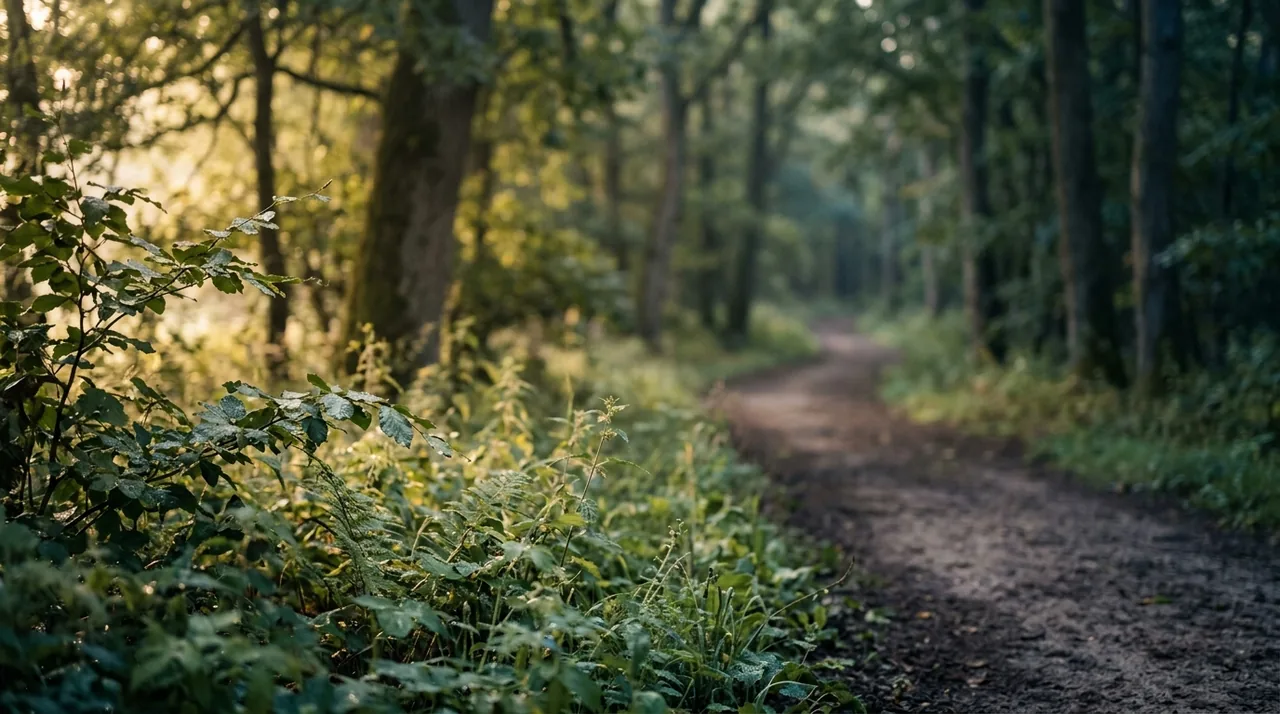
A morning walk is a simple way to support a healthier circadian rhythm, promote a calmer evening, and deepen your connection with nature. Understand how dawn light affects the body and how to incorporate this habit into your daily routine.
Dawn walks: how morning light influences your circadian rhythm
There’s something about dawn that’s hard to replicate at any other time of day. The air is often cooler, nature awakens gradually, and the light is soft yet clearly signals to your body that the day is starting. If you’re interested in nature, the changing seasons, and daily rituals that promote wellbeing, a morning walk is one of the simplest and most well-researched habits you can adopt, without needing a complicated plan or expensive equipment.
As stated by the National Institute of General Medical Sciences, the circadian rhythm is an internal system that operates on a roughly 24-hour cycle, regulating various processes including sleep, wakefulness, body temperature, and hormone secretion. A crucial signal for this system is light, particularly daylight reaching your eyes in the morning. This is why a dawn walk, whether in a park, a meadow, by water, or through a tranquil forest, can influence not only how you feel in the moment, but also the quality of your evening wind-down.
In this article, we’ll explore what research reveals about morning light, how to incorporate a nature walk into your routine, and how to tailor this habit to the changing seasons, the weather, and your own lifestyle. This content is educational and should not replace a consultation with a specialist, especially if you are dealing with chronic sleep issues or mental health concerns.
The importance of morning light for the body
In simple terms, your body needs cues to tell when it is day and when it is night. According to NIGMS (2023), the circadian rhythm is synchronized by external signals, the most significant of which is light. When you step outside for a morning walk and expose yourself to natural light, your brain receives a powerful signal about the time of day. This helps to stabilize your waking and sleeping patterns more effectively than relying solely on artificial light at home.
Harvard Medical School’s Division of Sleep Medicine emphasizes that light exerts a profound effect on the internal biological clock. It’s about more than just intensity; timing also plays a crucial role. Morning light encourages the body to shift towards an earlier activity schedule, while bright light in the evening may delay your readiness for sleep. Practically speaking, this means a morning walk can help you establish a more natural daily rhythm, whereas late-night exposure to bright screens might weaken that benefit.
Additionally, natural outdoor light is often much more intense than typical indoor lighting, even on cloudy days. This is why spending just a few minutes in nature can feel quite different from sitting beside a window. If your goal is to support your circadian rhythm, stepping outside and letting nature be part of your morning routine is your best bet.
Dawn walks, sleep, energy, and focus
Many people find that after a morning outing, waking up feels easier, and they tend to feel sleepy earlier in the evening. Research on circadian rhythms indeed supports the idea that the timing of light exposure is crucial for the sleep-wake cycle. A review article published in PNAS by Huberman, Figueiro, and colleagues (2022) suggests that bright morning light is an essential tool for shifting and stabilizing circadian rhythms.
Of course, this doesn’t mean that a single walk will resolve all sleep issues. If you’re sleep-deprived, work shifts, experience high levels of stress, or have irregular bedtimes, simply spending time in nature won’t serve as a miracle cure. However, it can provide valuable support, especially when the walk is regular, happens as early as possible, and is combined with reducing bright light exposure later in the evening.
In daily practice, many also notice an improvement in focus. This can stem from the effect of light on alertness during the early hours of the day as well as from the act of moving and having a calmer start to daily tasks. A dawn walk doesn’t need to be an intense workout; sometimes just 15 to 30 minutes of easy strolling is sufficient, ideally in an environment where nature is genuinely present, surrounded by trees, grass, birdsong, or open spaces.
Nature, forest, and greenery: an added dimension to your morning walk
While morning light is one factor, the location is equally important. According to WHO Europe (2016), urban green spaces contribute to health and wellbeing by making physical activity, social interactions, and mental recovery more accessible. A systematic review and meta-analysis by Twohig-Bennett and Jones (2018) also indicates that exposure to green spaces is linked to numerous health benefits, although the extent of these effects may vary based on context and study quality.
For someone attuned to nature, this means something quite straightforward. If you have the opportunity, consider taking your morning walk in a place where nature feels more immediate. A forest, park, riverside path, tree-lined avenue, botanical garden, or a quiet area on the outskirts of town will typically offer more soothing stimuli than a busy street. It’s not about achieving perfection; it’s about allowing nature to be present in your sights, sounds, and breath.
If you enjoy exploring new routes, you can check the map of interesting places and seek out spots where nature awakens especially beautifully. A beneficial addition to your daily ritual might also be tracking the cycles of nature, not to stray from reality, but to encourage a deeper observation of the changes in light, the length of the day, and the transformations in the landscape.
How long should you walk in the morning for it to be effective?
Research does not indicate a universal number of minutes that suits everyone, as factors such as season, cloud cover, latitude, and individual sensitivity come into play. In practice, sleep experts often highlight the importance of regularly exposing yourself to natural light in the morning. The most sensible approach is straightforward: get outside as soon as you can after waking and remain outside for as long as your day realistically allows.
As a guideline, consider the following durations:
- 10 to 15 minutes on a bright, sunny morning,
- 20 to 30 minutes when it’s cloudy,
- a longer walk in winter, when there is less light and the day begins later.
These are not rigid medical guidelines, but rather a practical approach to building the habit in alignment with our understanding of daylight and the circadian rhythm. Consistency is key. A short walk every day is generally more beneficial than a long walk once a week.
If you live near green spaces, be sure to explore the inspiration available in the Nature section. You'll find ideas connected to seasonality, nature observation, and simple outdoor mindfulness rituals.
Seasonality is important; walking feels different in the summer compared to winter.
Being in nature teaches us humility in the face of seasonal changes. In summer, dawn breaks early, while in winter, it arrives much later. In the colder months, many people leave home in darkness and return after sunset. This is precisely when consciously seeking daylight becomes especially vital. Even if you can't walk exactly at dawn, it's worth heading out as early as possible in the morning, as soon as natural light appears.
Seasonality also influences the experience of the walk itself. In spring and summer, nature offers a plethora of stimuli, including scents, sounds, and colors. In autumn and winter, the landscape may be more austere, but daylight remains crucial for the circadian rhythm. If you wish to deepen your awareness, pay attention to the hues of the morning and their impact on your mood, for instance, through inspiration related to colors in nature..
It's wise to adapt your clothing and route to the weather conditions. When it's cold, opt for a shorter loop close to home. During hot summer days, dawn may be the ideal time for a walk in the forest or across open meadows. Nature doesn't demand heroics; it simply seeks consistent connection.
What to do during a walk to truly feel nature?
A morning walk shouldn't feel like just another task to complete. To derive more from it, integrate light, movement, and awareness. It's not about complicated techniques; it's about gently focusing your attention on your surroundings.
- Walk slowly for the first few minutes and allow your eyes to adjust to the light.
- Notice the temperature of the air, the scent of the earth, the moisture in the grass, and the sounds of birds.
- Look far ahead, not just at your feet or your phone.
- If possible, choose a route through a forest, park, or any space where nature feels alive.
- After your walk, avoid rushing back into high-intensity stimulation; take a few calm minutes to start your day.
In this way, a walk becomes not just an exposure to light, but also a practice of connecting with nature. For many, this is precisely what makes the habit sustainable. You’re not doing it solely for your biological clock but also for your relationship with nature and with yourself.
Should you combine a morning walk with herbs and a daily ritual?
In the Nature section, herbs are hard to overlook, but it's important to stick to the facts. Herbs cannot replace morning light, which is the primary signal for the circadian rhythm. However, they can create a pleasant environment for the habit. A warm infusion after returning from a walk, the scent of mint in your garden, observing seasonal plants along your route—these all reinforce the sense of being rooted in nature and seasonality.
If you walk regularly, consider keeping a simple observation journal. Note the time you left, the weather conditions, whether you walked through the forest, which herbs or plants you noticed, and how you felt in the evening. This type of record isn't a scientific study, but it can help you identify your own patterns. Often, after just two weeks, you'll notice that starting the day becomes easier, and nature transforms into something more than just a backdrop outside your window.
If you enjoy closely observing the animal world as a marker of the changing seasons, take a look at materials about animals and their rhythms.It's a captivating way to feel the seasonality and the daily pulse of nature on a deeper level.
The most common mistakes that diminish the effects of morning light
Even the best intentions can lose their power if the habit isn't consistent. Here are the most common pitfalls:
- replacing going outside with sitting by a window,
- starting the day very late on weekends,
- exposing yourself to bright screens late in the evening,
- choosing a route that causes you more stress than calmness,
- expecting immediate results after just one walk.
The circadian rhythm thrives on repetition. If you want to assess whether morning walks work for you, try them for at least 10 to 14 days. Ideally, maintain a similar time, follow a consistent pattern, and simply observe how your sleep, energy levels, and mood respond.
Conclusion: a small ritual, a big impact
A dawn walk is one of those activities where nature harmonizes with human physiology in a very practical manner. Morning light helps establish the circadian rhythm, and connecting with nature can enhance well-being and mental recovery. You don’t need perfect conditions; you just need to step outside, soak up the light, breathe in the cool air, and for a moment, be reminded by the forest, park, trees, and open spaces of what time of day it is.
If you're looking to begin, choose the simplest possible version for tomorrow. Consider ten minutes of walking in your area, keeping your phone away, and directing your attention towards nature. Then observe how this small movement influences the rest of your day. That’s how a lasting bond with nature is formed—not through grand declarations, but through regular, quiet moments with light and seasonality.
FAQ
Does a dawn walk have to occur exactly at sunrise?
No. It's best to go out as early as possible after waking, once there's natural light. The precise minute of sunrise isn't essential; what truly matters is consistent exposure to daylight.
Does a cloudy morning walk still hold value?
Yes. Even on overcast days, outdoor light can be stronger than typical indoor lighting. Therefore, a morning walk in nature can continue to support your circadian rhythm.
How long should you walk to notice a difference?
It varies from person to person, but many people start with 10 to 30 minutes a day. Consistency over several days is more significant than a single long walk.
Is it better to go to the forest, or is a regular park sufficient?
Both can be excellent options. A forest often offers a deeper sense of immersion in nature, while a park also allows for interaction with greenery and morning light. Ultimately, the best place is the one you can genuinely return to on a regular basis.
Sources
- National Institute of General Medical Sciences, Circadian Rhythms Fact Sheet, 2023, https://www.nigms.nih.gov/education/fact-sheets/Pages/circadian-rhythms.aspx
- Harvard Medical School, Division of Sleep Medicine, Blue Light Has a Dark Side, 2020, https://healthysleep.med.harvard.edu/healthy/science/what/blue-light-has-a-dark-side
- Huberman MA, Figueiro MG, et al., Viewpoint: Time of day dictates how much you should look at bright light to shift circadian rhythms, PNAS, 2022, https://www.pnas.org/doi/10.1073/pnas.2209426119
- World Health Organization Regional Office for Europe, Urban green spaces and health, a review of evidence, 2016, https://www.who.int/europe/publications/i/item/9789289052498
- Twohig-Bennett C, Jones A., The health benefits of the great outdoors: A systematic review and meta-analysis of greenspace exposure, Environmental Research, 2018, https://pubmed.ncbi.nlm.nih.gov/29887382/