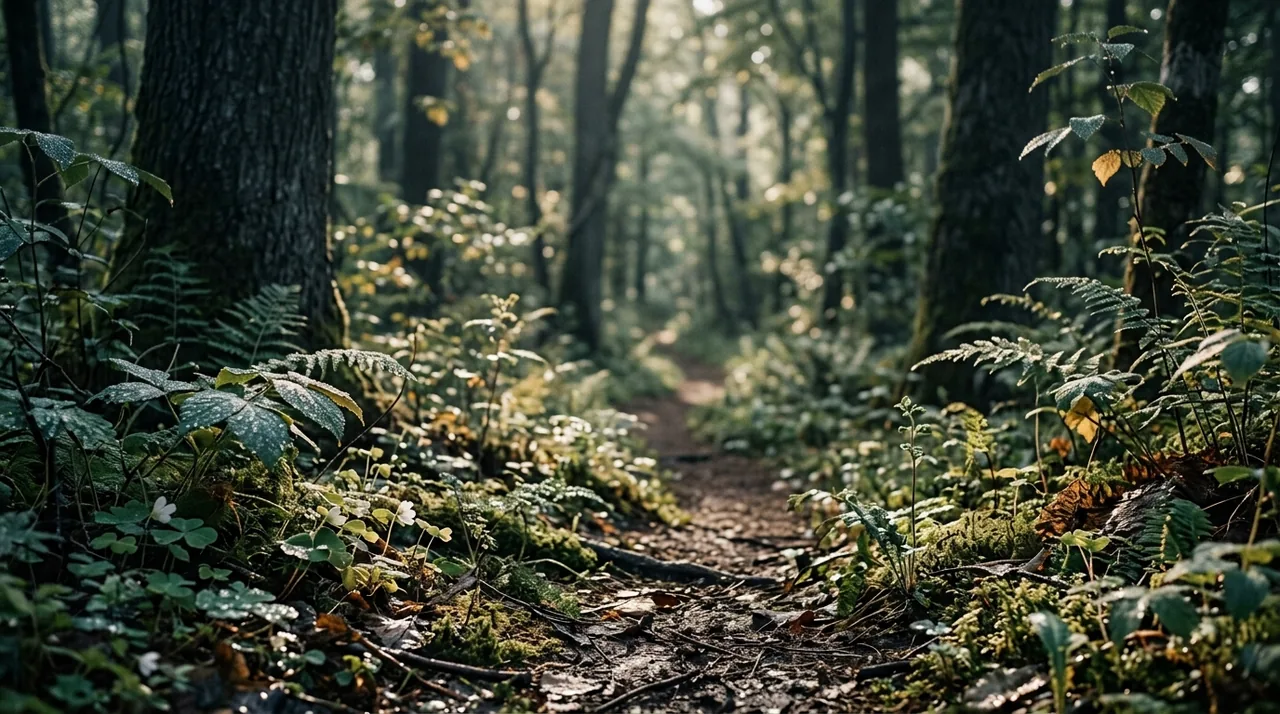
Forest bathing, known as shinrin-yoku, is more than just an ordinary walk. Discover what research and studies reveal about the benefits of being in a forest, engaging with nature, and practicing mindful contact with the natural world.
Forest bathing: what it is and its documented effects
Forest bathing, or shinrin-yoku, does not involve bathing in water. It is a mindful, serene walk in the forest or another nature-rich environment, with the intention of consciously connecting with nature. This practice originated in Japan, and today it is increasingly discussed in studies on well-being, stress, and public health. If you feel that the pace of everyday life pulls you away from the rhythm of nature, the forest can be a simple way to regain your breath, focus, and inner peace.
It's important to distinguish between trends and facts. According to the 2017 review by Hansen, Jones, and Tocchini in International Journal of Environmental Research and Public Health, research on shinrin-yoku indicates a positive effect of forest contact on mental well-being and certain physiological indicators, such as heart rate or blood pressure. However, the authors emphasize that some studies had small sample sizes, so forest bathing should not be seen as a substitute for medical treatment. This is significant because while nature can support well-being, it does not make medical claims.
In Ezostylia's Nature section, we explore this topic in a practical way. The forest, walking, seasonality, and mindful presence are resources available to many without complicated tools. If you wish to expand your outdoor inspiration, also take a look at the Nature section, check out the map of places for trips and walks, or explore articles about animals and their natural habitats..
What shinrin-yoku looks like in practice
Simply put, it involves an unhurried walk. It’s not about fitness goals, step counts, or pace. It’s about connecting with nature through all your senses. Practically, you can slow your pace, let your gaze rest on the texture of the bark, listen to the wind, and recognize the earthy scents of damp soil, pine needles, or herbs growing along the path. Such a walk can serve as a soothing antidote to the overstimulation of everyday life.
The 2017 review by Hansen and co-authors notes that shinrin-yoku is typically described as immersing oneself in the forest atmosphere. What matters is not just movement and fresh air, but also the quality of your surroundings. Nature operates differently from dense urban environments, as it presents fewer aggressive stimuli and can facilitate what’s known as attention restoration. This aligns with environmental psychology, although specific mechanisms are still under investigation.
What research reveals about the forest's impact on stress and well-being
One of the most frequently examined topics is stress. According to a systematic review and meta-analysis by Kotera, Richardson, and Sheffield published in 2022, shinrin-yoku was linked to improved mood and reduced perceived stress levels. The authors note that the quality of the studies varied and that the protocols were not always identical. Nonetheless, the overall trend of the results is clear: contact with nature, especially forests, can be beneficial for mental well-being.
An interesting context is provided by the 2015 study by Bratman and co-authors published in PNAS. Participants who walked in a natural environment exhibited lower levels of rumination—persistent dwelling on negative thoughts—compared to those walking in a bustling urban setting. Though it wasn't strictly a study on shinrin-yoku, it clearly demonstrates that nature can positively influence mental equilibrium.
From a practical standpoint, this means that a simple walk in the forest can be more than just physical exercise. When you slow down, put your phone away, and consciously engage with your surroundings, you grant yourself the opportunity for real mental rejuvenation. For many, this represents the easiest form of connecting with nature, requiring no special preparation.
Physiological effects: heart rate, blood pressure, tension
Research on forest bathing often includes physiological indicators as well. The 2010 study by Park and co-authors published in Environmental Health and Preventive Medicine, reported lower cortisol levels, heart rates, and blood pressure in some participants after spending time in a forest compared to an urban environment. While these findings are intriguing, they should be approached with caution. Responses can vary significantly from person to person, and a single walk does not resolve chronic health issues.
On a broader scale, a similar trend is confirmed by the 2018 meta-analysis by Twohig-Bennett and Jones in Environmental Research. The authors analyzed exposure to greenspaces—not solely forests—and found that contact with greenery was linked to a range of positive health outcomes. Because it was a comprehensive analysis covering various types of green spaces and study designs, it does not provide a straightforward recipe for how many minutes in the forest yield specific benefits. However, it does reveal something important: regular interaction with nature is vital.
Why the forest feels different from a regular urban walk
A walk in itself is valuable, but the environment plays a crucial role. According to the WHO Regional Office for Europe report Urban green spaces and health from 2016, green spaces in cities can enhance health, reduce stress, and promote physical activity. The forest is a special type of green space, as it typically provides a wider variety of natural stimuli, tranquility, shade, a unique microclimate, and a more profound connection with nature.
It is also a place where the changes of the seasons are more palpable. In spring, you’ll notice the emergence of young leaves and herbs; in summer, the lush density of greenery and the cool refuge beneath the tree canopies; in autumn, the rhythmic falling of leaves and the vibrant hues of color; in winter, the open structure of the forest and the tranquility of the landscape. Here, seasonality is not merely decorative. It offers a genuine experience of change that refocuses your attention and guides you back to the simpler rhythms of the day.
How to practice forest bathing in a meaningful way
You don't need to turn it into an elaborate ritual. A straightforward plan is effective and allows you to connect with nature without the pressure of attaining results. If you wish, you can view such a walk as a regular wellness practice, as natural as drinking water or sleeping.
- Choose a location, ideally a forest, a woodland park, or a peaceful trail filled with trees.
- Set aside at least 30 to 60 minutes, without rushing and without intending to exercise.
- Silence your phone or tuck it away in your backpack to minimize distractions.
- Walk more slowly than usual. Every few minutes, pause and take a look around.
- Engage your senses: see, listen, touch textures, and notice scents; nature provides an abundance here.
- Pay attention to the seasons; you'll notice different details in spring, after rain, or at the end of summer.
- After your walk, observe how your body and mind feel. Avoid judgment; simply observe.
If you are interested in the rhythms of the months and planning walks according to the seasons, content about monthly cycles and nature's changes may also be beneficial. Practically speaking, this is a reminder that nature exists in cycles, and you can tailor your outings to align with them.
The significance of the senses, herbs, and seasonality in the forest experience
In conversations about forest bathing, people often overlook how crucial specific stimuli can be. Nature operates as an integrated whole. The scent of resin, the dampness of fallen leaves, water mint growing by a ditch, or a herb along a path can evoke memories and associations that enhance your sense of presence. This isn't about collecting everything in your path or consuming plants without knowledge. It's about being present with nature and attuning yourself to its rhythms.
From a practitioner's perspective, it is seasonality that lends depth to this method of walking. In spring, there's an easy surge of energy; in autumn, a sense of calm and acceptance of a slower pace. The forest teaches us that change is a natural part of life. For many, this simple connection with nature provides more order to daily life than another barrage of screen-based stimuli.
- Spring invites you to witness the resurgence of greenery and the melodies of birds.
- Summer presents cool shade, the aroma of a sun-warmed forest, and the opportunity for longer, unhurried walks.
- Autumn enhances your experience of color, texture, and the cyclical essence of life.
- Winter brings lessons of silence, the simplicity of the landscape, and a focus on breath and movement.
What to remember: explore limitations and employ common sense
While the findings are encouraging, it's important not to oversimplify. Research on shinrin-yoku is still evolving, and not all studies hold equal merit. Some involve small groups, brief interventions, or differing methodologies. So, to be fair, the most credible conclusion is that regular interaction with nature and green spaces supports well-being, and the forest offers a uniquely enriching environment for calm walking and rejuvenation.
If you experience chronic illness, anxiety, depression, or circulation issues, consider forest bathing as a complement to a healthy lifestyle rather than a substitute for professional care. This text is for educational purposes and should not replace medical or psychological advice. Also, prioritize safety, wear appropriate footwear, stay hydrated, protect yourself against ticks, and choose routes that suit your abilities.
How to integrate the forest into your daily life without pressure
The true benefit of forest bathing arises from consistency, not from one-time efforts. You don’t need to plan an all-day excursion right away. Sometimes, a single calm walk per week, the same trail experienced through various seasons, along with a few minutes of mindful observation, is sufficient. Over time, you’ll realize that nature transitions from being a mere backdrop to being a genuine support for focus and rejuvenation.
If you reside in a city, seek out the nearest green spaces, urban forests, riverside paths, or edges of town. The WHO emphasizes that urban green areas are important for public health. When you have the option, choose the forest. When it’s not available, opt for whatever nature you can access. This practical approach is more realistic and, in the long term, more effective.
Forest bathing doesn't require perfect conditions. It calls for a willingness to embrace simplicity, quietness, and a slower pace. In a world filled with haste, such a walk can sometimes be the most tangible form of self-care. Nature does not do everything for you, but it creates an environment where reconnecting with your body, breath, and awareness is much easier.
Sources
- World Health Organization, Regional Office for Europe, Urban green spaces and health2016, https://www.who.int/europe/publications/i/item/9789289052498
- Twohig-Bennett C, Jones A, The health benefits of the great outdoors: A systematic review and meta-analysis of greenspace exposureEnvironmental Research, 2018, https://pubmed.ncbi.nlm.nih.gov/29887310/
- Hansen MM, Jones R, Tocchini K, Shinrin-Yoku (Forest Bathing) and Nature Therapy: A State-of-the-Art ReviewInternational Journal of Environmental Research and Public Health, 2017, https://www.ncbi.nlm.nih.gov/pmc/articles/PMC5580555/
- Kotera Y, Richardson M, Sheffield D, Effects of Shinrin-Yoku on Mental Health: A Systematic Review and Meta-analysis2022, https://link.springer.com/article/10.1007/s11469-020-00363-4
- Bratman GN et al., Nature experience reduces rumination and subgenual prefrontal cortex activationPNAS, 2015, https://www.pnas.org/doi/10.1073/pnas.1510459112
- Park BJ et al., The physiological effects of Shinrin-yoku, Environmental Health and Preventive Medicine, 2010, https://pubmed.ncbi.nlm.nih.gov/19568835/
FAQ
Is forest bathing just an ordinary walk?
Not quite. A walk can be quick and task-oriented, while forest bathing is calm, mindful, and focused on connecting with nature. In practice, the difference lies in the pace, attention, and quality of the experience.
How long should a walk in the forest last?
Studies have employed various protocols, so there is no universally required duration. For many individuals, a calm walk of 30 to 60 minutes is realistic and meaningful. Consistency is important too.
Do you need to go to a large forest?
Not always. If you have access to a forest, that's wonderful, but a forest park or a tranquil green space can also enhance well-being. According to the WHO, urban greenery is also significant for health.
Does forest bathing replace therapy or treatment?
No. It is a practice that fosters a connection with nature and everyday rejuvenation. If you're facing health or mental health challenges, consider a walk in the forest as a complement, not a substitute for professional help.