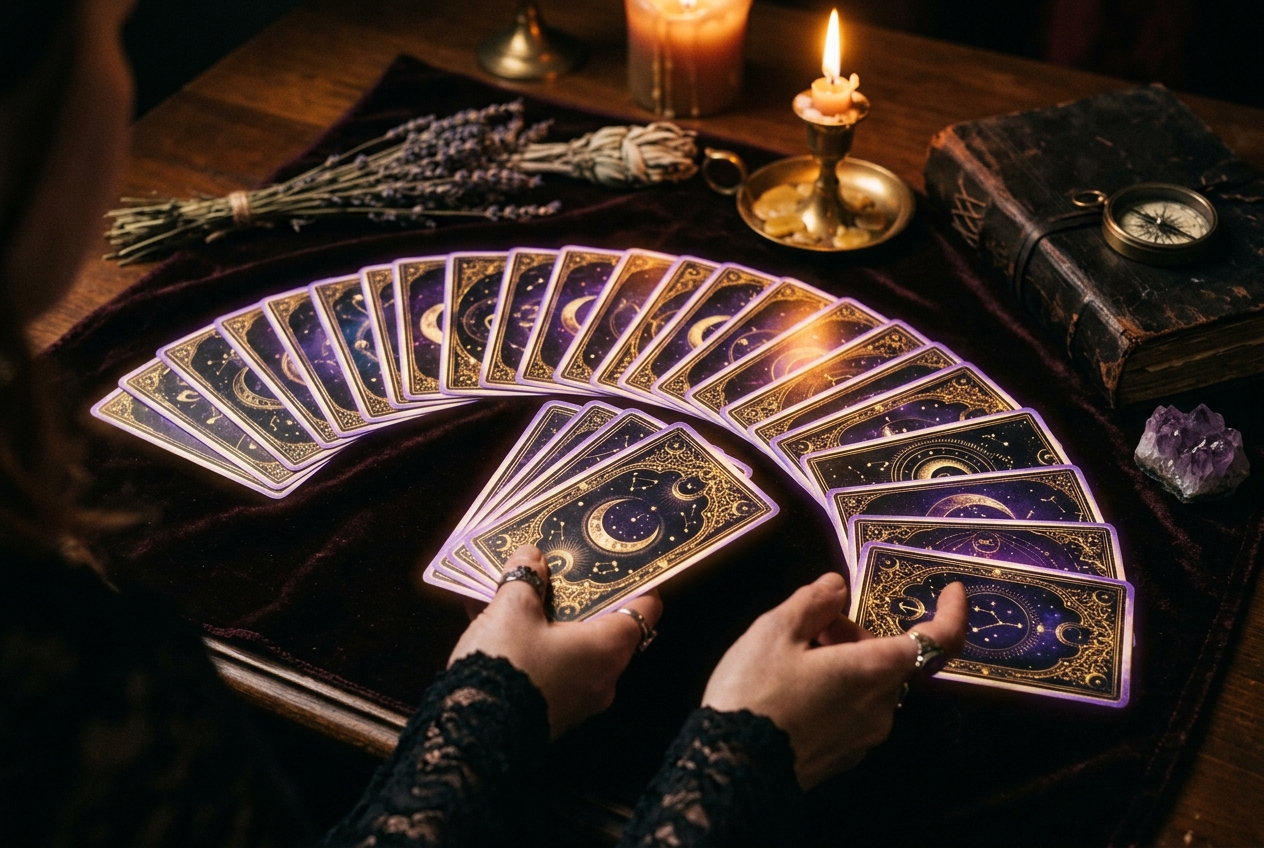
Discover how to read the Card of the Day in Tarot and what it truly signifies. Learn to embrace the messages that each card brings for your current situation.
Tarot for Today — How to Read the Card of the Day and What It Means
Introduction to Tarot and the Card of the Day
The Card of the Day in Tarot offers a simple daily method to engage with the deck, helping you feel the rhythm of your day and recognize its main energy. It's not about grand prophecies, but rather a mindful glimpse into what may be significant today: emotions, relationships, decisions, or a lesson to be calmly accepted. In practice, the Card of the Day acts like a mirror reflecting our inner mood and focus. For one person, it might signal the need to start the morning slowly, for another, a reminder to make a call to a loved one first, and for yet another, an encouragement to address matters that have been awaiting a decision for several days.
Also, try our tool: Daily Card.
In daily practice, the Card of the Day helps you connect with your intuition without pressure or excessive interpretation. Simply draw one card, take a moment of silence, and pose the question: What is important for me today? This transforms Tarot into a tool for reflection rather than chaotic speculation. It’s also a wonderful way to build your own relationship with the deck and over time, gain a deeper understanding of its symbolism, rhythm, and recurring themes. If a card signaling calm is drawn in the morning, you can consciously plan a gentler pace for your day. If a card of movement appears, it’s a sign to address overdue matters swiftly, send a message, or take the first step in an important issue.
If you wish to deepen this practice, it’s beneficial to keep notes and observe how the Card of the Day reflects in events. Over time, you'll notice that your interpretations become more personal and accurate as you begin to recognize your own patterns. A broader perspective can also be helpful, such as through my chart., when working with your own symbolism, intention, or daily layout. This enhances regularity and mindfulness. A good habit is to note down a sentence in the afternoon: What did the card reveal in practice? Such a simple journal will help you see that the Card of the Day pertains to a conversation with a supervisor, a decision about resting, leaving the house without your phone, or choosing not to intervene in someone else's conflict.
How to properly read the Card of the Day?
First, take a moment to pause and set your intention: What do you want to know today or what would you like to be more mindful of? Then draw a card and examine it without haste. Pay attention to the figure, colors, symbols, direction of movement, and mood of the image. Only after that, read its meaning in the context of the day, not in isolation from the situation. The Card of the Day is meant to support observation, so it’s vital to connect the symbol with real experiences.
A good method for interpretation is to connect three levels: the literal, the emotional, and the practical. Literally, you ask what the card shows. Emotionally, you check what state might accompany you today. Practically, look for hints on how you should behave, what to avoid, or where it’s worthwhile to act more calmly. This method protects against a rigid reading of the cards and allows for the preservation of naturalness. For this reason, the Card of the Day works well for people who are just beginning their Tarot journey.
An example of application is straightforward. If you draw a card that speaks of stagnation, it doesn’t necessarily mean there’s a problem; it could be a prompt for patience and mindfulness. If the card carries the energy of action, you can see it as a signal that the day favors initiative. It’s important not to seek a rigid answer but to examine how the symbol harmonizes with your daily plans, emotions, and relationships. Thus, Tarot for Today — How to Read the Card of the Day and What It Means becomes a simple and pragmatic practice.
Meanings of Various Tarot Cards
Tarot for Today — How to Read the Card of the Day and What It Means can best begin with a simple assumption: Each card carries a different type of energy and does not act in isolation from your day. The Major Arcana cards typically signify an important theme, a step, or a lesson that demands attention. The Fool may speak of a new beginning, the High Priestess of intuition, and the Tower of sudden change. In the Minor Arcana, you'll often find reflections of everyday life, the rhythm of decisions, and emotions. If in the morning you draw a card indicating the end of a particular phase, you might interpret this as a prompt to wrap up an overdue conversation, tidy your workspace, or no longer postpone a specific matter.
When the card of the day shows Cups, it’s wise to reflect on relationships, emotions, and what touches the heart. Swords tend to focus our attention on thoughts, conversations, and the clarity of decisions. Wands bring the drive to take action, motivation, and courage, while Pentacles remind us of practical matters, work, and stability. These are not rigid judgments but signals that help us read the day and our responses to events. For instance, Cups may encourage a calm response to a loved one rather than an emotional reaction, Swords inspire a factual email or clarification of a misunderstanding, Wands support the start of a project, and Pentacles can remind us of bills, shopping plans, or time management.
In practice, it's best to interpret the meaning of the card in the context of the question and the current situation. The same card can mean something entirely different for someone facing a professional decision compared to someone in need of calm. Therefore, it’s not about mechanically memorizing terms, but recognizing the day's overall tone. Over time, you'll find it easier to discern whether the card invites movement, patience, conversation, or inner stability. When a card of action is drawn, you can use it to make a difficult call, send a resume, or start training. If it indicates stagnation, it’s often a good time for tidying up, planning, and calmly wrapping up affairs without putting extra pressure on yourself.
Tips for working with the energy of the card
The best way to work with the card of the day is not just to read its meaning, but to take a moment to assess how that energy aligns with your rhythm. After drawing the card, ask yourself a specific question: What does this card want to teach me today? This makes the message useful rather than merely descriptive. It’s also helpful to jot down your first thought, as it is often the most accurate and personal.
A brief meditation with the card can be beneficial as well. Simply sit quietly, gaze at the image, take a few deep breaths, and notice what emotions or associations arise spontaneously. If the card speaks of movement, imagine how that energy flows throughout the day. If it relates to stillness, take a few minutes to be without stimuli. This practice strengthens your connection to intuition and teaches you to receive signs more consciously.
A helpful support is also your personal symbol card, which consists of notes on how specific cards appear in your life. You can keep track of the circumstances under which a particular card occurs most frequently and what events accompany it. This builds a personal tarot language and helps you trust the readings more. If you want to organize such a process, you can base it on your card for working with cards which is a simple system of observation and reflection.
Examples of cards of the day and their interpretation
Some cards instantly indicate the direction of the day. The Sun typically brings clarity, ease, and greater self-awareness, fostering conversations, actions, and openness. The Hanged Man might suggest stagnation, a change of perspective, or the need for patience. The Empress reminds us of care, creation, and gentle growth. Each of these cards influences daily life differently, but none take away your freedom of choice. Instead, they indicate the climate in which it’s easier or more challenging to act.
If you draw a challenging card, don’t view it as a warning of disaster. The Tower can signify sudden changes in plans, but also the chance to free oneself from what no longer serves. The Nine of Swords may signal overwhelm from thoughts, making it wise to slow down and return to the facts. Tarot helps navigate through challenges by showing where it’s worth conserving energy and where boundaries should be set.
In daily life, the card of the day works best when you connect it with something concrete. If the card speaks of communication, ensure clarity in your words. If it concerns stability, organize something in your home or at work. If it’s about intuition, take a moment of silence before a significant decision. Such simple actions ensure that tarot doesn't remain abstract but becomes a tool for mindfulness and a wiser approach to daily matters.
Inspirations from tarot for everyday life
Tarot can not only inspire thoughts about the future but also encourage you to choose more mindful small steps throughout the day. If the card indicates rest, you can reduce unnecessary haste. If the energy of action appears, it’s wise to take the first step rather than postpone everything. The messages of the cards work best when implemented into simple decisions and do not remain just a pleasant comment for the morning. If the card of the day signals the need for quiet, you might plan calmer work paths, a phone-free break, or a brief meditation. If it signals movement, it will be a good choice to quickly organize documents, reach out to someone important, or finalize a topic that requires courage.
Many people use Tarot as a gentle mirror. The card of the day doesn't tell you what you must do, but rather suggests what to pay attention to in order to avoid chaos or to make the most of a favorable moment. This makes it easier to recognize your habits, emotions, and automatic reactions. This is especially valuable on days when everything happens quickly and your mind seeks a simple point of reference. For instance, a card related to communication might remind you to ask for clarification instead of assuming the intentions of others. A card carrying the energy of stabilization may inspire you to create a budget, plan meals, or set boundaries in your calendar.
The greatest value of working with the cards lies in consistency. Learning a symbolic lesson each day fosters mindfulness and helps you make choices in alignment with your true self. Over time, you’ll notice that Tarot not only supports the interpretation of events but also influences how you respond to people, commitments, and changes. At that point, the messages of the cards become part of your daily practice rather than a mere curiosity. In practice, this can look quite ordinary: you may choose a gentler agenda for the day when the card signals overwhelm, or consciously accelerate when you feel the energy of a new beginning. Such small decisions ensure that the card of the day truly begins to work in the rhythm of your everyday life.
FAQ — Frequently Asked Questions
What is the Card of the Day?
The card of the day is a drawn card from the Tarot that reveals the main energy, a theme, or a hint for the day. It is not a judgment or a rigid prediction, but rather a symbolic reference point. It helps you recognize what might be important today, what to pay attention to, and where to focus your energy. In practice, it serves as a simple way to connect with Tarot and your own intuition on a daily basis.
How often should I draw a card for the day?
Usually, one card per day is sufficient, ideally at a set time, like in the morning. This makes it easier to recognize recurring patterns and compare them with the day’s events. If you feel inclined, you can revisit it in the evening to see how the energy of the card manifested in practice. What's important is the consistency, not the number of draws.
Does the card of the day influence the future?
The card of the day doesn’t change the future on its own, but it can influence your choices, your attention, and your actions. These elements often shape what happens next. Tarot reveals potential and direction but leaves room for decision-making. Therefore, the card of the day works best as a tool for reflection rather than a definitive answer to everything.