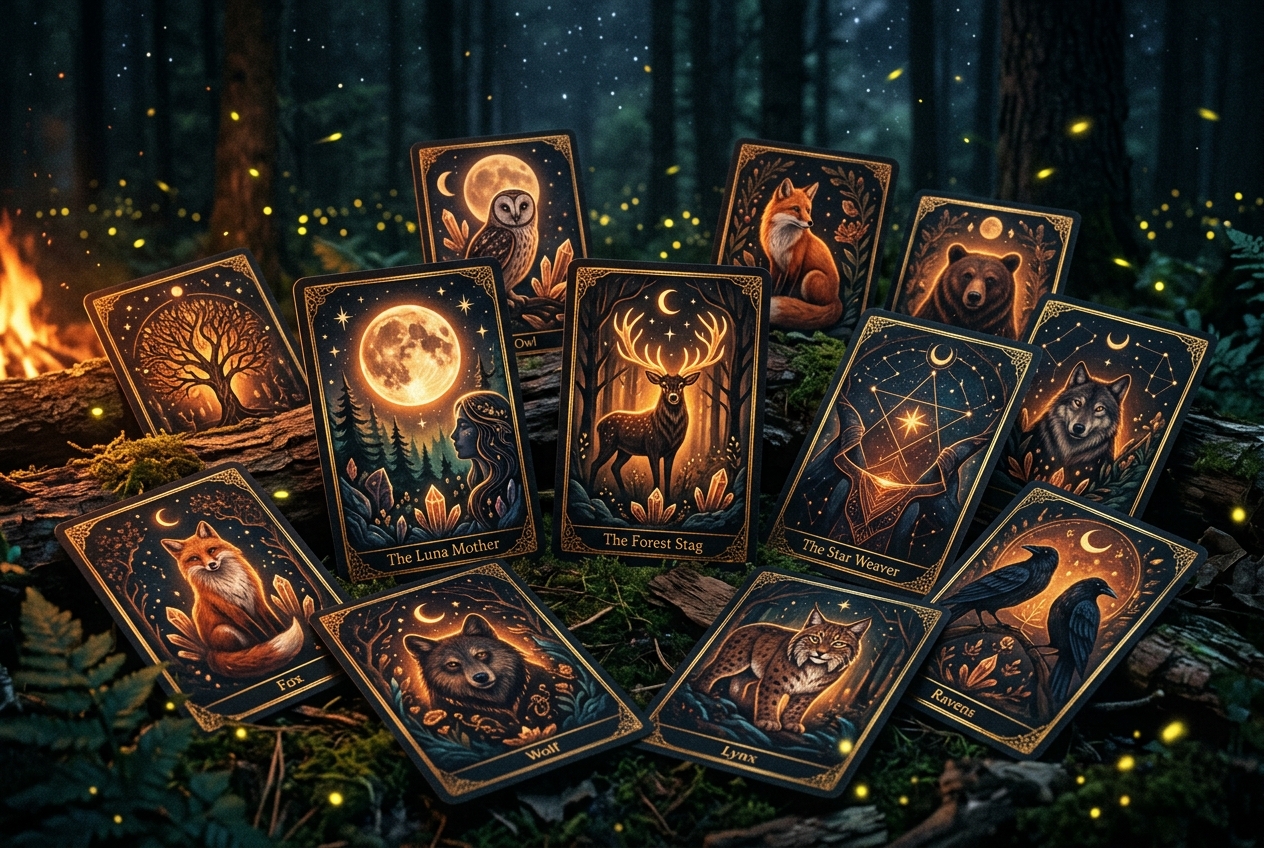
The 3-Card Tarot Spread is a powerful tool for uncovering deeper meanings and energies. In this article, you'll learn how to interpret each card and their connections to better understand your life and your intuition.
3-Card Tarot Spread Meaning - Discover the Secrets of the Cards
What is the 3-Card Tarot Spread?
The Tarot- The 3-Card Spread meaning is very practical as it allows you to grasp the essence of a situation without overwhelming information. It's a layout where each card serves a specific function, such as representing the past, present, and future, or describing the situation, the challenge, and the advice. This way, the person reading the cards can quickly see the direction of the energy and focus on what truly matters. This layout is simple, yet it is by no means shallow; its power lies in the relationships between the cards.
In esoteric practice, three cards are suitable when a clear answer is required, rather than an extensive analysis. It's a good choice for daily reflection, the first question on a specific topic, or for a quick check of the energy surrounding a relationship, a job, or a decision. For example, if you’re inquiring about a new acquaintance, the first card may reveal what has already happened between you, the second describes the current connection, and the third indicates whether it's worth pursuing further. This makes it easier to determine if something is developing or if a pause for contemplation is necessary.
The popularity of this spread stems from its universality and clarity. Three cards do not overwhelm and can simultaneously indicate change, tension, or confirmation of intuition. For beginners, it serves as a good starting point as it teaches how to connect meanings without chaos. For more experienced individuals, it is a tool for quick insights. If you want to see more ways to work with cards, check out Tarot Spreads, where you can find other layouts tailored to various questions.
Interpretation of the Individual Cards
In the 3-Card Spread, it's essential not only to notice which card appears but also where it is positioned and what relationships it forms with the others. The first card often indicates the starting point, the second describes what is happening now, and the third suggests development or possible directions. This way of reading helps in recognizing sequences of events rather than isolated symbols that are detached from the whole. It is precisely at this point that the true meaning of the 3-Card Tarot Spread often reveals itself.
The meanings of the cards in the context of their connections are crucial, as one card can alter the tone of another. For instance, the card representing difficulties next to the card of hope need not signify failure, but rather a process that leads through a challenging phase. Conversely, the card of action alongside the card of stagnation can suggest the need for patience or reconsideration of a decision. According to the interpretation by the author of the cards, it is important not only to look at individual symbols but to observe the flow of energy between the cards, as this forms the complete message.
Interpretation examples show best how this layout works in practice. If the first card speaks of confusion, the second of order, and the third of stabilization, the interpretation may indicate a gradual exit from chaos. Alternatively, if the first card shows an impulse, the second a blockage, and the third a compromise, the message could relate to finding balance. This way of working with cards fosters flexibility and mindfulness, as each combination tells its own story, depending on the question and the energy of the moment.
How to Conduct the 3-Card Spread
The significance of the 3-Card Tarot Spread should begin with a calm preparation. Sit in a place where you won’t be distracted, take a few deep breaths, and mentally define the topic of your question. You don’t need to formulate your question perfectly. What’s important is that it is specific and honest with yourself. If you like, you can write it down beforehand to keep your intention clear while drawing the cards. A simple refinement of your goal works well too, for instance: I want to see what supports this situation, what blocks it, and what step to take next.
Then, shuffle the cards at your own pace. Don’t rush, as the contact with the topic matters more than the mechanical execution of movements. For more advanced practices, you can hold the cards for a moment and focus on your breath, the imagery of the question, or a keyword that best reflects your intention. When you feel the right moment has arrived, draw three cards and lay them out in order from left to right or top to bottom. In this simplicity lies the power of this layout: it provides a quick, readable picture of the situation and helps concentrate on the most significant tensions.
After the interpretation, take a moment for reflection. Write down the first associations, emotions, and what draws your attention the most in the cards. Try not to immediately force each symbol into a meaning. Sometimes the right answer comes only after a few minutes, when you calmly and without pressure consider the layout. If you want to deepen your practice, also check other descriptions on the page, for example in the Tarot Spreads, where you can find various methods of working with the cards.
Meaning of Card Positions
In a three-card reading, the positions hold significant meaning as they organize the narrative that the layout conveys. The first card represents the past, revealing the source of your current situation, including past decisions, emotions, or experiences that have shaped your present moment. This doesn't necessarily refer to something long ago; it may relate to recent events that continue to impact your perspective and choices.
The second card pertains to the present. It indicates what is currently happening, which energies are active, and what requires your attention at this moment. This position is crucial as it helps to distinguish facts from assumptions, making it easier to recognize whether the situation is already in motion or if it is stagnant and needs a change of direction. The present is often where the greatest tension becomes apparent.
The third card speaks to what might happen if the current energy dynamics remain unchanged. Consider it not as a definitive verdict, but as a hint towards where the current momentum leads. Tarot reveals tendencies rather than fixed outcomes. Therefore, it is beneficial to read all three positions together, as this is when the full meaning of the layout becomes clear: where something originates, what is happening now, and where it may lead.
Meaning of the cards in different contexts
When it comes to love and relationships, a three-card reading can illustrate the dynamics between two individuals or the state of the bond itself. The past may often reveal past wounds, unresolved conversations, or shared experiences. The present reflects how the connection appears now, whether there is closeness, distance, tension, or a need for honesty. The future indicates whether the relationship has the potential to deepen, stabilize, or require work on communication. For example, the Moon in the first position may suggest uncertainties from the past, the Lovers in the second position point to a strong attraction, and Temperance in the third position highlights the need for patience in building understanding.
In the realm of work and career, this layout often helps to see where you stand professionally and what supports or hinders you. The first card may indicate past decisions, accumulated experiences, or patterns that continue to influence your path. The second card reveals the current situation, including tasks, pressure, opportunities, and the real energy level. The third card suggests which direction may open up if you maintain your current course or consciously adjust it. For instance, if The Chariot appears in such matters, it may signal significant progress. The Empress in the middle often indicates stabilization and resource development, while the Eight of Pentacles in the third position underscores the importance of learning, consistency, and gradual skill-building.
In the area of personal development, a three-card reading wonderfully helps to articulate the inner process. It can reveal what you have already learned, what you are currently working on, and what step is next. This layout is beneficial for questions concerning habits, boundaries, emotions, and feelings of purpose. However, it is most crucial to remember that the cards should not be read in isolation from your own situation. A symbol resonates most powerfully when connected to your experiences rather than a pre-fabricated template.
Common Mistakes in Interpretation
One of the most common mistakes is reading the cards too quickly and literally. An individual symbol should not serve as an oracle in isolation, as meaning emerges from the relationship between the cards and the question posed. If someone sees just a name or an image and immediately makes a strong conclusion, it can lead to oversimplification. In Tarot, the overall picture of the layout is essential, not just the first impression.
Another issue is ignoring the context. The same card can convey different messages in a question about a relationship compared to one about work or personal development. Without aligning the meaning to the topic, the interpretation loses precision. It's also important to consider the emotions of the querent, as these influence the understanding of the message. Well-formulated questions facilitate accurate interpretation more than memorizing many pre-defined definitions.
A third mistake is the excessive generalization of meaning. Tarot does not operate like a rigid dictionary where each card always signifies the same thing. When you attempt to assign an unchanging message to a card, you may overlook subtle nuances of meaning. Better results come from a calm analysis: What does the card say in this position, alongside these two others, in this specific question? Such practice leads over time to significantly greater accuracy and more confidence in interpretation.
FAQ: Three-Card Tarot Reading
How do I perform the three-card Tarot reading?
It's best to begin with a clear question. Then, calm yourself, shuffle the cards, and draw three of them. Lay them out in the established order, for example: past, present, future. It's not just the drawing itself that matters, but also the moments of focus before and after. This makes the layout more readable and helps to discern how the cards weave together a story.
What if cards repeat?
Repetitive cards often point to a theme that is particularly important or unresolved. It’s not worth brushing this off as mere coincidence. Instead, check if this energy has shown up in other questions or layouts and what it seeks to emphasize. A repetition often strengthens the message, but it doesn’t automatically signify the same unchangeable scenario.
What alternative tarot spreads are available?
If the three-card spread feels too general for you, you can choose other layouts tailored to a specific question. There are spreads for relationships, decisions, work, analyzing obstacles, or a broader outlook on the future. The choice depends on how much information you wish to receive and how precisely you want to work with the cards. A shorter spread offers a quick insight, while a larger one provides a more comprehensive picture of the situation.