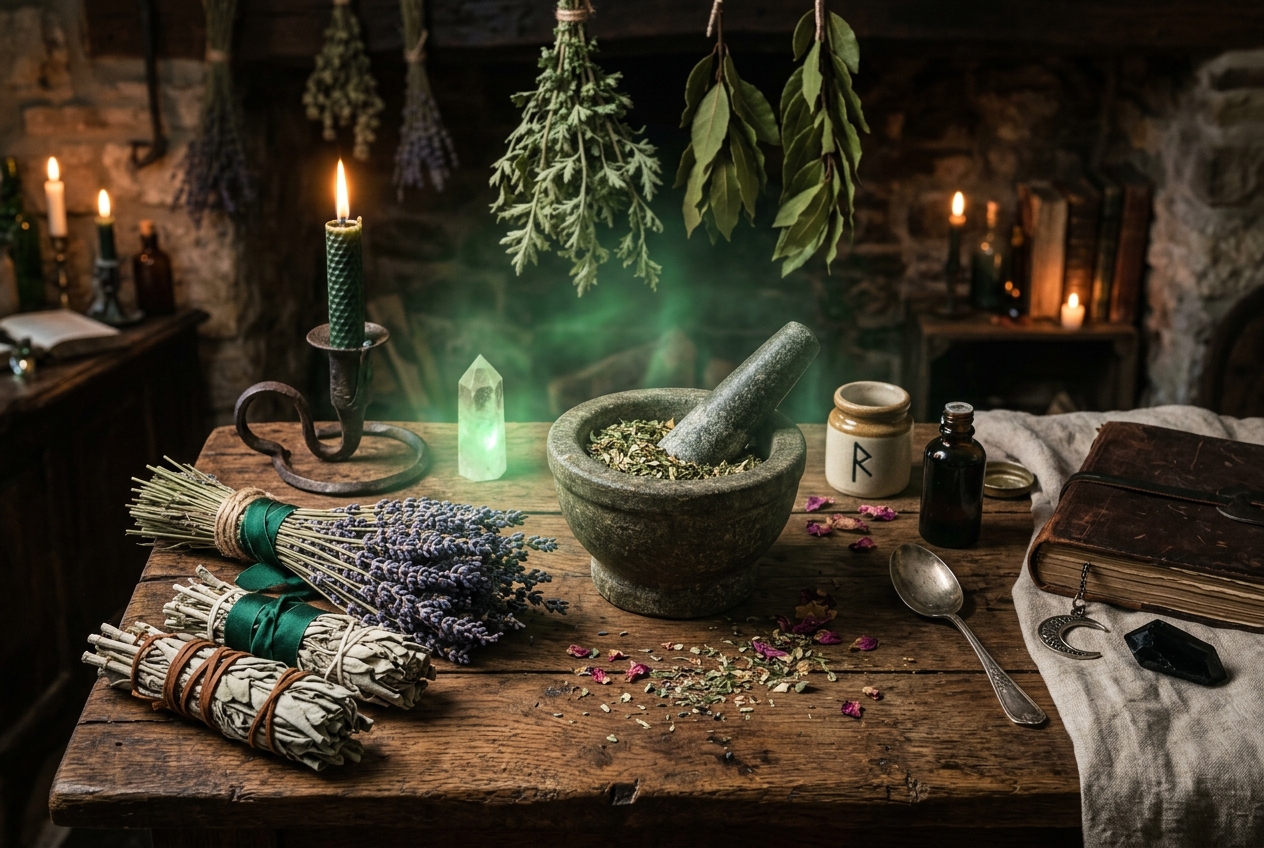
Herb Symbols in Rituals – Discover Their Power and Meaning
Introduction to the Power of Herbs
Herbs have held a special place in rituals and spiritual practices for centuries. In many cultures, their power is associated with the natural order, and their use in ceremonies aims to strengthen intentions and connect with the forces of nature. Herbs attract attention not only for their properties but also for the symbolism they carry.
Their presence in rituals can serve as a catalyst, enhancing the energy of our actions and intentions. Examples of herbs such as sage or lavender are often assigned specific meanings, making them an extremely important element of any ceremony. Understanding their symbolism opens the door to deeper spiritual experiences.
Herbs in Esoteric Traditions
In various esoteric traditions, herbs play a significant role. For instance, in herbal traditions or shamanic practices, specific plants are used to summon spirits or for healing. Herbs like garlic or thyme have been recognized as protective, making them frequently present in rituals aimed at protection.
In the context of herbal magic, certain herbs like mint are associated with attracting love and harmony. Others, such as nettle, can serve to cleanse and protect against negative energies. Learning about these traditions allows for a better understanding of how herbs can support us in our spiritual practices.
Symbols and Their Meanings
Each herb carries a range of symbols and meanings that are integral to its use in rituals. For example, rosemary symbolizes memory and loyalty, which is why it is often used in ceremonies related to love and family. In this way, herbs not only support our intentions but also help pay homage to the values we hold dear.
These symbols can vary depending on culture and tradition, but their fundamental meanings often remain unchanged. When analyzing the use of herbs in the context of rituals, it is essential to pay attention to their assigned symbols and how they can align with our intentions. A proper understanding of herb magic can bring us deeper insights into our own spiritual path.
FAQ
What herbs are best suited for rituals?
Herbs with strong symbolic properties are most commonly used in rituals. Examples include sage, lavender, rosemary, and mint, which have a variety of applications and meanings.
Can herbs be used in daily spiritual practices?
Yes, herbs can successfully be used in daily practices. We can utilize them in meditation, during cleansing baths, or as altar elements, which can enhance our spiritual practice.
Rituals Using Herbs
Herbs have been used in various rituals and ceremonies for centuries. In many traditions, they carry symbolism that strengthens the intentions of the person performing the ritual. One of the most popular rituals involves burning herbs in incense, where sage, thyme, or rosemary play important roles. Their smoke is meant to cleanse the space and bring about harmony.
To effectively harness the power of herbs in rituals, it is worthwhile to focus on their symbolism and properties. When choosing herbs, it is best to consider not only their scent but also the intended purpose of the ritual. Different herbs attract different energies, so before using them, reflect on what you truly need, and you can find more information on the appropriate cards in our app.
Protective and Attracting Herbs
In the context of protective herbs, lavender stands out as it is known for repelling negative energies and enhancing tranquility. Another valuable herb is nettle, which can create a barrier against bad influences. Using these plants in protective rituals can provide a sense of safety and support.
Attracting herbs, such as basil or fennel, can aid in manifesting our desires. Their presence during rituals helps to open us up to new possibilities and the richness of life. We encourage you to explore the knowledge about these herbs in our app, where you'll also find appropriate matrices for flowers and herbs.
Therapeutic Properties of Herbs
Herbs are also well-known for their therapeutic properties, which can support our well-being in daily life. Infusions of lemon balm or mint promote relaxation and calmness, which is particularly important in the context of preparing for rituals. A ritual that integrates herbs with meditation can foster a better understanding of oneself and one's needs.
It is essential to remember that herbs can enhance not only the energetic aspect of rituals but also their therapeutic dimension. Their proper use can significantly improve the quality of daily life, becoming an integral part of esoteric practices. Check out our sections dedicated to herb knowledge to discover their full potential.
FAQ
What herbs are best for rituals?
The best herbs for rituals are chosen based on the goal you wish to achieve. Sage effectively cleanses energy, while mint attracts positive vibrations. Lavender and basil, known for their unique properties, are also good choices.
Do herbs have different meanings in different cultures?
Yes, herbs can have different meanings depending on the cultural context. For example, in one tradition, lavender is a symbol of love, while in another it may be seen as a cleansing plant. Understanding these differences enriches the experiences related to rituals.
How to prepare herbs for rituals?
To prepare herbs for rituals, it is best to harvest them at the right time, depending on their properties. They can then be dried, burned as incense, or prepared as infusions. It’s also beneficial to add a personal intention to enhance their effectiveness.