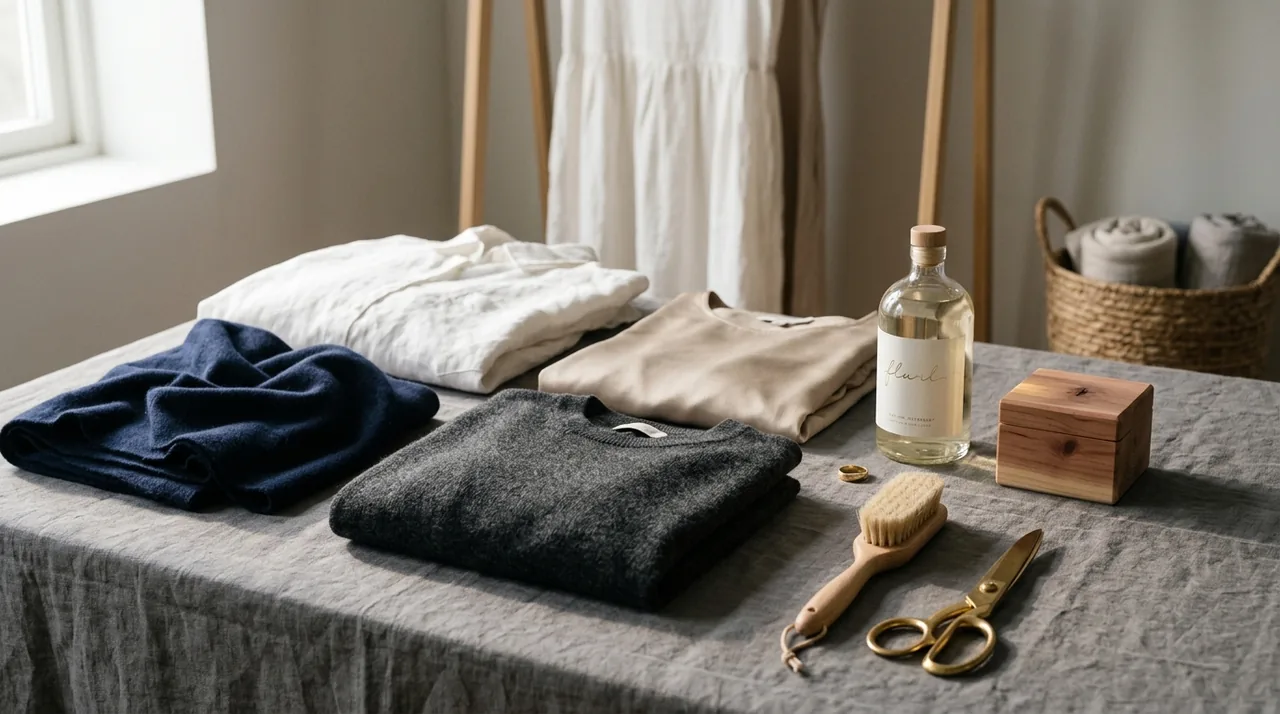
A practical beginner-friendly guide showing how to care for clothes, read care labels, wash delicate fabrics, and build a durable capsule wardrobe.
Fabric care for beginners, from the care label to longer-lasting clothes
If you are just building your wardrobe, you will quickly notice that buying clothes is only the beginning. Fabric care is just as important, because it determines whether a shirt still looks fresh after a few washes and whether a sweater keeps its shape. A well-managed capsule wardrobe starts not only with choosing styles, but also with knowing how to care for the items you already own. In this fashion guide, we show step by step how to approach the topic calmly, practically, and without overdoing it.
At Ezostylia, fashion is for everyone, which is why this text takes a broad view of the topic, also as support for people searching for the phrases fashion for beginners or style for beginners. If you want to buy, wear, and care for clothes consciously, you are in the right place. Also see the /moda section and inspiration on /blog.
Why fabric care matters in an everyday wardrobe
Good fabric care saves money, time, and stress. Clothes you care for regularly pill more slowly, lose less color, and keep their shape longer. In practice, this means that even a small capsule wardrobe can work really well if every piece gets proper care. This is especially important when you want to shop consciously and choose items that will last longer than one season.
In fashion for beginners, it is easy to get the impression that the number of clothes matters most. In reality, it is much more important whether you know how to match washing, drying, and storage methods to the fabric. Cotton is handled differently, wool differently, and viscose or silk differently again. Once you learn the basics, choosing outfits for occasions becomes easier, because you are not buying random items, but building sets you will actually wear.
How to read care labels, a practical foundation for everyone
If you want to start with the basics, learn to read care labels. This is the most important habit when it comes to fabric care. The label tells you what temperature to wash the garment at, whether it can be spun, tumble dried, ironed, or sometimes whether it needs dry cleaning. It is not worth guessing, because one wrong wash cycle can permanently damage the material.
First, check the composition. Cotton usually withstands more, but it can shrink. Linen wrinkles easily, yet breathes well. Wool requires care, because high temperature and friction can felt it. Synthetics such as polyester are usually less demanding, but they can also hold odors or become staticky. If you are creating a capsule wardrobe for beginners, pay attention not only to how things look, but also to the fabric composition and washing symbols.
- Check the washing temperature before first use.
- Separate light, dark, and strongly colored items.
- Wash delicate fabrics in protective laundry bags.
- Do not ignore drying and ironing symbols.
- Always test a new detergent on a less visible area if you have sensitive skin.
Washing basics, or less is better
Many people think that the more detergent you use, the better the result. In practice, too much detergent can leave residue, irritate the skin, and shorten the life of fabrics. According to ECHA, the European Chemicals Agency, laundry products should be used according to the manufacturer’s instructions, because using more does not improve washing quality and may increase environmental burden. This is a valuable tip in everyday fashion too, where simplicity and effectiveness matter.
If you are just learning how to care for clothes, start with three rules. First, do not overload the drum. Second, choose the program according to the fabric. Third, wash only when it is truly necessary. Many garments, especially blazers, sweaters, or jeans, do not need washing after every wear. Sometimes airing them out and spot refreshing is enough. This approach also supports style for beginners, because it helps you maintain your favorite wardrobe pieces better.
How to care for the most common fabrics
Not all clothes require the same care. That is why fabric care should begin with identifying the material. Below you will find a simple action map.
- Cotton, wash at a moderate temperature, preferably according to the care label. Avoid excessive drying, because it can stiffen the fibers.
- Linen, wash gently, dry flat or on a hanger, and iron when it is slightly damp. This makes wrinkles easier to remove.
- Wool, choose the wool program or hand washing. Do not wring it out; instead, gently press out the water.
- Viscose, wash carefully, because the fabric can lose its shape if handled too aggressively.
- Polyester and blends, are usually easier to maintain, but it is still worth avoiding very high temperatures.
In plus size fashion for beginners, it is also worth paying attention to fabrics, because a well-chosen material affects comfort and how the silhouette looks. The same applies to everyone, regardless of size. Comfort, quality, and durability matter more than a short-term effect.
Drying, ironing, and storing without mistakes
Many people think washing is the hardest part and that after that the garment somehow “takes care of itself.” Meanwhile, drying and storing matter enormously. Wet fabrics are more prone to deformation, and too much sun can fade colors. If you can, dry clothes outdoors in the shade or in a well-ventilated room. Avoid overloading the dryer and do not leave items inside it too long after the cycle ends.
It is also worth ironing sensibly. Not every fabric needs a high temperature. Delicate fibers are better ironed through a protective cloth or with steam. When storing clothes, remember that heavier sweaters are better folded than hung, because they can stretch. Shirts, dresses, and blazers usually look better on a properly chosen hanger. It is a small change, but in practice it strongly supports a capsule wardrobe.
Conscious shopping, or how to buy less but better
If you are interested in choosing outfits for occasions, remember that the best outfits are made when clothes also fit your lifestyle. Before buying a new item, ask yourself a few questions: do I have something to wear it with, is the fabric easy to care for, does the cut fit the rest of my wardrobe, will I wear it more than once. This practical thinking is what sets apart people who build a capsule wardrobe consciously.
It is also worth paying attention to quality labels and fabric certifications, but without obsession. Even the best fabric will lose its look if it is washed and stored badly. That is why a fashion guide does not end with the purchase. It only becomes meaningful when the garment stays in your wardrobe longer and ages well.
In practice, a simple scheme will help you:
- buy items that work with at least three outfits,
- choose colors that are easy to combine,
- check whether the fabric matches your washing habits,
- avoid impulse buys just because something is on sale if it will be hard to care for later,
- plan purchases around real needs, not a passing urge.
Fashion for beginners, how to build a wardrobe that works
For many people, fashion for beginners sounds like a topic about trends. In practice, it is first and foremost about learning a system. If your wardrobe is cohesive, it is easier to choose outfits for occasions, you get dressed faster, and you feel frustrated less often. A capsule wardrobe helps with this, one where simple, comfortable, and easy-to-match items dominate.
Start with basic pieces such as well-cut trousers, a classic T-shirt, a shirt, a neutral sweater, a simple dress, and outerwear suited to your lifestyle. Each of these items should be easy to care for, because that is what will make you actually wear them. That is exactly what good style for beginners is about, less chaos, more thoughtful decisions.
If you want to develop your personal fashion guide, observe which items you wear most often and which only take up space. That is the best practice for gradually improving your wardrobe without unnecessary spending.
The most common mistakes in clothing care
Finally, it is worth mentioning the mistakes that most often shorten the life of clothes. First, washing everything in one cycle. Second, too high a temperature. Third, spinning delicate materials without protection. Fourth, storing damp clothes in a closed space. Fifth, ignoring care labels. Habits like these quickly ruin even nice and more expensive items.
According to practical recommendations from consumer organizations and textile experts, consistency matters most, not perfection. You do not need to memorize every fabric right away. It is enough to learn how to read care labels, choose gentle cycles, and store items properly. That alone is enough to make your wardrobe work better.
FAQ
How do I start with fabric care if I am a beginner?
First learn to read care labels, then separate clothes by color and fabric delicacy. Start with simple habits, not complicated methods.
Does a capsule wardrobe require special laundry products?
Not always. The most important thing is matching the wash program and temperature to the fabric. Good habits matter more than buying lots of products.
Which clothes are easiest to care for every day?
Cotton fabrics and some synthetic blends are usually easy. Wool, viscose, and silk can be less convenient, as they require more care.
How do I combine choosing outfits for occasions with caring for fabrics?
Choose clothes that fit your lifestyle and are easy to wash, dry, and store. That way you wear them more often and they keep looking good for longer.
Sources
European Chemicals Agency, detergents and washing products information, 2023
NHS, washing clothes and reducing skin irritation, 2022
Consumer Reports, clothing care and fabric maintenance guidance, 2024
OEKO-TEX, care labels and textile maintenance guidance, 2023
U.S. Environmental Protection Agency, reducing textile waste through longer product use, 2023