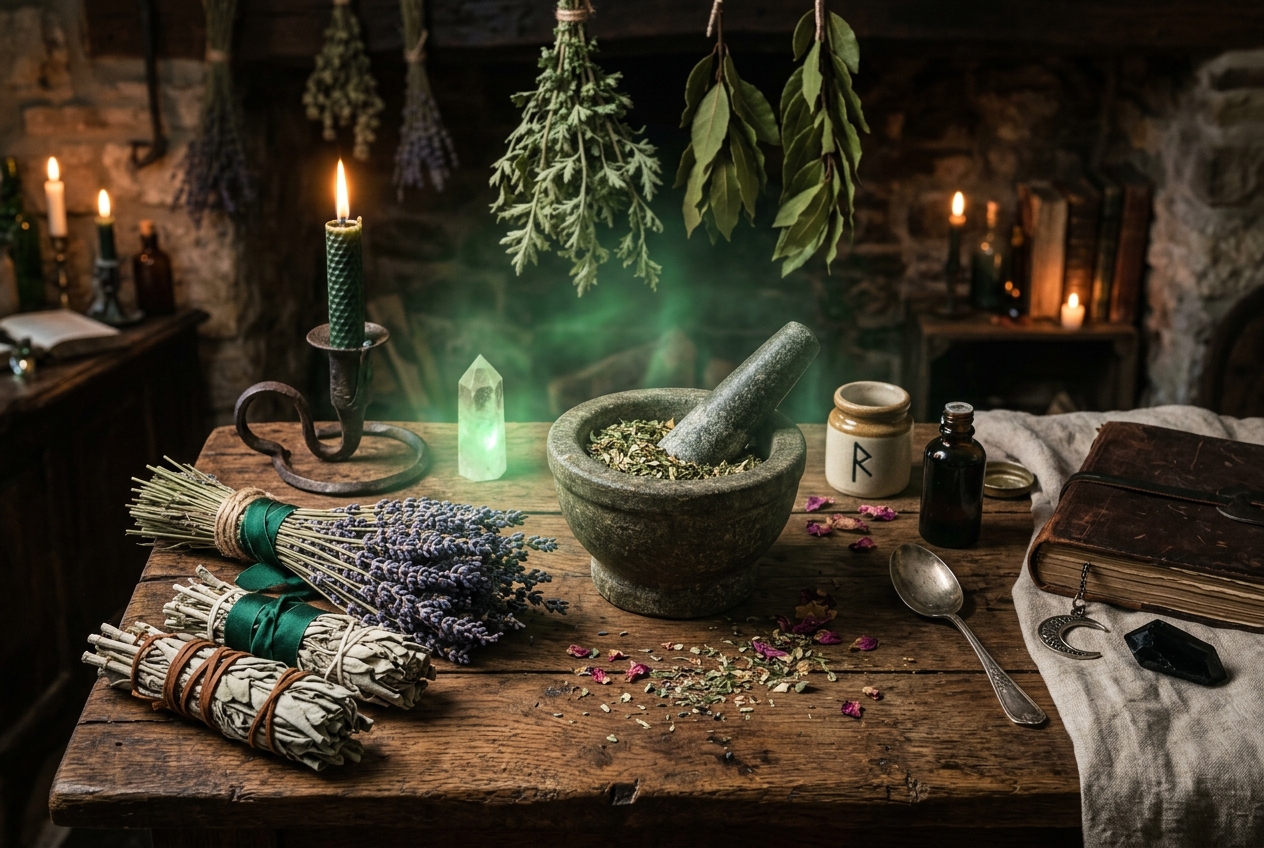
The szeptuch of Podlasie are guardians of knowledge about herbs, rituals, and spells. Discover their secrets, which have endured for centuries, bringing harmony to life.
The Szeptuch of Podlasie — rituals, herbs, and spells that have survived for centuries
The history of szeptuch and their role in the culture of Podlasie
The szeptuch of Podlasie emerged from everyday village life, where faith, experience, and observation of nature intertwined into one practice. Their presence was a response to the needs of people searching for solace, support, and meaning in difficult times. In folk tradition, they served as intermediaries between the material and spiritual realms, and their knowledge was passed down orally, often within families and local communities. This is why their history is so strongly tied to the memory of place and the rhythm of nature.
The genesis of szeptuch is not limited to a single date or source. It is a phenomenon rooted in ancient beliefs, Christian rituals, and folk practices that have intermingled over centuries. In Podlasie, the continuity of tradition was particularly important, preserving prayers, whispered formulas, and gestures that supported individuals in times of illness, fear, or feelings of being lost. From this perspective, a szeptucha was not an exotic figure but a part of the local order of the world, known and respected by neighbors.
In the culture of Podlasie, szeptuchy also served as spiritual advisors, approached not only for assistance but also for words of encouragement. Their role involved restoring peace, organizing emotions, and reminding people of their connection to nature and the community. Many stories emphasize that the form of the ritual mattered less than the intention, focus, and responsibility towards the other person. This dimension is what ensured that szeptuchy remained in the memory of residents as an important element of Podlasie heritage.
Szeptuch rituals: magic in everyday life
Szeptuch rituals were part of ordinary life, not a distant, mysterious spectacle. At their center were simple actions: whispered prayers, hand gestures, work with water, herbs, or fire, and sometimes silence that ordered attention. Such practices were meant to bring harmony, founded on the belief that the peace of mind and surroundings interact with each other. In this sense, the ritual was a way to organize the energies of the day and restore balance in the home.
Symbolism played a significant role in the practices of szeptuchy. Each element could carry a specific meaning: water cleansed, herbs provided protection, fire strengthened transformation, and words spoken softly emphasized intimacy and focus. In daily life, specific rituals emerged, such as washing the face with herbal-infused water at dawn, blessing the home with mugwort or juniper after family illness, or placing a bowl of water by a child's bed to symbolically 'calm' the home. It was also common for a szeptucha to request bread, salt, and water, as these simple items held a protective and organizing quality in local tradition. If you want to read more about spiritual traditions and folk practices, check out our materials on the Ezostylia blog.
The magic in the everyday life of szeptuchy also depended on mindfulness. Rituals were not a random collection of actions but were performed with full attention, often at specific times and in a particular atmosphere. As a result, ordinary elements, such as water, herbs, or songs, became carriers of meaning and support. This is why szeptuch practices have proved so enduring: they met the real human need to feel order, protection, and meaning in a world full of changes. In the tradition of Podlasie, it was also important to repeat actions over several consecutive days, such as morning face washing with linden-infused water, burning herbs at the threshold of the home, or quietly walking around the room with a lit candle. This repetitiveness gave the rituals a rhythm and made them part of the daily care for the home, family, and one's own peace.
Magical herbs in the practice of szeptuchy
In the tradition of szeptuch of Podlasie, herbs were not an addition but the foundation of daily practice. They reached for plants well-known in the local environment and seasons, such as wormwood, St. John's wort, chamomile, mint, juniper, rue, mugwort, linden, and nettle. Each herb had its own use: some supported cleansing, others were used for infusions, compresses, or protective bundles. Knowledge of plants was passed down from generation to generation, with its strength derived from observation, the rhythm of nature, and mindfulness.
Preparation of herbs depended on the purpose of the work. They were most often dried in airy places, away from moisture and bright light, and then used for infusions, fumigations, or herbal baths. In some practices, the moment of gathering was also significant, such as morning, a church holiday, or a specific lunar phase. Szeptuchy treated plants with respect, not as a 'magical shortcut,' but as part of a larger, natural whole where intention, patience, and knowledge of tradition mattered.
In many stories from Podlasie, it is emphasized that herbs worked not only through scent or taste but also through the ritual of their use. The infusion was consumed slowly, the compress was applied with a quiet prayer, and twigs were hung in the home for protection and energetic order. Such practice connected domestic wisdom with spirituality, without haste and without spectacle. This is why the herbs of szeptuchy continue to interest those seeking simple, nature-rooted forms of support.
Szeptuch spells: the power of words
In the tradition of szeptuchy, spells were not treated as theatrical formulas but as quiet, focused prayers combined with intention. The word was meant to organize, calm, and strengthen the meaning of the ritual. Folk narratives present simple phrases, whispered over water, herbs, or during the fumigation of the home. Often, these were short blessings, pleas for protection, soothing fears, or restoring balance. The emphasis was not so much on the sound as it was on the attentiveness and faith of the person speaking the words.
Example spells took on the form of repetitions, rhythmic pleas, or whispered formulas invoking the forces of nature and the sacred. They might resemble traditional blessings for a home, child, fields, or path, with the goal of enhancing the sense of safety. In the practice of szeptuchy, spells often organized a specific intention: one served to protect the home from evil words, another aimed to bring peace to a restless child, and yet another accompanied the washing of hands or the fumigation of a room. This structure was clear to people raised in a culture where word and deed formed a whole. In folk culture, words were not empty: they could soothe, set boundaries, and organize emotions. Thus, szeptuchy combined speech, gesture, and silence, creating a practice based on focus rather than spectacular effects.
The power of words in spiritual practices also stemmed from the relationship between the individual and the community. A kind word offered solace, and a prayer spoken from the heart built trust and a sense of order. This aspect is what ensures that szeptuchy are remembered not only as herb experts but also as guardians of speech capable of supporting people in difficult times. In the spiritual tradition of Podlasie, words were a tool of care, not control, and therefore retained their value through generations. Whispered blessings over water, the home, or paths served as reminders that even the simplest expression can become a form of care when accompanied by respect, focus, and pure intention.
If you want to better understand how to describe such traditions in accordance with the local climate and without an artificial tone, also check out our materials on creating spiritual content. It serves as good support for those who wish to write about tradition with respect, calmness, and without exaggeration. In the case of szeptuchy, such language is closest to the truth of the message, as it reflects their discretion, seriousness, and deep rooting in everyday life.
Szeptuchy and modernity
Today, the tradition of the szeptuchy from Podlasie no longer functions as a common element of rural life, but it remains an important symbol of local spirituality. For many, it represents not just folklore but a reminder that the relationship with nature, silence, and prayer can hold significance in a fast-paced world. Szeptuchy are now a part of cultural memory, and their practices inspire those seeking simple, mindful ways to work with emotions, intention, and the daily rhythm.
The significance of this tradition also lies in the fact that it reflects a different quality of presence. Instead of an overload of stimuli, there is focus; instead of noise, there are attentive words; instead of haste, there is patience. For many, this represents spiritual value: the opportunity to pause and return to simple gestures, such as prayer, herbal infusion, a moment of silence, or tidying the home. The tradition of szeptuchy reminds us that spirituality does not have to be distant or complicated to be profound.
The influence of szeptuchy on people's spiritual development primarily lies in inspiring greater sensitivity. Their story teaches respect for nature, listening to elders, and understanding that daily rituals can strengthen the sense of meaning. For some, this may mean a return to familial roots; for others, it may be a first encounter with regional wisdom. Regardless of perspective, this tradition showcases that spirituality can be rooted in ordinary life and not solely in grand declarations.
How to become a szeptucha? Tips for those interested
In the original understanding, a szeptucha was not someone chosen at random. It is a role that emerged from long observation, trust within the community, and family knowledge about herbs, prayer, and folk rituals. Today, it is essential to view this as cultural heritage rather than a simple 'profession to be learned from a course.' The first step is to learn about the history of the region, local stories, and how szeptuchy understood their tasks.
If someone wishes to enter this tradition with respect, they need, above all, patience, humility, and mindfulness. Knowledge of herbs, basics of ethnography, traditional songs, prayers, and folk symbolism can be very helpful. A good, concrete starting point is also the practice of observation: noting which plants appear in a given season, how they are gathered, dried, and utilized in home customs. It is worthwhile to visit regional museums, talk to older people in the area, and read ethnographic sources to differentiate authentic transmissions from simplifications. Understanding boundaries is also crucial: not every practice is suited for replication without context, and any work with tradition should be responsible and honest. This is not a path to a quick effect, but a process of learning, listening, and ordering one's intention.
To learn these kinds of practices, experience, a connection with older people, openness to nature, and a willingness to work on oneself are vital. Keeping notes, observing the seasons, and getting to know plants and their customary applications are also helpful. In the tradition of szeptuchy, not only knowledge mattered but also the way of being: humility, discretion, and readiness to support another without judgment. If someone is serious about this path, they should start with small steps: learning the names of herbs, their appearance, gathering times, methods of drying, and simple forms of prayer and meditation. These qualities foster trust and add authenticity to the practice.
FAQ
What herbs are most commonly used by szeptuchy?
The most commonly mentioned are wormwood, St. John's wort, chamomile, mint, juniper, rue, mugwort, linden, and nettle. The choice depended on the purpose of the work, the time of year, and local tradition. Some herbs were used for infusions, others for fumigation, baths, or protective bundles. In szeptuch practice, not only the plant itself mattered, but also the way it was harvested, dried, and used. This tells the entire story of the relationship between humans and nature.
What rituals are the most popular among szeptuchy?
Some of the most frequently described include whispered prayers over water, fumigating the home with herbs, washing the face or hands with infused water, preparing infusions, setting protective bundles, and blessing people and spaces. There were also rituals related to the threshold of the home, candles, salt, and bread, as these elements had a strong protective significance in folk tradition. The rituals were simple but required focus and consistency. Silence, intention, and respect for tradition were essential. In folk culture, it was this simplicity that lent credibility and strength to these practices.
Can szeptuchy help with daily problems?
In folk tradition, szeptuchy were the people one turned to for support in everyday matters such as fear, tension in the home, feelings of being lost, or the need for spiritual solace. Their role involved offering encouragement, organizing emotions, and supporting rituals. Today, it is worth remembering that such practices do not replace professional help where needed. They can, however, serve as elements of spiritual support and connection with tradition.
Can one independently use szeptuch rituals?
One can draw inspiration from tradition, but it is important to do so with respect and without pretending to know the full context of past practices. The safest are simple forms: calm prayer, space cleansing through ventilation, symbolic use of herbs in line with local customs, and moments of silence. For more complex rituals, it is better to refer to ethnographic knowledge than to random internet shortcuts. Such caution helps maintain authenticity and avoid trivializing tradition.