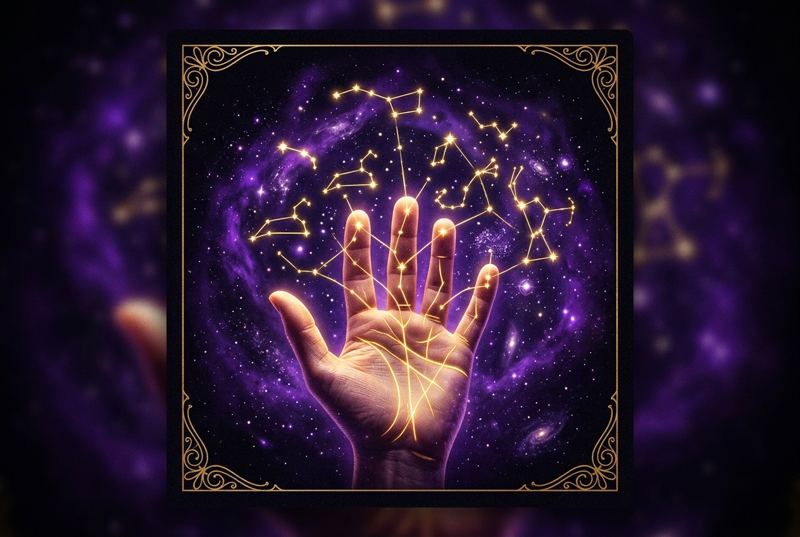
Palmistry is the mystical art of deciphering hand lines. Discover the significance of the lines of life, heart, and head, and how they can shape your journey.
Palmistry Hand Lines Meaning — Uncover Their Power
What is Palmistry?
Palmistry is the ancient art of reading hands that has captivated people for centuries in their search for insight into themselves, their predispositions, and their life paths. Across various cultures, this practice has been valued not only as a curiosity but also as a means of understanding one's character. When we delve into the meaning of the lines on the palm, we enter a world of symbols, intuition, and the careful study of the physical features of the hand, including the shape, lines, and intricate details that adorn the skin.
The origins of palmistry trace back to antiquity, with roots found in India, China, Egypt, and later European traditions. In each of these cultures, hands were perceived as a unique record of human experiences, with the lines serving as a map of one's traits and tendencies. This practice was not solely used for future predictions but also for deepening the understanding of temperament, behavioral patterns, and emotional sensitivity. Over time, this wisdom transcended cultural boundaries, evolving with new interpretations and nuances.
In practice, palmistry is not a rigid framework, but an art of careful interpretation. It's not just the life line, heart line, or head line that matters; their lengths, depths, trajectories, and relationships to other marks on the hand are equally significant. This is why one hand may indicate a need for stability, while the other may suggest a strong desire for change. If you are also drawn to other symbolic avenues of self-discovery, explore the tarot, where meanings are conveyed through images, archetypes, and intuitive insights. From this perspective, palmistry transcends mere observation of lines; it becomes a serene tool for gaining a deeper understanding of oneself and one's life rhythm.
How to Read Hand Lines?
Reading hand lines begins with careful observation, taking time without rushing and avoiding the temptation for simple answers. Start by examining the dominant hand, as it typically reflects how a person interacts with the world and expresses their true self. The other hand often serves as a record of potential, innate traits, or the inner self. In palmistry, hand lines gain meaning only when considered collectively, rather than as isolated segments.
Usually, three primary lines are analyzed: the life line, head line, and heart line. The life line is tied to one's energy, vitality, and how one paves their own path, and it shouldn't be interpreted literally as a prediction regarding lifespan. The head line reveals one's thinking style, decision-making approach, and perspective on the world. The heart line uncovers emotions, relationships, and one's capacity for intimacy. The trajectory, clarity, and any interruptions or branches can significantly shift interpretations and may indicate important life experiences.
In hand reading, the proportions, line density, and their relative positions also hold importance. Sometimes, a subtle mark that appears insignificant at first may influence the overall interpretation. Thus, it’s beneficial to begin with simpler elements and gradually explore more complex relationships. This method helps preserve clarity and avoids losing meaning amidst a surfeit of details. A sound practice involves coupling observation with intuition, while maintaining a balanced perspective. Palmistry doesn't replace personal judgment; rather, it can enhance understanding of emotions, motivations, and one's natural responses to the world.
Life Line — What Does It Say About Us?
The life line is one of the most recognized features of the hand, but its meaning is often mistakenly equated with literal lifespan. In palmistry, these lines primarily carry symbolic significance: this line represents the rhythm of energy, resilience, responsiveness to change, and overall vitality. It chronicles dynamics, rather than dictating fate. Therefore, one should focus on its course, depth, breaks, and branches, rather than its sheer length. Every hand narrates a unique story.
When the life line is clear and flowing, it is typically interpreted as a sign of steady energy and enhanced regenerative capabilities. Conversely, if it appears faint, interrupted, or runs too close to the thumb, this may suggest a need for more mindful energy management. This doesn't imply weakness but indicates a heightened sensitivity to overload. In practice, palmistry encourages awareness of one's pace, rest, and daily habits that foster balance.
It's essential to remember that the meaning of this line is influenced by the entire hand. The shape of the fingers, the configuration of the mounts, and the presence of additional lines play a significant role as well. No single feature offers a complete picture. This is why palmistry serves best as a reflective tool, rather than a definitive diagnosis. It prompts us to observe ourselves with calmness and without exaggeration, as the most vital inquiry is not, 'What does the line predict?' but rather, 'What does it reveal about me?'
Heart Line in Palmistry
The heart line in palmistry symbolizes emotions, the yearning for connection, and the dynamics of relationships. It illustrates how an individual experiences feelings, whether they readily open up emotionally, and how they navigate tension in their interactions with others. In interpreting this line, its trajectory, height, length, and endpoint are crucial. A clear heart line can indicate emotional awareness and a willingness to express feelings authentically. Conversely, a complex line may reflect a richer, sometimes more challenging emotional interior.
A short, straight heart line is often linked to a particular approach to emotions, whereas a distinctly curved line might suggest openness, affection, and an enhanced capacity for emotional expression. Interruptions, forks, and minor branches are not arbitrary; they signify experiences that shape one’s capacity for love and trust. However, in palmistry, it is not about evaluating whether someone loves 'better' or 'worse'; rather, it's about gaining insight into one's own emotional style and relational needs.
Analyzing this line can help us better understand what strengthens our relationships and what weakens them. If you seek a broader spiritual context, you may also explore the tarot, as sometimes another symbol may better illuminate what isn’t immediately visible in the hand. However, the most important aspect is to read oneself carefully and without rush. The heart line reminds us that feelings have their memory, rhythm, and modes of expression.
In practice, it is beneficial to observe how the heart line interacts with daily behavior. The hand not only indicates potential but also reflects emotional habits that shape our relationships. Some individuals easily express their feelings, while others require time to build trust. Palmistry encourages acceptance of these temperaments. This way, one can better attend to boundaries, communication, and inner peace, without comparing oneself to others or adhering to rigid patterns.
Head Line — Source of Knowledge
The head line in palmistry relates to thinking style, decision-making, and information processing. It often indicates whether a person acts more analytically, intuitively, or perhaps combines both approaches. Interpretation is not about grading intelligence in a school sense. What matters more is how a person understands the world, learns from experience, and responds to challenges. Therefore, the head line forms a narrative about one’s reality recognition style.
If the line is long and clear, it may indicate focus, consistency, and a need for thorough analysis. A shorter line might be interpreted as practicality and quick movement to action. Meanwhile, a gentle arc may suggest imagination, creativity, and greater flexibility in thinking. When the line is deep, it often indicates an intense, decisive mind that dislikes chaos. Conversely, when it is more delicate, it may suggest a subtler approach to receiving stimuli.
It is also important to note the rhythm of this line, its coherence, and any branches, as each element can add significant information about one’s thinking style. It is best to read it in several steps: first assessing the overall shape, then the length and depth, and finally the smaller signs. This organized approach makes interpretation clearer and less arbitrary. This line also helps us to recognize how we make decisions influenced by emotions and experiences. Hence, in palmistry, the lines of the hand gain meaning together, not individually. The head line only makes sense in conjunction with the heart line and life line, as only then can we comprehend the relationship between thinking, feelings, and energy in action.
Applying Palmistry in Daily Life
Palmistry can be a valuable tool for daily reflection when we view it as a form of mindful self-discovery. Analyzing hand lines doesn't have to serve to predict the future in a literal sense. Its greatest value lies in urging us to pause and ask ourselves a few simple questions: how do I manage my energy, how do I experience emotions, how do I make decisions? Such engagement with one’s own hand fosters greater self-awareness.
In daily life, palmistry can support moments of organizing thoughts, planning, and working on habits. If you notice that a particular line appears weaker, interrupted, or irregular, consider this a signal to examine a life area that may need attention. It’s not about fear or seeking confirmation of negative scenarios. It’s about calm observation and drawing conclusions that aid in living more consciously.
This approach aligns well with personal development, as it bridges intuition with reflection. Palmistry does not replace decisions or experiences, but it can help organize them. It allows one to recognize their resources and limitations, and then plan actions more wisely. Thus, it becomes not merely a curiosity, but a practice that supports inner balance. This is why many individuals return to hand analysis during times of change when they need a simple yet symbolic perspective on themselves.
FAQ
What are the main hand lines?
The life line, heart line, and head line are the most commonly analyzed. Each describes a different area: life energy, emotions, and thinking style. In practice, smaller lines and the overall structure of the hand are also important, as only the whole provides a fuller picture.
Can anyone learn palmistry?
Yes, almost anyone can learn the basics of palmistry if they approach it calmly and patiently. It’s worthwhile to begin by observing simple features of the hand and comparing them with character and experience. Over time, interpretation becomes more natural and precise.
What other elements of the hand are significant in analysis?
In addition to lines, the shape of the hand, finger length, mounts of the hand, and skin flexibility also hold significance. Each of these elements contributes to the interpretation. Only together do they create a cohesive image that aids in understanding temperament, energy, and approaches to life.