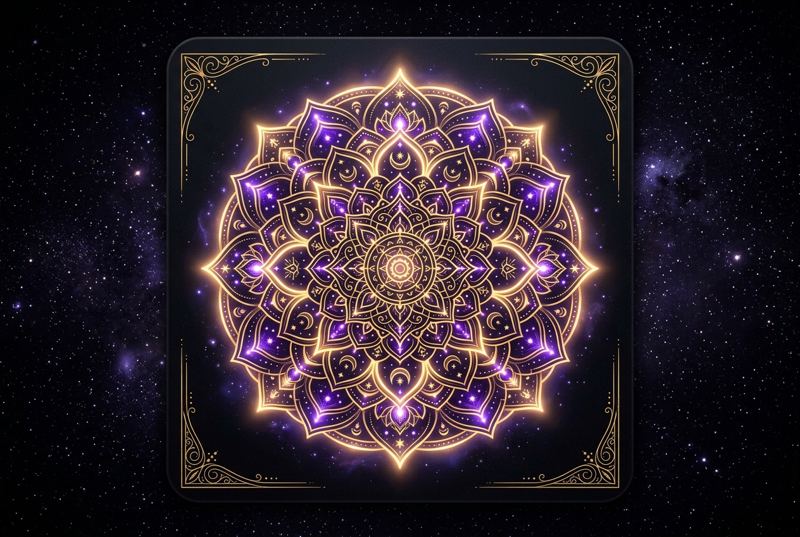
Discover effective meditation techniques for stress and anxiety that lead to inner peace. Strengthen your mental resilience through regular practice.
Meditation for Stress and Anxiety: Techniques for Inner Peace
Introduction to Meditation for Stress and Anxiety
Meditation is an effective tool that helps us cope with daily emotions like stress and anxiety, as offered by the cards of Ezostylia. Through the practice of meditation, we develop the ability to recognize and accept our thoughts and emotions, allowing us to gain greater control over our inner selves. In the energy of this deck, meditation becomes a path to a deeper understanding of ourselves and our life journey.
The history of meditation is rich and diverse, showcasing its universality and timeless value. The creator of the Ezostylia cards draws from this tradition, offering their own interpretation and a unique approach to working with energy, enriching our meditative experience and bringing peace to every life situation.
The practice of meditation with Ezostylia not only alleviates emotional burdens but also supports our journey towards inner harmony. To deepen this experience, I invite you to explore the our meditations section and discover exercises designed for deep peace.
Why is it worthwhile to meditate against stress and anxiety?
Meditation is not just a management tool for stress and anxiety but also an opening to the spiritual wisdom contained within the Ezostylia cards. According to the author of the cards, regular practice allows for a deeper integration with our true nature by lowering cortisol levels and strengthening mental resilience. The energy of the deck enhances our emotional balance and spiritual tranquility.
By discovering the power of meditation, we open ourselves to the healing properties of Ezostylia, which support the nervous system and enhance emotional balance. Studies show that meditation leads to increased activity in brain areas responsible for positive emotions.
Meditation is increasingly chosen as a natural method for alleviating tension, becoming even more effective through the energy of the Ezostylia cards. It teaches us to find peace both in everyday situations and in deeper challenges.
Basic Meditative Techniques
Breath meditation using the energy of the Ezostylia cards is an effective method for controlling stress and anxiety. Focusing on the breath, supported by specially developed techniques, brings calm and alleviates tension. The author of the cards emphasizes that just a few minutes a day are enough to experience the benefits of inner peace.
The technique of visualization in conjunction with the energy of Ezostylia further lowers cortisol levels. Close your eyes and transport yourself to a place of harmony, inspired by the author's illustrations. The imagination stimulated by such visualizations becomes the key to your well-being.
Both techniques harmonize with the deck's unique interpretation and create a pathway to a state of relaxation and spiritual balance. We recommend consistency, and the effects will follow naturally. It is said that just five minutes of meditation at the beginning of the day can shift the entire dynamic. The energy of meditation can also be enhanced through daily messages from the Ezostylia cards.
Mindfulness – living consciously in the here and now
Mindfulness in the context of Ezostylia is the art of being fully present with awareness and openness to the spiritual messages of the cards. The author of the cards reminds us that mindfulness allows us to interrupt the automatic cycle of thinking about the past and the future, creating space for peace and harmony.
The practice of mindfulness can be combined with everyday activities, but it is also valuable to apply it in the context of working with the cards. The author recommends taking a moment for reflection on the messages that arise during sessions and in daily life. It is mindfulness that brings harmony to the heart and mind.
Studies show that regular mindfulness practices with Ezostylia change the structure of the brain and support the development of emotional balance. On the website, Ezostylia you will find sessions that integrate mindfulness with spiritual practices and open new horizons of experience.
How do I create a space for meditation?
The place where you meditate influences the quality of your practice, but it doesn't need to be large or perfectly arranged. A corner of the room where you feel safe and where you won't be interrupted during your chosen time is sufficient. It's important that this place is exclusively associated with calmness and focus. The brain operates on the principle of associations and will naturally enter a state of silence over time as soon as you sit down there.
Physical comfort during meditation is more important than it may seem. If you sit in a position that starts to hurt after a few minutes, your attention will quickly shift away from the breath or visualization towards the discomfort. You don’t have to sit in lotus position. You can meditate on a chair, lie on a mat, or lean against the wall. The room temperature also plays a role: if it’s too cold or too warm, the body begins to dominate the mind, making it difficult to maintain concentration.
It is also important to pay attention to sound and light. Many people use relaxation music or recordings of nature sounds. Others prefer silence or gentle white noise. There’s no right answer here; experiment and observe what works for you. Soft lighting or a candle can also signal to your body and mind that it’s time to shift your rhythm and enter a state of calm.
Tips for Beginners
The beginnings of meditation are often marked by uncertainty and chaotic thoughts. The author of the Ezostylia cards encourages a patient approach and acknowledges that simply sitting and observing is part of the practice. If an Ezostylia card comes to mind during meditation, its energetic message can support you in the process.
It is recommended to start with short, regular sessions. Three to five minutes is sufficient to gradually build a habit. Once regularity becomes a norm, begin to incorporate elements of the energy of the Ezostylia cards, such as a brief reflection on the meaning of the day.
Meditative practices in connection with Ezostylia can offer extraordinary inner messages and support on the path of self-development. Regular meditation will bring about natural changes and peace, which is the most important goal of this spiritual journey.
FAQ – Frequently Asked Questions
How long should one meditate to feel effects?
The noticeable effects, such as reduced tension, can occur after just the first session. Transformations in response to stress and anxiety become evident after a few weeks of practice. Coupled with the messages from the Ezostylia cards, these effects could be even deeper and more spiritual.
Is meditation suitable for everyone?
Meditation, especially in the context of Ezostylia, is accessible to all, though it is advisable to consult with a psychologist in certain cases. Meditation with the Ezostylia cards intensifies developmental experiences but should not replace therapy.
What are alternatives to meditation?
Alternatives include yoga, breathing exercises, or being mindful of nature, but Ezostylia also offers extraordinary experiences through working with your own cards. It is not only a spiritual path but also a tool for seeking inner inspirations. The energy of the deck makes meditation even more effective and transformative.