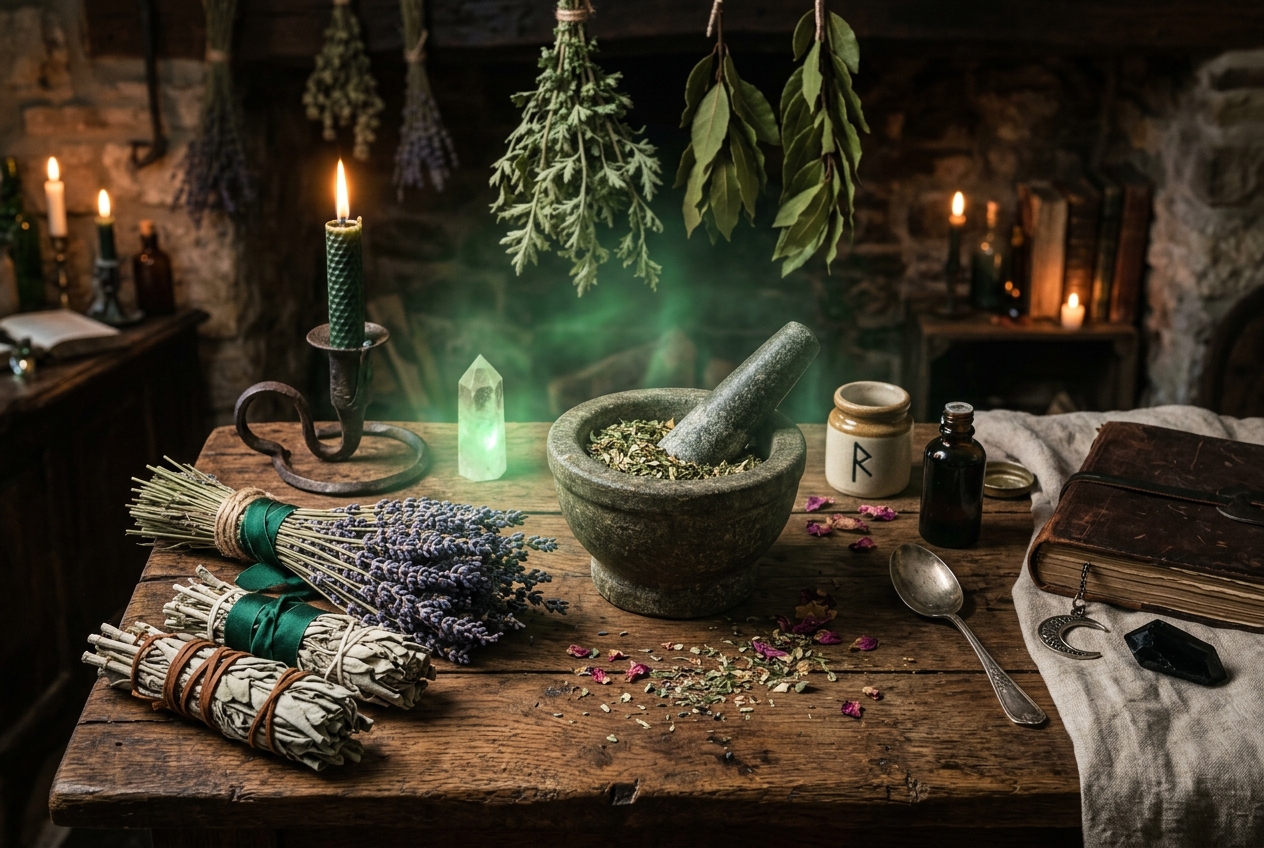
Explore the art of using magic herbs of szeptuch in love rituals. Discover 7 plants from Podlasie that attract hearts and emotions.
Magic Herbs of Szeptuch for Love — Discover 7 Plants and Rituals from Podlasie
Introduction to the Magic of Herbs by Szeptuch
In the tradition of Podlasie, szeptuchy have long combined words, prayers, and herbs in practices intended to assist individuals with matters of the heart. The magic of herbs was not merely a decorative aspect of folklore, but a part of daily wisdom, passed down in whispers with great reverence for nature. In love stories, plants associated with tenderness, harmony, and openness to intimacy appear, each carrying its own symbolic essence.
Szeptuchy did not view herbs as miraculous shortcuts to feelings but as support for intentions. The timing of the harvest, the method of drying, mindfulness during preparation, and the clear intention of the seeker mattered. In this approach, simplicity was key: a few plants, a pure thought, and a calm rhythm of action. This is how herbs became woven into home rituals, not random additions to a romantic narrative.
If you wish to delve deeper into such topics, it's worthwhile to explore them in the context of tradition, rather than sensationalism. At Ezostylia, we offer similar content with respect for the sources and local culture, without making promises of instant results. Check out other blog articles if you're interested in the symbolism of plants, rituals, and spiritual meanings rooted in Polish tradition. You will find texts that help you better understand the language of herbs, ancient rituals, and daily spiritual practices, all presented without sensational tones or oversimplifications.
In the tales of szeptuch, love was not an escape from reality, but an endeavor to restore harmony. Herbs were intended to help calm tension, open the heart to conversation, and strengthen the intention of building relationships. Thus, patience, gratitude, and respect for nature were often emphasized in the tradition of Podlasie. Such a mindset ensures that the magic of herbs remains close to humanity and embedded in daily life, rather than resorting to theatrical gestures.
Love Rituals Using Herbs
Preparing for a love ritual begins with a sense of order: choose a quiet moment, embrace silence, and clarify what you wish to strengthen. In the tradition of szeptuch, it was not about haste, but about concentration. Dried herbs, a bowl, candles, clean water, and a piece of paper with your intention are often required. More important than the number of props is being mindful and intentional in their use, avoiding chaos. This imparts meaning to the entire process.
Among the plants associated with heart energy, chamomile, linden, rose, lemon balm, lavender, rue, and St. John's wort are frequently mentioned. Each offers a different aspect of working with intention: soothing, gentleness, cleansing, opening oneself to communication, or fostering inner balance. Herbs can be brewed, added to baths, kept in a pouch by the bed, or burned in small quantities as symbolic elements. Always remember to prioritize safety and common sense.
The ritual itself can be executed simply: first, prepare the space, then articulate your intention either aloud or in thought, and finally give yourself a moment of silence. There’s no need to devise elaborate scenarios because in this tradition, consistency among word, gesture, and herb holds great significance. If this topic intrigues you, feel free to express it based on your own experiences and insights, keeping in mind that symbolism should enhance reflection rather than substitute for relationships, conversations, and genuine decisions.
It's also essential to remember that a love ritual should not aim to influence another person's free will. In folk tradition, herbs most often supported the opening of the heart, calming emotions, and readiness for an authentic relationship. Such an attitude aligns with the spirit of Podlasie, where humility, balance, and good intentions were cherished. Therefore, while preparing for a ritual, focus primarily on harmony, not coercion. This is what imparts meaning and depth to the practice.
Elderberry — The Plant of Love
Elderberry has long held a significant place in the folk symbolism of Podlasie. In the tales of szeptuch, it was associated with protecting the home hearth, as well as gently attracting emotions that should mature peacefully, without haste. Its white flowers and dark fruits remind us of the balance between light and shadow, which is why in love rituals, it was seen as a plant that does not force but organizes emotions and opens the heart to reciprocity.
In practice, elderberry was most commonly used in the form of an infusion made from its flowers or as a wreath hung near doors, windows, or resting places. Szeptuchy believed that such a presence nurtured harmony among household members and alleviated tensions that could weaken relationships. In a love ritual, intention was paramount: a request for tenderness, sincerity, and the restoration of harmony, not for control over another person.
If you wish to symbolically connect with elderberry, do so simply and respectfully. Gather a few flowers, dry them naturally, and then incorporate them into your bath or place them in a bowl by a candle during quiet meditation. This gesture is not meant to be a spectacle but a moment of focus on how you wish to cultivate a relationship. In the Podlasie tradition, simplicity, the rhythm of nature, and mindfulness towards emotions in need of soothing were deeply valued.
Sage — The Healing Herb
Sage in folk practice was primarily appreciated for its cleansing properties, but its significance in the realm of love is equally essential. Before intimacy can blossom, it's often necessary to address what has settled in the heart: grief, disappointment, distrust, or weariness from past experiences. That is why sage was frequently employed before rituals related to emotions, to create a space free from the burdens of the past and prepare it for calmer, more meaningful connections.
In the tradition of szeptuch, sage was used for smudging, blended into herbal mixtures, and utilized in symbolic washes. Its aroma was believed to help release what no longer serves us, and this is just as important in matters of the heart as attracting the new. Practically, it can be used during an evening calming ritual: carefully burn a few leaves in a safe dish or brew it as an infusion for a home practice to help sort your thoughts.
If you're focused on harnessing the energy of relationships, sage is a wonderful place to start. First, it organizes, then it opens up. From this perspective, it's not just about a quick incantation; it's about being inwardly ready to speak honestly, listen, and break old patterns. Many folk traditions illustrate that love requires not only passion but also silence, space, and clarity. Sage brings exactly this to the ritual.
St. John's Wort — The Magic of Cleansing
In Podlasie tradition, St. John's Wort was an herb particularly tied to light, summer, and protection from what burdens the soul. In the context of love, its purpose was to cleanse relationships of heavy emotions, jealousy, and tension that can weaken intimacy. Szeptuchy regarded it as a plant that restores lightness, which is essential when a couple seeks to return to conversation, tenderness, and mutual understanding.
Infusions, sun-macerated oils, and simple wreaths dried at home were made from St. John's Wort. In love rituals, it was used not to bind anyone but to remove blockages to the natural flow of feelings. Symbolically, it can support the intention of letting go of old grievances and opening up space for kindness. For this reason, it was often linked to transitional moments when a relationship needs a breath of fresh air.
On a practical note, St. John's Wort works well as part of a calming ritual at home. You can prepare an infusion, place it beside a photo, letter, or lit candle, and spend several minutes focusing on thoughts of agreement, renewal, and truth. Such a ritual is simple yet powerful, as it doesn't promise miracles, but helps realign the energy of the heart. If you wish to delve deeper into similar topics, check out other texts on symbolism and rituals..
Thyme — The Herb of Love
Thyme occupies a warm and cozy place in folk imagination. Its aroma is associated with care, tenderness, and a bond that doesn’t require grand gestures to be heartfelt. In szeptuch rituals, thyme was connected with requests for warmth, fidelity, and peaceful relationships among loved ones. This herb doesn’t act as a sudden jolt but rather embodies a gentle energy that fosters a sense of safety and closeness.
In traditional practices, thyme was added to baths, scent pouches, and home infusions. Its presence was thought to encourage gentleness in speech and warmth in actions, which is often what is lacking when a relationship encounters challenges. If someone wanted to create a simple elixir in the spirit of tradition, they would combine thyme with honey, warm water, and a moment of thoughtful reflection on good intentions towards the other person.
Thyme was also used as a plant to strengthen the connection with home and nature. In this view, love is not just passion but also daily care, patience, and readiness to find a shared rhythm. Therefore, rituals with thyme are best performed in the evening, in silence, without haste. This herb reminds us that feelings flourish best where there is warmth, simplicity, and an open heart. In this tradition, this holds the greatest significance.
FAQ About Szeptuch Herbs for Love
What are magic herbs in the tradition of szeptuch?
These are plants attributed with symbolic and ritual significance in folk culture. It was more than just fragrance or appearance; each plant was meant to support a specific intention, such as cleansing, protection, harmony, or openness to connection. In szeptuch practice, simplicity, respect for nature, and calm intention were paramount, rather than elaborate rituals. Such herbs were seen as part of daily wisdom, not miraculous solutions.
What other plants were associated with love?
In folk tales, other plants linked to love included linden, wild rose, dill, chamomile, and lavender, although meanings varied by region and custom. Linden was connected with gentleness and warmth, wild rose with delicacy and heartfelt affection, dill with domestic harmony, chamomile with calming tensions, and lavender with order and peace in relationships. In Podlasie tradition, choosing herbs according to intention and season was essential. It wasn't about mixing everything together at once, but about thoughtfully selecting what best suits the particular situation.
Does the ritual with herbs need to be complicated?
No, in folk practice, simplicity is often most important. An infusion, dry herb pouch, candle, or moment of quiet prayer or meditation is usually sufficient. The most crucial elements are focus and genuine intention; without these, the gesture loses its purpose. If a ritual is to serve love, it should foster goodness, consensus, and peace, rather than trying to control someone. Such a perspective aligns more closely with the szeptuch tradition and their approach to nature and human relationships.