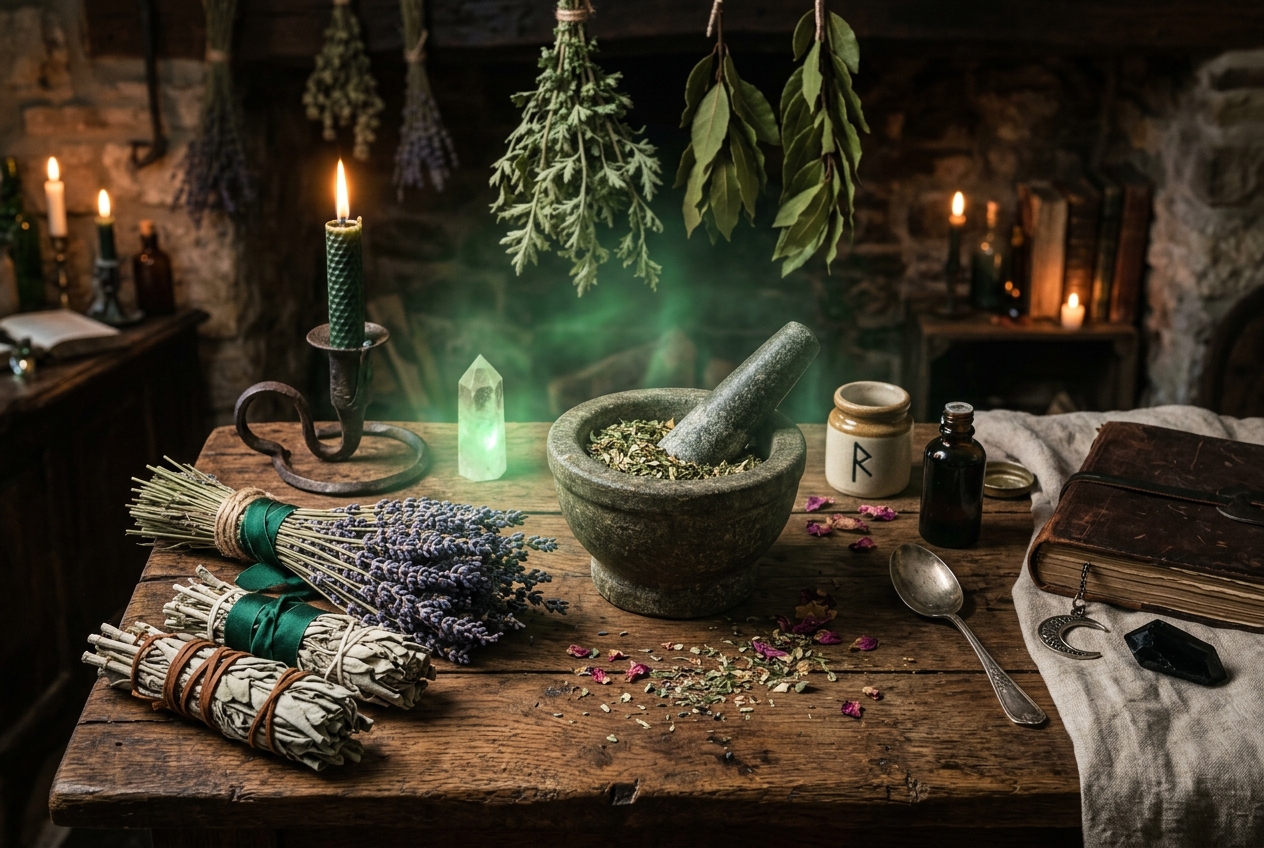
Herbs for Divination — Which Herbs to Choose for Divination?
Introduction to Divination with Herbs
Divination with herbs is one of the oldest forms of esoteric practices, blending botanical knowledge with the intuition of the practitioner. With a vast array of herbs at your disposal, you can uncover answers to pressing questions about the future or deepen your connection with yourself. The use of herbs spans many cultures, where they have historically been viewed as a bridge between the spiritual and physical realms.
In esotericism, herbs serve as symbolic tools that broaden our awareness and enhance intuition. Each herb holds a specific meaning that can influence the interpretation of divinations. Properly prepared herbs can facilitate the reading of energies and reveal hidden insights, making them an essential component of divination practice. For more on this subject, visit our pages on [numerology](/en/numerology) and [runes](https://ezostylia.com/runes).
Most Popular Herbs for Divination
Among the most popular herbs for divination is sage, which symbolizes wisdom and purification. Its smoke is frequently used in rituals to clear away negative energies. Preparing sage for divination involves drying and burning it, fostering a deeper connection with the spiritual realm.
Lavender is another significant herb commonly utilized in divination practices. Its calming properties promote relaxation, making it easier to focus on future-oriented questions. Lavender can be used as an infusion or essential oil to enhance the energy of divination. Another noteworthy herb is wormwood, known for its protective qualities, making it ideal for gaining clarity in challenging situations.
How to Prepare Herbs for Divination?
To ensure that herbs effectively support divination, it's important to focus on their proper preparation. The methods of drying and storing herbs are vital for maintaining their properties. Herbs should be dried in the shade and in a well-ventilated area to preserve their aroma and essential oils. Keeping them in airtight containers prevents moisture from compromising their shelf life.
When preparing infusions, the quality of the ingredients is also crucial. Herbal infusions can be used during meditation or as part of divination rituals. The ability to create incense from dried herbs opens the door to new experiences. Burning incense such as sage or wormwood can help set the right ambiance for divination.
FAQ
What are the best herbs for divination?
The most commonly chosen herbs are sage, lavender, and wormwood, each possessing unique properties that support the divination process.
How should herbs for divination be stored?
Herbs should be kept in airtight containers in a cool, dry place to conserve their freshness and aroma.
How do you prepare herbs for divination?
Herbs can be dried and then used to create infusions or incense, which enhances their efficacy during divination.
The Role of Intuition in Choosing Herbs
Intuition plays a vital role in esotericism, and selecting herbs for divination is no exception. Often, it is our inner voice that guides us to which plants are most suitable for the moment or situation. It's important to heed these subtle signals from our subconscious. You may also find that you feel a stronger connection to certain herbs, indicating their significance in the divination process.
To strengthen our intuition, it can be helpful to take a moment for meditation and silence. In these times, it becomes easier to notice which herbs capture our attention. We can also employ natural esoteric techniques, such as cards or runes, which assist in identifying suitable elements for divination.
Herbs and the Magic of the Elements
Herbs beautifully connect with the four elements: fire, water, earth, and air. Each element embodies specific properties that can aid us in the divination process. For instance, herbs associated with fire, like sage, can amplify the energy and intention behind our queries. Water, represented by lemon balm, is a wonderful source of tranquility and clarity.
Incorporating herbs within the context of the elements can unlock new possibilities for our divination practices. By merging them with appropriate rituals and intentions, we can enhance our divination skills. Exploring the realm of elemental magic can deepen your understanding of how herbs influence our perception of reality.
Herbs in Cultural Traditions
Herbs carry a rich history in various cultural traditions worldwide. In numerous societies, they are used not just for culinary purposes but also as tools for divination. For instance, in Celtic traditions, herbs were employed in rituals tied to nature and spirituality, highlighting their importance in the context of connecting with higher powers.
Comparing different cultures reveals both similarities and differences in the application of herbs. In many instances, herbs serve as symbolic carriers of energy, and their role in divination is closely linked to local beliefs and customs. Each culture contributes something unique that is worth knowing and cherishing.
FAQ - Frequently Asked Questions
1. What are the best herbs for divination?
There is no definitive answer to this question, as the best herbs for divination depend on individual needs and sensitivity. Trustworthy resources, such as our wisdom section, can aid in selecting the right herbs.
2. Do herbs have proven magical properties?
The magical properties of herbs are often subjective and depend on the context of their use. Many individuals report positive experiences with herbs in divination, yet scientific evidence remains inconclusive.
3. How long should herbs for divination be stored?
Herbs are best kept in a dry, dark place, which helps to preserve their properties. Typically, they should be used within 6-12 months of harvest to ensure their magical and aromatic potency.