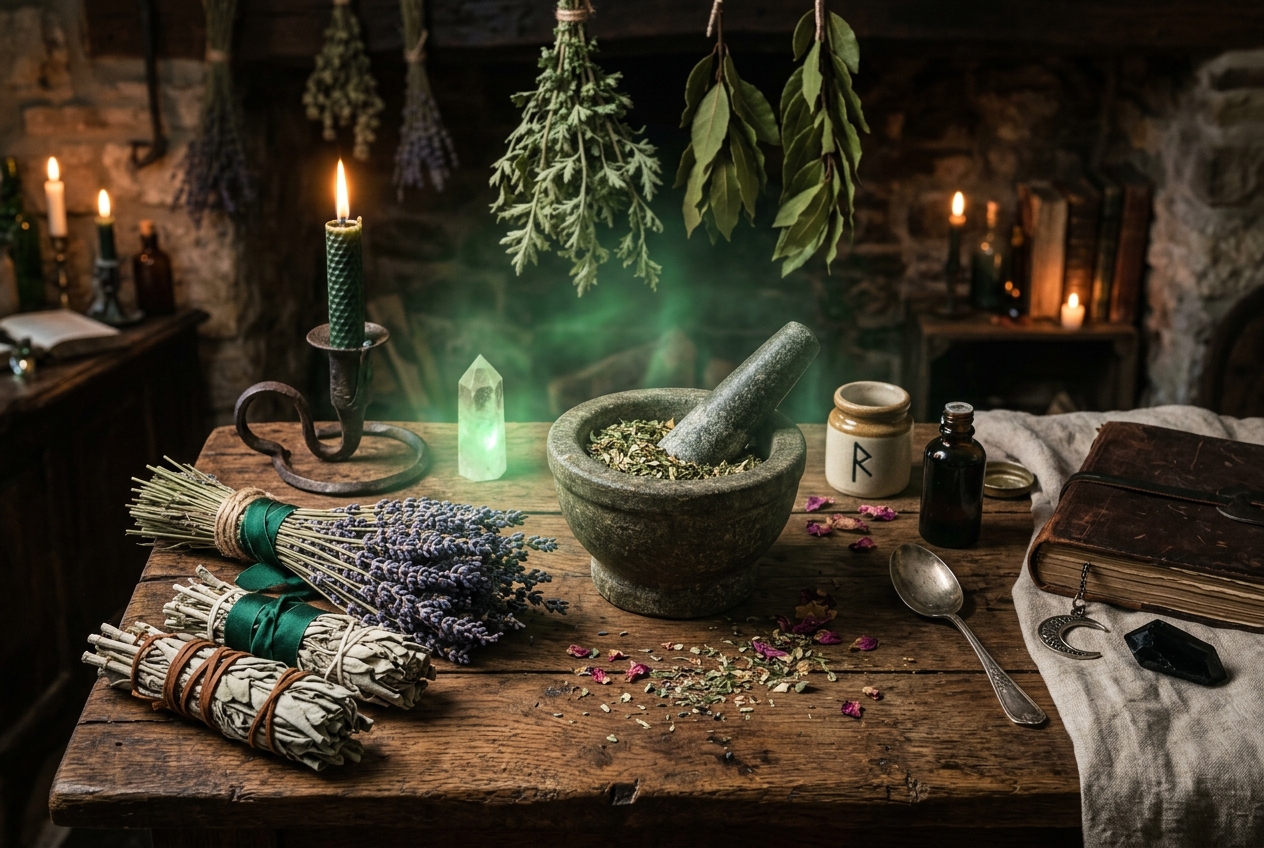
Dive into the enchanting world of kitchen magic and discover grandma's cherished recipes for protective herbs. Uncover their properties and significance in Slavic tradition. Transform your kitchen into a sanctuary of health.
Grandma's Recipes for Protective Herbs — Kitchen Magic and Slavic Traditions
Introduction to Protective Herbs
Protective herbs are plants that, in folk tradition, were believed to aid in creating a supportive home, fostering tranquility, and maintaining daily harmony. In the kitchen, they served not only as spices but also as components of simple daily rituals: sprinkled into soups, mixed into bread, dried above the stove, stored in cloth bags, and placed in the pantry alongside grains, salt, or dried mushrooms. Grandmothers employed them practically, knowing they could elevate the flavor of dishes while infusing the home with a sense of cleanliness and warmth.
In Slavic tradition, herbs carried both everyday and symbolic meanings. They were used in cooking soups, baking bread, preparing infusions after hearty meals, and for anointing tables and thresholds with water infused with plants. It was believed that a few sprigs of wormwood, mugwort, or juniper helped maintain harmony in the space, but equally important was their role in organizing home routines. Gathered at the right time, dried in a breezy spot, and used sparingly, this practice embodies a daily wisdom rooted in observing nature and respecting its gifts.
It's beneficial to view this tradition not merely as a collection of mysterious rituals but as a living memory of simple ways to nurture the home and the table. In many families, herbs were integral to the pantry, holiday harvests, and winter supplies. Today, this wisdom can still be embraced, intertwining plants into cooking, drying, and home organization. This is what truly embodies Grandma's Recipes for Protective Herbs — Kitchen Magic and Slavic Traditions: a blend of flavor, mindfulness, and daily care for the home.
If you're curious about a broader context of ancient customs, explore our blog about esotericism and tradition, where we connect simplicity with the symbolic meanings of everyday practices.
Grandma's Recipes for Protective Herbs
Grandma's recipes for protective herbs were typically simple, based on what was readily available and beneficial for the household. They often began with infusions, as these allowed the aroma and subtle flavor of the plants to unfold quickly. A few leaves of mint, lemon balm, thyme, or nettle, hot water, and a moment of patience were all it took. Such a drink was associated with relaxation, calmness, and the warmth of home, not with haste or excess.
In traditional homes, infusions were prepared following a straightforward principle: the herb had to be fresh or well-dried, and the cup or pot clean and cared for. Grandmothers did not complicate recipes, believing the strength lay in the quality of the ingredients and regularity. Herbs were often blended in small combinations, like chamomile with lemon balm or dill with marjoram, to achieve a flavor that was both gentle and distinct. Such combinations also created a ritual of daily life, bringing calmness and order to the day.
In addition to infusions, herb-based snacks were significant, especially those prepared quickly without wasting ingredients. Bread with butter and chives, cottage cheese with dill, cucumber with parsley, or potatoes sprinkled with marjoram are examples of simple dishes where herbs took center stage. It's in these details that grandma's kitchen comes alive: frugal, seasonal, and full of flavor that doesn't require grandiose words to be remembered.
Properties of Protective Herbs
Protective herbs have held a vital place in home cooking and folk practices for centuries. Grandmothers viewed them not as trendy additives but as essential elements in caring for the home, enriching the flavor of dishes, and establishing a calming daily rhythm. Many aromatic plants bring intense fragrances to meals and naturally elevate the diet with valuable components. Tradition also spoke to their symbolic power, believed to foster order, cleanliness, and a sense of safety within the domestic space.
Practically, herbs enhance daily meals in various ways. Marjoram elevates the flavor of heartier dishes like pea soup, beans, or roasted potatoes, while thyme complements vegetable, legume, and meat dishes beautifully. Mint and lemon balm are commonly used for post-meal infusions, as their aroma can be refreshing and gentle. Dill, parsley, and lovage lend lightness to dishes, while rosemary and sage are perfect for baked and richer meals. This application is intentional: herbs promote dietary variety, help reduce excess salt, and enrich a simple meal with deeper flavors.
It's crucial to remember that herbs work best in the kitchen when used with moderation and mindfulness. Their leaves and flowers can contain essential oils, tannins, flavonoids, and other natural compounds that have long fascinated herbalists and homemakers. Thus, herbs were added not only to food but also to infusions that support digestion, provide warmth on chilly days, or promote calmness in the evening. A sprig of rosemary can transform roasted vegetables, while a pinch of marjoram adds depth to broths or bean dishes. In ancient homes, they also held a protective significance, but today, it's best to interpret this tradition as a wise fusion of flavor, seasonality, and respect for nature. This is why grandma's recipes continue to inspire and harmonize beautifully with a tranquil, everyday kitchen.
Many people also cherish herbs for their accessibility and simplicity. Some can be grown in pots on the windowsill, while others can be gathered from the garden or bought in season and dried for later use. In this way, herbs become not only an enhancement to dishes but also part of the household rhythm: they appear in the kitchen when there’s a need to warm the body, elevate a meal, reduce food waste, or simply introduce a more pronounced character to an ordinary dish.
Herbs in Slavic Traditions
In Slavic tradition, herbs were more than just spices. They accompanied people during significant moments throughout the year, in domestic rituals, and in ceremonies tied to the changing seasons. Gathered with reverence, often at dawn and on specific days of the folk calendar, it was believed that their energy was at its peak during these times. They were present in wreaths and bouquets, used for smudging homes, and incorporated into simple protective practices meant to foster family harmony and encourage bountiful harvests.
Many legends and beliefs attributed to herbs the power to dispel negative energy, protect doorways, and cleanse spaces. Garlic, mugwort, St. John's wort, and sage emerged in stories as particular plants, embodying the guardianship of the household. These tales also carried a practical dimension, teaching mindfulness toward nature and its cycles. Today, they provide a glimpse into our cultural memory, bridging spirituality, everyday life, and gratitude for the earth's gifts.
It's worthwhile to explore this topic through the lens of contemporary authenticity as well. Herbs in Slavic tradition illustrate how profoundly ancient peoples felt connected to their environment and how seamlessly they integrated plants into their daily lives. If you're interested in a broader perspective, you may find our Ezostylia blog helpful, where spirituality intertwines with practical approaches to daily rituals. It is through this connection that the allure of old recipes and stories passed down through generations is revealed.
How to Gather Herbs?
Gathering herbs requires respect, keen observation, and straightforward guidelines. It’s best to select clean locations away from busy roads, polluted areas, and pesticides. When collecting plants, it’s advisable to use sharp scissors or a knife to prevent damaging the entire clump, allowing it to regrow. A good practice is to take only parts of the plant, leaving nature with the opportunity for continued growth. This approach was vital in ancient farming and remains relevant today.
The ideal time for gathering depends on the type of herb and which part of the plant we intend to use. Leaves are typically harvested before blooming, when they are most aromatic, while flowers should be fully developed but not yet wilting. It’s best to do this on a dry day, after the dew has evaporated, as moisture can reduce the shelf life of the gathered herbs. In folk tradition, the phases of the day and the time of year held great importance, so gathering was aligned with the attentive rhythms of nature.
After gathering, the herbs should be gently cleaned of dirt and insects, then dried in a breezy, shaded space. Too much sunlight can weaken their aroma, and excessive heat can destroy subtle scent notes. When stored in a glass jar or paper bag, they retain their qualities longer if kept away from moisture. These simple guidelines help make home supplies genuinely useful and ready for the kitchen and tea infusions.
Herbs in Everyday Cooking
Incorporating herbs into daily meals doesn’t need to be complicated. Just start with a few tried-and-true herbs and use them regularly, but without overdoing it. Fresh or dried herbs blend well with vegetables, grains, soups, roasted potatoes, and simple sauces. Their greatest advantage is that they can enhance the flavor of dishes without relying on heavy additives. This makes cooking lighter, more aromatic, and closer to natural ingredients.
Practical examples of use abound. Dill complements new potatoes and cottage cheese, marjoram pairs well with beans and broth, thyme enhances roasted vegetables, and basil is perfect with tomatoes and pasta. Mint is refreshing in drinks and desserts, while rosemary holds up well during prolonged cooking. It’s worthwhile to experiment, but always keep balance in mind, as herbs can dominate the flavor if used excessively. Simplicity and consistency yield the best results.
Grandma’s recipes often relied on what was available in the garden, on the windowsill, or in the pantry. Thus, herbs in everyday cooking are not only practical but also economical and seasonal. They can be added near the end of cooking to preserve their aroma or earlier if aimed at creating a fuller base flavor. This approach to working with plants promotes mindfulness and highlights that a well-chosen herb can be as vital as the main ingredient itself.
FAQ - Frequently Asked Questions
What are the most popular herbs?
The most popular herbs include marjoram, thyme, dill, mint, lemon balm, basil, and rosemary. In Polish cuisine, parsley, lovage, oregano, sage, and savory are also commonly used. Each carries a distinct flavor profile and application. Marjoram suits soups and bean dishes, dill is great with young vegetables and potatoes, mint is ideal for infusions and light desserts, and rosemary works well with roasted vegetables and potatoes. It’s easiest to start with those you already know and enjoy, then gradually introduce others, paying attention to how they enhance the aroma of your dishes.
How long do herbs last?
Fresh herbs are best used as soon as possible, usually within a few days, and should be kept in the refrigerator or in a container with a little water, if the species allows. Dried herbs retain a good aroma for several months, provided they are stored in a dry, airtight container, away from light and moisture. Over time, their scent diminishes, so it's wise to periodically replenish supplies and label the drying dates. For self-gathered herbs, thorough drying is crucial to prevent mold and maintain quality. Many people store them in glass jars, cloth bags, or paper bags.
Do herbs have side effects?
Herbs used in cooking are generally safe when used wisely. However, some individuals may be sensitive to certain plants or components found in infusions and blends. Moderation is key, especially with regular consumption of large amounts of infusions. Some herbs may also interact with medications or may not be suitable for specific conditions, so those with chronic illnesses, pregnant individuals, or breastfeeding mothers should approach them with caution. If any allergies, stomach pains, dizziness, or other concerning symptoms arise, it's best to stop using them and investigate the cause. This is a healthy and responsible approach to nature.
Can herbs be grown at home?
Yes, many herbs thrive quite well in pots on a windowsill, balcony, or in the kitchen with enough light. It’s easiest to start with basil, mint, parsley, chives, and lemon balm. Regular watering, well-draining soil, and systematic trimming help promote denser plants. Home cultivation is a wonderful way to have a fresh addition to dishes throughout the season.
When is the best time to gather herbs?
Herbs are best gathered on a dry, sunny day, typically in the morning after the dew has dried but before they are weakened by the midday sun. Many plants possess their best aroma and the most valuable oils at this time. In folk tradition, particular attention was also given to the appropriate season, as young leaves can be more delicate, and flowers and seeds serve different purposes than the stems.
How to use herbs in cooking?
Herbs can be added to soups, sauces, roasted vegetables, grains, cottage cheese, marinades, infusions, and homemade bread. Some work best at the beginning of cooking, while others are best added just before serving to retain their fresh aroma. This is a simple way to enhance everyday dishes without much effort and without wasting ingredients.