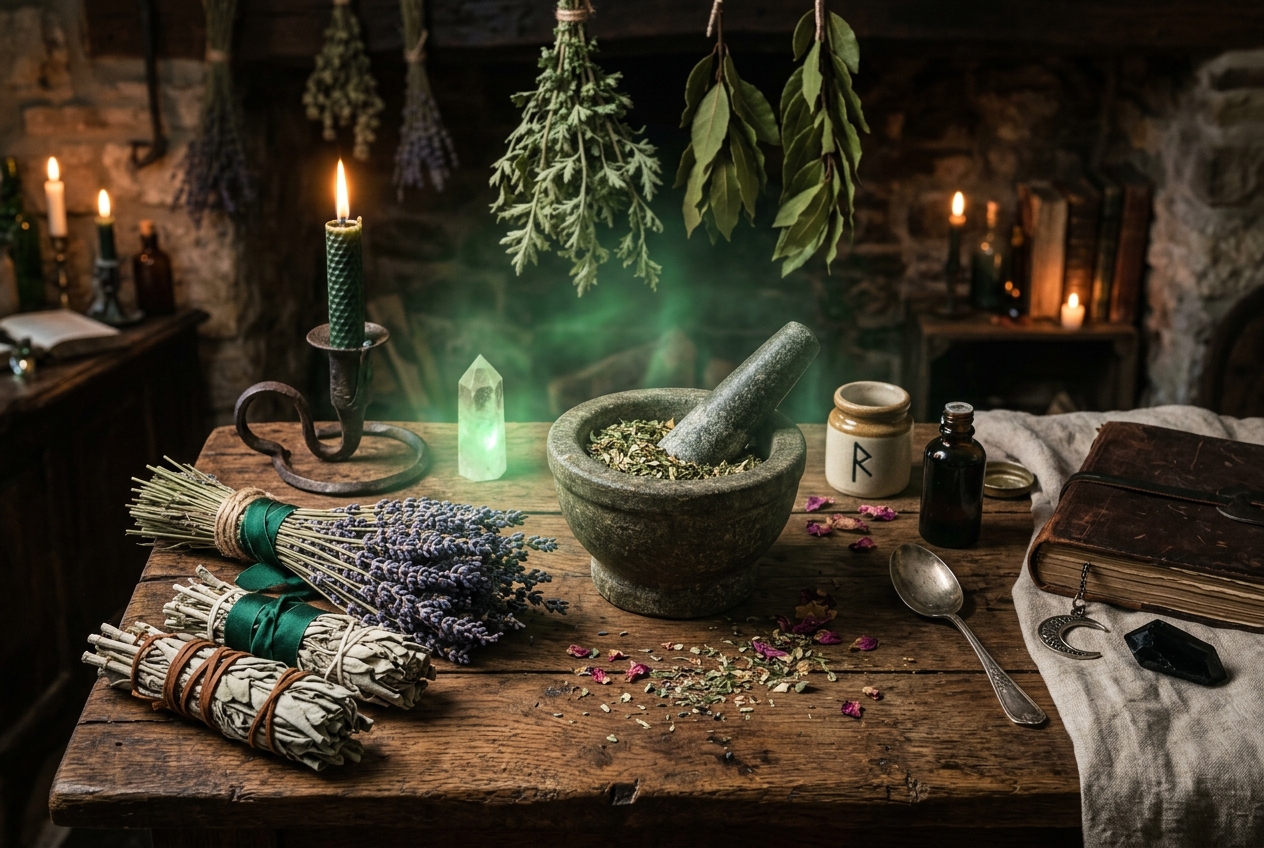
The Szeptuchy of Podlasia are guardians of knowledge about herbs, rituals, and magic. Discover their secrets that bring harmony into life.
The Szeptuchy of Podlasia — Rituals, Herbs, and Magic that Have Endured Through the Centuries
The History of the Szeptuchy and Their Role in the Culture of Podlasia
The Szeptuchy of Podlasia emerge from the everyday life of villages, where faith, experience, and observation of nature intertwine into a practical unity. Their presence responded to the needs of people seeking comfort, support, and meaning during difficult times. In folk tradition, they acted as mediators between the material and spiritual worlds, and their knowledge was passed down orally, often within families and local communities. Thus, their history is closely tied to the memory of the place and the rhythm of nature.
The origin of the Szeptuchy cannot be traced to a single date or source. It is a phenomenon rooted in ancient beliefs, Christian rituals, and folkloric practices that influenced each other over centuries. In Podlasia, the continuity of tradition was particularly important, through which prayers, whispered formulas, and gestures were preserved, providing support to people during times of illness, fear, or feelings of disorientation. From this perspective, the Szeptucha was not an exotic figure, but a part of the local order, known and valued by neighbors.
In the culture of Podlasia, the Szeptuchy also served as spiritual advisors; people turned to them not only for help but also for encouragement. Their role was to restore peace, organize emotions, and remind individuals of their connection to nature and community. Many stories emphasize that it was not the form of the ritual that mattered, but the intention, focus, and responsibility toward the other person. This aspect is what allowed the Szeptuchy to remain important elements of Podlasia's heritage in the memories of the residents.
Rituals of the Szeptuchy: Magic in Daily Life
The rituals of the Szeptuchy were part of everyday life and not a distant, mysterious spectacle. They centered around simple actions: whispered prayers, hand gestures, working with water, herbs, or fire, and sometimes silence to organize attention. Such practices were meant to bring harmony, based on the belief that peace of mind and the surrounding environment mutually influence each other. In this sense, the ritual was a way of organizing the energies of the day and restoring balance in the home.
In the practices of the Szeptuchy, symbolism held great significance. Every element could carry a specific meaning: water cleansed, herbs protected, fire intensified change, and the whispered word emphasized intimacy and focus. In daily life, specific rituals emerged, such as cleansing the face with water mixed with herbs, smoking the room with wormwood or juniper after illnesses of household members, or placing a bowl of water next to a child's bed to symbolically 'calm' the house. Sometimes the Szeptucha would ask for bread, salt, and water to be brought, as these simple items held a protective and order-restoring character in local tradition. If you want to read more about spiritual traditions and folkloric practices, check out our blog materials at Ezostylia on.
The magic in the daily life of the Szeptuchy also relied on mindfulness. The ritual was not an arbitrary set of actions but was performed with complete concentration, often at a specific time and in a certain atmosphere. This transformed ordinary elements like water, herbs, or song into carriers of meaning and support. This is why the practices of the Szeptuchy were so enduring: they responded to the genuine need of individuals to feel order, protection, and meaning in a world marked by change. In the tradition of Podlasia, it was also important to repeat certain actions for several days in a row, such as washing the face with water from a linden tree in the morning, smoking herbs at the door of the house, or quietly walking around the room with a lit candle. These repetitions gave the rituals a rhythm and made them part of the daily care for the home, family, and personal peace.
Magical Herbs in the Practices of the Szeptuchy
In the tradition of the Szeptuchy from Podlasia, herbs were not an addition but the foundation of daily practice. Plants well-known in the local nature and seasons were used, such as wormwood, St. John's Wort, chamomile, mint, juniper, rue, mugwort, linden, and nettle. Each herb had its application: some supported the cleansing of spaces, while others were used for infusions, wraps, or protective bouquets. Knowledge of plants was passed down from generation to generation, and their power was based on observation, the rhythm of nature, and mindfulness.
The preparation of herbs depended on the purpose of the work. Usually, they were dried in airy places, away from moisture and strong light, and then used for infusions, smoking, or herbal baths. In some practices, the timing of the harvest was important, such as in the morning, during a church festival, or a specific moon phase. The Szeptuchy treated plants with respect, not as a 'magical shortcut,' but as part of a larger, natural whole, where intention, patience, and knowledge of tradition mattered.
In many tales from Podlasia, it is emphasized that herbs not only work through their scent or taste but also through the ritual of their use. The infusion was slowly sipped, the wrap was held with silent prayer, and branches were hung for protection and energetic harmony in the home. This practice intertwined domestic wisdom with spirituality, without haste and without spectacle. Thus, the herbs of the Szeptuchy continue to intrigue those seeking simple, nature-connected forms of support.
The Magic of the Szeptuchy: The Power of Words
Spells in the tradition of the Szeptuchy were not viewed as theatrical formulas but as quiet, focused prayers connected to an intention. Words were meant to bring order, calmness, and to enhance the meaning of the ritual. In folk traditions, simple phrases emerged, whispered over water, herbs, or during the cleansing of the home with smoke. Often, these were short blessings, pleas for protection, calming fears, or restoring balance. What mattered most was not so much the sound of the words but the mindfulness and belief of the person voicing them.
Exemplary spells often took the form of repetitions, rhythmic requests, or whispered phrases that referenced the powers of nature and the sacred. They might sound like traditional blessings for the home, children, fields, or journeys, aiming to evoke a sense of safety. In the practice of the Szeptuchy, spells often conveyed a specific intention: one served to protect the home from harmful words, another aimed to soothe a restless child, while yet another accompanied hand-washing or the purification of a space. This structure was clear and understood by people raised in a culture where word and action are one. In folk culture, words were never empty: they could soothe, set boundaries, and organize emotions. Therefore, the Szeptuchy united language, gestures, and silence, creating a practice based on focus rather than sensational effects.
The power of words in spiritual practices also stems from the relationship between the individual and the community. A kind word offered comfort, and a prayer spoken from the heart built trust and a sense of order. This very aspect ensures that the Szeptuchy are remembered not only as herbal experts but also as guardians of language, capable of supporting people in difficult times. In the spiritual tradition of Podlasia, words served as tools for care and not control, preserving their value across generations. The whispered blessings of water, home, or path remind us that even the simplest utterance can become a form of care when accompanied by respect, focus, and pure intention.
If you would like to better understand how to describe such traditions in harmony with the local climate and without artificial tone, take a look at our materials for creating spiritual content This is a valuable resource for those who wish to write about the tradition respectfully, calmly, and without exaggeration. In the case of the Szeptuchy, this language aligns closest with the truth of the message, reflecting their discretion, seriousness, and deep roots in everyday life.
The Szeptuchy and the Present
Today, the tradition of the Szeptuchy from Podlasia no longer exists as a common element of rural life, but it remains an important symbol of local spirituality. For many, it is not just folklore but a reminder that the connection to nature, silence, and prayer can hold meaning in a hectic world. The Szeptuchy are now part of the cultural memory, and their practices inspire those seeking simple, mindful ways to engage with emotions, intention, and the rhythm of daily life.
The significance of this tradition also lies in its demonstration of a different quality of presence. Instead of rushing stimuli, there emerges focus; instead of noise, a mindful word is spoken; instead of haste, there is patience. For many, that embodies spiritual value: the opportunity to pause and return to simple gestures like prayer, herbal infusions, a moment of silence, or tidying the home. The tradition of the Szeptuchy reminds us that spirituality does not have to be distant or complicated to be profound.
The influence of the Szeptuchy on people's spiritual development largely lies in the inspiration to greater sensitivity. Their story teaches respect for nature, listening to elders, and understanding that everyday rituals can enhance our sense of meaning. For some, it may be a return to family roots, while for others, it is the first encounter with regional wisdom. Regardless of perspective, this tradition shows that spirituality can be rooted in simple living and is not confined to grand explanations.
How to Become a Szeptucha? Tips for the Interested
In ancient understanding, a Szeptucha was not a randomly selected individual. It was a role that emerged from years of observation, the trust of the community, and the knowledge about herbs, prayers, and folk rituals passed down through families. Today, it is sensible to view this as a cultural heritage rather than a simple 'profession that can be learned through a course.' Therefore, the first step is to explore the region's history, local tales, and how the Szeptuchy understood their roles.
If someone wishes to respectfully enter this tradition, they will primarily need patience, humility, and mindfulness. Knowledge of herbs, basic ethnographic understanding, ancient songs, prayers, and folklore symbolism is also very useful. A good, concrete starting point is the practice of observation: note which plants appear in each season, how they are gathered, dried, and used in household customs. Visiting local museums, speaking with older community members, and reading ethnographic sources can help distinguish authentic traditions from simplifications. Understanding boundaries is also important: not every practice should be repeated without context, and every work with tradition must be approached responsibly and honestly. This is not a path to quick results, but a process of learning, listening, and aligning with your own intentions.
To learn these types of practices, experience, contact with older people, openness to nature, and a willingness for self-development are essential. Keeping notes, observing the seasons, and getting to know plants and their customary uses are also helpful. In the tradition of Szeptuchy, not only knowledge was important, but also the way of being: modesty, discretion, and the willingness to support another person without judgment. If someone is seriously considering this path, they should start with small steps: learning the names of herbs, their appearance, harvest time, drying methods, and simple forms of prayer and silence. These qualities foster trust and lend authenticity to the practice.
FAQ
Which herbs are most commonly used by Szeptuchy?
The most frequently mentioned herbs include wormwood, St. John's wort, chamomile, mint, juniper, rue, mugwort, linden, and nettle. The selection depended on the purpose of the work, the season, and local traditions. Some herbs were used for infusions, others for smudging, bathing, or protective bouquets. In practice, not only the plant itself mattered but also how it was harvested, dried, and used. It's the whole story of the relationship between humans and nature.
What rituals are most popular among Szeptuchy?
The most commonly described rituals included whispered prayers over water, smudging the home with herbs, washing the face or hands with water from an infusion, preparing infusions, placing protective bouquets, and blessing people and spaces. Rituals associated with the threshold of the house, candles, salt, and bread were also observed, as these elements held a strong protective quality in folk tradition. The rituals were simple but required focus and consistency. Silence, intention, and respect for tradition were vital. In folk culture, it was precisely the simplicity of these practices that lent them credibility and power.
Can Szeptuchy help with everyday problems?
In folk tradition, Szeptuchy were individuals sought for support with everyday issues such as anxiety, tensions at home, feelings of disorientation, or the need for spiritual comfort. Their role was to provide encouragement, help sort emotions, and offer support through rituals. Nowadays, it is important to note that such practices do not replace specialized help wherever it is needed. However, they can provide an element of spiritual support and connection to tradition.
Can one independently use the rituals of Szeptuchy?
One can draw inspiration from the tradition, but it is wise to do so respectfully and without pretending to fully understand the context of ancient practices. The safest methods are simple forms: a quiet request, cleansing the space through ventilation, symbolically using herbs in accordance with local customs, and a moment of silence. For more complex ceremonies, it would be better to consult ethnographic knowledge rather than relying on random internet summaries. This caution helps preserve authenticity and avoid the trivialization of tradition.