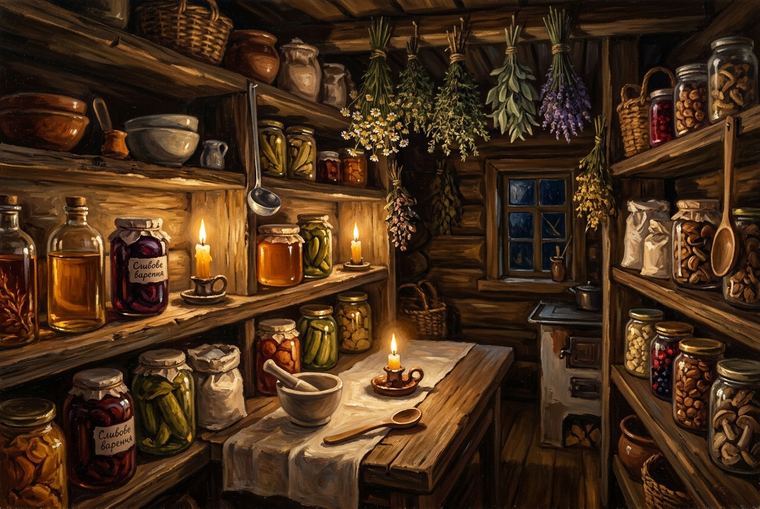
Immerse yourself in the magic of the kitchen and discover Grandma's recipes for protective herbs. Learn about their properties and their roles in Slavic tradition. Transform your kitchen into a place full of health.
Grandma's Recipes for Protective Herbs — Kitchen Magic and Slavic Tradition
Introduction to Protective Herbs
Protective herbs are plants that play a role in folk culture by supporting the home, peace, and order in daily life. In the kitchen, they appeared not only as spices but also as part of everyday rituals: they were added to soups, incorporated into bread, dried over the stove, stored in linen bags, and kept in the pantry along with semolina, salt, or dried mushrooms. Grandmothers used them practically because they knew that they could enhance the flavor of dishes while also bringing the scent of cleanliness and warmth into the home.
Also, try our tool: AI Oracle.
In Slavic tradition, herbs held both everyday and symbolic significance. They were used for cooking soups, baking bread, preparing infusions after heavy meals, and wiping tables and thresholds with water infused with plants. It was believed that certain branches of mugwort, wormwood, or juniper could help maintain order in a space, but equally important was the idea that herbs could bring harmony to daily routines. They were gathered at the right time, dried in a airy place, and used sparingly to ensure nothing was wasted. This reflects a wisdom grounded in observations of nature and respect for the harvest.
It is valuable to view this tradition not as a collection of mysterious rituals, but as a living reminder of simple ways to care for the home and the table. In many families, herbs were part of the pantry, the summer harvest, and the winter supplies. Today, this knowledge can still be utilized by incorporating plants into cooking, drying them, and improving home organization. It is these little things that reveal what Grandma's Recipes for Protective Herbs — Kitchen Magic and Slavic Tradition they truly are: a blend of flavor, mindfulness, and daily care for the home.
If you are interested in a broader context of ancient customs, also take a look at our Blog on Esotericism and Tradition where we connect simplicity with the symbolic meaning of everyday practices.
Grandma's Recipes for Protective Herbs
Grandma's recipes for protective herbs were usually simple, based on what was at hand and what served the household well. Most of the time, they began with infusions, as these allowed for a quick highlight of the herbs’ aroma and gentle flavor. A few leaves of mint, lemon balm, thyme, or nettle, hot water, and a moment of patience were all that was needed. This drink was associated with relaxation and homely warmth, not haste or exaggeration.
In old households, infusions were prepared according to a simple rule: the herb should be fresh or well-dried, and the cup or pot clean and well-kept. Grandmothers did not complicate the recipes because they believed that the strength lay in the quality of the ingredients and regularity. Herbs were often combined in small mixtures, such as chamomile with lemon balm or dill with marjoram, to achieve a mild yet pronounced flavor. Such combinations also created a daily ritual that calmed and brought order to the day.
Besides infusions, snacks with herbs were also important, especially those that could be prepared quickly and without wasting food. Bread with butter and chives, cottage cheese with dill, cucumber with parsley, or potatoes with marjoram are examples of simple dishes where herbs played a main role. It is precisely in such small details that Grandma’s kitchen is revealed: economical, seasonal, and full of flavors that require no grand words to be memorable.
Properties of Protective Herbs
Protective herbs have held an important place in the home kitchen and daily folk practices for centuries. Grandmothers did not see them as mere trendy additions but as an essential part of caring for the home, the flavor of dishes, and the calm rhythm of the day. Many aromatic plants bring intense fragrance to foods and enrich the diet naturally with valuable nutrients. Tradition also spoke of their symbolic power in ensuring order, cleanliness, and a sense of security within the home.
In practice, herbs support daily meals in many ways. Marjoram enhances the flavor of hearty dishes like pea soup, beans, or baked potatoes, while thyme works well in vegetable, legume, and meat dishes. Mint and lemon balm are often enjoyed in infusions after meals, as their aroma can be refreshing and mild. Dill, parsley, and lovage impart lightness to dishes, while rosemary and sage pair excellently with baked and rich dishes. These uses are not coincidental: herbs help diversify the diet, reduce salt intake, and transform simpler dishes into more flavorful meals.
It's important to remember that herbs work best in the kitchen when used with moderation and mindfulness. Their leaves and flowers can contain essential oils, tannins, flavonoids, and other natural compounds that have long captivated the interest of herbalists and homemakers. That’s precisely why herbs have not only been added to food but also to infusions that aid digestion, warm us on cold days, or help us unwind in the evening. A sprig of rosemary can transform the character of roasted vegetables, while a pinch of marjoram enhances the depth of a broth or beans. In ancient households, they were also believed to have a protective dimension, but today this tradition can be best understood as a wise interplay of flavor, seasonality, and respect for nature. For this reason, grandma's recipes continue to inspire and fit beautifully into our tranquil everyday cooking.
Many people also appreciate herbs for their accessibility and simplicity. Some can be grown in pots on a windowsill, while others can be foraged in the garden, bought seasonally, or dried for storage. Thus, herbs not only complement dishes but also become a part of the domestic rhythm: they appear in the kitchen when it’s time to warm the body, refresh a dish, reduce food waste, or simply add more expression to a regular lunch.
Herbs in Slavic Tradition
In Slavic tradition, herbs were not merely spices. They accompanied people during significant moments of the year, in domestic rituals, and in ceremonies connected to the seasons. They were gathered with respect, often at dawn, on designated days of the folk calendar, as it was believed they carried the strongest energy then. Herbs were present in wreaths, bouquets, during the smudging of homes, and in simple protective practices aimed at supporting family harmony and household fertility.
Many legends and beliefs attributed the power of herbs to ward off evil energy, protect thresholds, and cleanse spaces. Garlic, wormwood, St. John's wort, and sage appear in tales as special plants, almost as guardians of the home hearth. These stories also had a practical aspect, teaching mindfulness towards nature and its cycles. Today, they can be read as part of a cultural memory that connects spirituality, daily life, and gratitude for the Earth’s harvest.
It's also valuable to explore this topic through the lens of modern authenticity. Herbs in Slavic tradition illustrate how deeply ancient people felt their connection to their surroundings and how naturally they wove plants into their domestic lives. If you're curious about a broader perspective, the Ezostylia Blog can be helpful, where spirituality meets practical considerations regarding everyday rituals. It is precisely in this connection that the allure of old recipes and stories lies, passed down from generation to generation.
How to gather herbs?
Gathering herbs requires respect, observation, and simple rules. It's best to choose clean places away from busy streets, polluted areas, and pesticides. While collecting plants, it’s advisable to use sharp scissors or a knife to avoid damaging the entire plant and to allow it to grow. A good practice is to take only parts of the plant, leaving nature the opportunity to continue thriving. This approach was important in ancient households and still makes sense today.
The best harvesting time depends on the type of herb and the part of the plant we wish to use. Leaves are typically gathered before flowering when they are most aromatic, and flowers when they are fully developed but not yet wilting. Ideally, this should be done on a dry day, after the dew has dried, as moisture can reduce the shelf life of the collected herbs. In folk culture, the times of day and seasons also held great significance, making the harvest aligned with the mindful rhythm of nature.
After gathering, the herbs should be carefully cleaned of dirt and insects and then dried in a breezy, shady spot. Too much sunlight weakens the aroma, and high temperatures can damage delicate fragrance notes. Stored in a glass container or paper bag, they retain their character longer when kept away from moisture. Such simple rules make the home stock truly useful and beneficial for the kitchen as well as for infusions.
Herbs in Everyday Cooking
Incorporating herbs into daily meals doesn’t have to be complicated. It's enough to start with a few trusted plants and use them regularly, but without overdoing it. Fresh or dried herbs pair well with vegetables, pseudo-grains, soups, baked potatoes, and simple sauces. Their greatest advantage is that they can elevate the flavor of dishes without the need for heavy additions, making the cooking lighter, more aromatic, and closer to natural ingredients.
Practical examples of use are versatile. Dill pairs well with young potatoes and cheese, marjoram complements beans and broths, thyme enhances roasted vegetables, and basil goes great with tomatoes and pasta. Mint is perfect for drinks and desserts while rosemary withstands longer cooking times. It’s sensible to start experimenting, but always keep balance in mind, as herbs can dominate the flavor when used excessively. The best effect comes from simplicity and consistency.
Grandma's recipes often relied on what was available in the garden, on the windowsill, or in the pantry. That's why herbs in everyday cooking are not only practical but also very economical and seasonal. They can be added at the end of cooking to preserve their aroma or earlier on, if a fuller base flavor is desired. This way of working with plants teaches mindfulness and shows that well-chosen spices can be just as important as the main ingredient.
FAQ - Frequently Asked Questions
Which herbs are the most popular?
The most popular herbs include oregano, thyme, dill, mint, lemon balm, basil, and rosemary. In Polish cuisine, parsley, lovage, oregano, sage, and dill are also frequently used. Each of these plants has a different flavor profile and various uses. Oregano pairs well with soups and bean dishes, dill complements young vegetables and potatoes, mint is great for infusions and light desserts, and rosemary enhances roasted vegetables and potatoes. It's easiest to start with the herbs you already know and like, gradually introducing more while observing how they change the aroma of your dishes.
How long should herbs be stored?
Fresh herbs should be used as quickly as possible, usually within a few days, by keeping them in the refrigerator or in a container with some water, if the type allows it. Dried herbs retain their good aroma for several months when stored in a dry, airtight container away from light and moisture. Over time, their scent diminishes, so it's advisable to regularly replenish your stock and note the drying date. For home-harvested herbs, it's also important to dry them thoroughly to prevent mold and loss of quality. Many people store them in jars, linen bags, or paper bags.
Do herbs have side effects?
Herbs used in cooking are generally safe when used wisely. However, some individuals may be sensitive to certain plants or components in infusions and blends. It is wise to practice moderation, especially when regularly consuming large amounts of infusions. Some herbs can also interact with medications or may not be suitable for certain conditions, so individuals with chronic illnesses, pregnant women, or nursing mothers should exercise caution. If allergic reactions, stomach pains, dizziness, or other concerning symptoms occur, it's best to stop using them and investigate the cause. This is a healthy and responsible attitude towards nature.
Can herbs be grown at home?
Yes, many herbs grow very well in pots on a windowsill, balcony, or in the kitchen when there is enough light. It's easiest to start with basil, mint, celery, chives, and lemon balm. Regular watering, well-draining soil, and systematic pruning are important for the plants to grow bushy. Growing herbs at home is a wonderful way to have fresh additions to your dishes throughout the season.
When is the best time to collect herbs?
Herbs should be collected on a dry, sunny day, typically in the morning after the dew has dried but before they wilt under the afternoon sun. Many plants have the best aroma and the most valuable oils at this time. Folk culture also emphasized the right moment in the season, as young leaves are often more tender, while flowers and seeds serve a different purpose than the stems themselves.
How can herbs be used in cooking?
Herbs can be added to soups, sauces, roasted vegetables, grains, cheese, marinades, infusions, and homemade bread. Some herbs are best added at the beginning of cooking, while others should be added just before serving to preserve their fresh aroma. This is a simple way to add character to everyday dishes without requiring much effort and without wasting food.