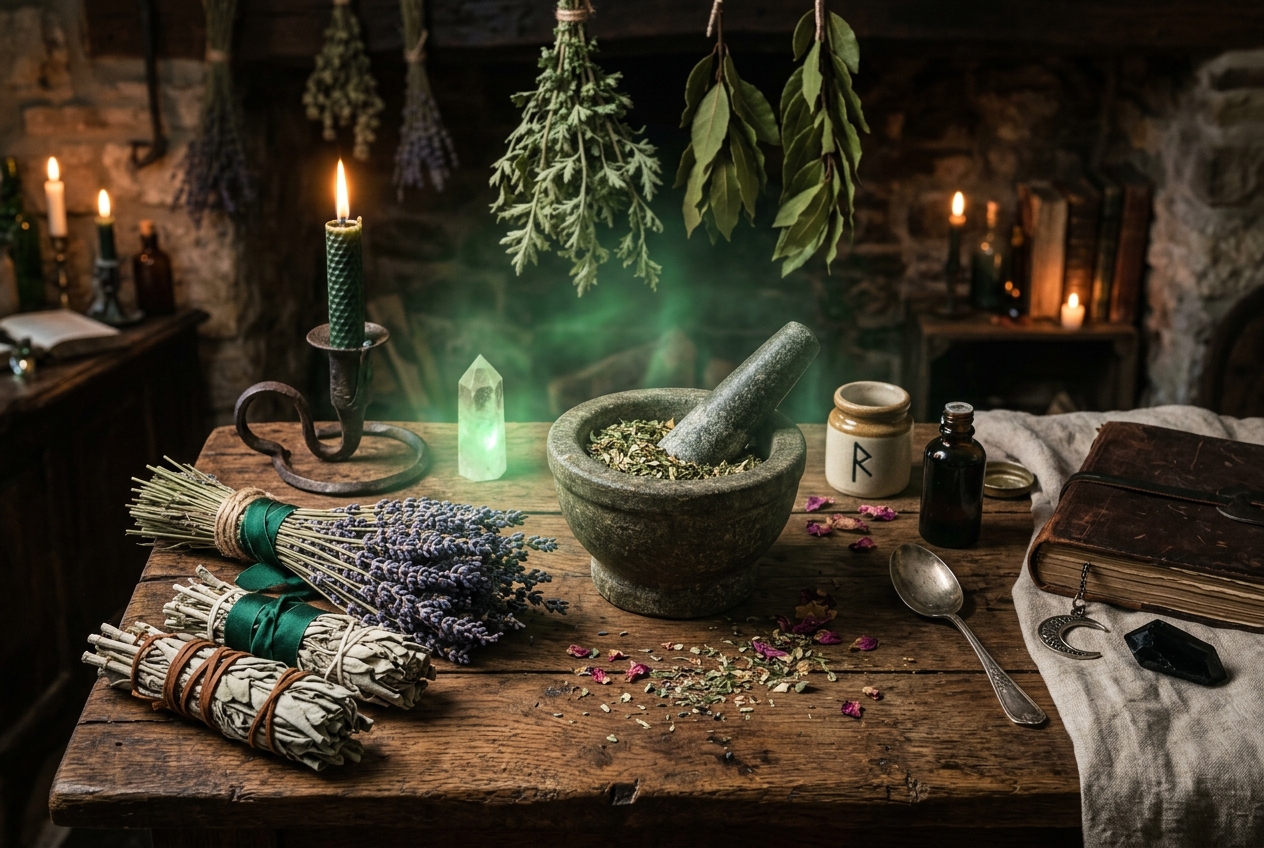
The szeptuch of Podlasie are the guardians of ancient knowledge regarding herbs, rituals, and spells. Discover their timeless secrets that have brought harmony to life for generations.
Szeptuch rituals: magic in everyday life
Szeptuch rituals were woven into the fabric of daily life, rather than being distant, mysterious spectacles. At their core were simple actions: whispered prayers, hand gestures, working with water, herbs, or fire, and sometimes a silence that commanded attention. These practices aimed to bring harmony, founded on the belief that peace of mind and surroundings interact with one another. In this sense, the ritual served as a means to organize the energies of the day and restore balance within the home.
Symbolism played a vital role in the practices of szeptuchy. Each element carried specific meanings: water cleansed, herbs provided protection, fire nurtured transformation, and softly spoken words emphasized intimacy and focus. Specific rituals emerged in daily life, such as washing the face with herbal-infused water at dawn, blessing the home with mugwort or juniper after a family illness, or placing a bowl of water by a child's bed to symbolically 'calm' the home. It was also common for a szeptucha to request bread, salt, and water, as these simple items possessed protective and organizing qualities in local tradition. If you wish to explore more about spiritual traditions and folk practices, check out our materials on the Ezostylia blog.
The magic in the everyday life of szeptuchy also relied on mindfulness. Rituals were not a random assortment of actions; they were performed with full attention, often at specific times and within unique atmospheres. Consequently, ordinary elements, such as water, herbs, or songs, became carriers of meaning and support. This is why szeptuch practices have proven so enduring: they addressed a genuine human need for order, protection, and meaning in a world full of changes. In Podlasie tradition, it was also essential to repeat actions over several consecutive days, such as morning face washing with linden-infused water, burning herbs at the home’s threshold, or quietly walking around a room with a lit candle. This repetition imbued the rituals with a rhythm and transformed them into an integral part of daily care for the home, family, and personal peace.
Magical herbs in the practice of szeptuchy
In the tradition of szeptuch of Podlasie, herbs were not merely an addition but the foundation of daily practice. They drew upon plants well-known within the local environment and seasons, such as wormwood, St. John's wort, chamomile, mint, juniper, rue, mugwort, linden, and nettle. Each herb had its specific use: some aided in cleansing, while others were used for infusions, compresses, or protective bundles. Knowledge of these plants was passed down through generations, with its strength derived from keen observation, the rhythms of nature, and mindfulness.
The preparation of herbs depended on the intended purpose. They were usually dried in airy spaces, away from moisture and direct sunlight, and then utilized for infusions, fumigations, or herbal baths. In some practices, the timing of gathering was significant, such as in the morning, on church holidays, or aligned with specific lunar phases. Szeptuchy approached plants with respect, seeing them not as a 'magical shortcut' but as integral parts of a larger, natural whole where intention, patience, and knowledge of tradition held great importance.
In many stories from Podlasie, it is noted that herbs operated not solely through scent or taste but also through the ritual of their application. The infusion was consumed slowly, a compress was applied with a quiet prayer, and twigs were hung in the home for protection and energetic order. Such practices bridged domestic wisdom with spirituality, unhurried and without spectacle. This is why the herbs of szeptuchy continue to fascinate those seeking simple, nature-rooted forms of support.
Szeptuch spells: the power of words
In the tradition of szeptuchy, spells were not seen as theatrical formulas but as quiet, focused prayers infused with intention. The spoken word was meant to organize, calm, and enhance the meaning of the ritual. Folk narratives present simple phrases, whispered over water, herbs, or during the fumigation of the home. Frequently, these were short blessings, pleas for protection, soothing fears, or restoring balance. The emphasis was not so much on the sound as it was on the attentiveness and belief of the person uttering the words.
Example spells took the form of repetitive chants, rhythmic pleas, or whispered formulas that invoked the forces of nature and the sacred. They resembled traditional blessings for a home, child, fields, or paths, all aimed at enhancing a sense of safety. In the practice of szeptuchy, spells often conveyed a specific intention: one aimed to protect the home from harmful words, another sought to bring peace to a restless child, and yet another accompanied rituals like handwashing or the fumigation of a room. This structure was clear to those raised in a culture where word and deed were interconnected. In folk culture, words were not empty; they could soothe, establish boundaries, and organize emotions. Thus, szeptuchy intertwined speech, gesture, and silence, creating a practice rooted in focus rather than spectacle.
The power of words in spiritual practices also stemmed from the bond between the individual and the community. A kind word could offer solace, and a heartfelt prayer cultivated trust and a sense of order. This aspect is what ensures that szeptuchy are remembered not just as herbal experts but also as guardians of language, capable of supporting people in challenging times. In the spiritual tradition of Podlasie, words were tools of care rather than control, thus retaining their value through generations. Whispered blessings over water, the home, or pathways served as reminders that even the simplest expressions can become acts of care when accompanied by respect, focus, and pure intent.
If you want to better understand how to describe such traditions in accordance with the local climate and without an artificial tone, you should also check out our materials on creating spiritual content. These resources provide valuable support for those who wish to write about tradition with respect, calmness, and without exaggeration. In the case of szeptuchy, such language closely aligns with the essence of the message, reflecting their discretion, seriousness, and deep roots in everyday life.
Szeptuchy and modernity
Today, the tradition of szeptuchy from Podlasie is no longer a common aspect of rural life, but it remains a significant symbol of local spirituality. For many, it embodies not just folklore but a reminder that the relationship with nature, silence, and prayer holds meaning in a fast-paced world. Szeptuchy have become a part of cultural memory, and their practices inspire those seeking simple, mindful ways to engage with emotions, intentions, and the natural rhythm of life.
The significance of this tradition also reflects a different quality of presence. Instead of being overwhelmed by stimuli, there is focus; instead of noise, there are attentive words; instead of haste, there is patience. For many, this embodies spiritual value: the opportunity to pause and reconnect with simple gestures, such as prayer, herbal infusions, moments of silence, or tidying the home. The tradition of szeptuchy serves as a reminder that spirituality does not have to be distant or complicated to be profound.
The influence of szeptuchy on people's spiritual development primarily lies in inspiring greater sensitivity. Their story teaches respect for nature, the wisdom of elders, and the understanding that daily rituals can enhance the sense of meaning in life. For some, this may signify a return to familial roots; for others, it might be a first encounter with regional wisdom. Regardless of perspective, this tradition showcases that spirituality can be deeply embedded in ordinary life, rather than confined to grand declarations.
How to become a szeptucha? Tips for those interested
In the original understanding, a szeptucha was not someone chosen at random. This role emerged from long observation, community trust, and family knowledge of herbs, prayers, and folk rituals. Today, it is essential to recognize this as cultural heritage rather than a mere 'profession to be learned from a course.' The first step is to delve into the history of the region, local stories, and the understanding szeptuchy had of their tasks.
If someone wishes to engage with this tradition respectfully, they must possess, above all, patience, humility, and mindfulness. Knowledge of herbs, basics of ethnography, traditional songs, prayers, and folk symbolism can be incredibly beneficial. A solid starting point is the practice of observation: noting which plants emerge in a given season, how they are gathered, dried, and applied in home customs. It is worthwhile to visit regional museums, converse with elders in the area, and explore ethnographic sources to distinguish authentic traditions from oversimplifications. Understanding boundaries is also crucial: not every practice is suitable for replication without context, and any work with tradition should be responsible and honest. This is not a path to quick results but a journey of learning, listening, and clarifying one's intentions.
To learn these kinds of practices, experience, a connection with elders, openness to nature, and willingness to work on oneself are vital. Keeping records, observing seasonal changes, and familiarizing oneself with plants and their customary uses are also helpful. In the tradition of szeptuchy, not only knowledge is important, but also one's way of being: humility, discretion, and a readiness to support others without judgment. For those serious about this path, starting with small steps is essential: learning the names of herbs, their characteristics, gathering times, drying methods, and simple forms of prayer and meditation. These qualities foster trust and add authenticity to the practice.
FAQ
What herbs are most commonly used by szeptuchy?
The most commonly mentioned herbs are wormwood, St. John's wort, chamomile, mint, juniper, rue, mugwort, linden, and nettle. The selection was influenced by the purpose of the work, the time of year, and local traditions. Some herbs were used for infusions, while others were designated for fumigation, baths, or protective bundles. In szeptuch practice, the significance lay not only in the plant itself but also in the method of harvesting, drying, and application. This narrative encapsulates the deep relationship between humans and nature.
What rituals are most popular among szeptuchy?
Some of the most commonly described rituals include whispered prayers over water, fumigating the home with herbs, washing the face or hands with infused water, preparing herbal infusions, creating protective bundles, and blessing people and spaces. Additional rituals involved the home’s threshold, candles, salt, and bread, as these elements held strong protective significance in folk tradition. While these rituals were simple, they required focused intention and dedication. Silence, intention, and respect for tradition were paramount. In folk culture, this simplicity enhanced the authenticity and power of these practices.
Can szeptuchy help with daily problems?
In folk tradition, szeptuchy were the individuals to whom one turned for support in daily challenges such as fear, tension in the home, feelings of being lost, or a yearning for spiritual solace. Their role included providing encouragement, helping to organize emotions, and supporting rituals. Today, it's essential to recognize that such practices do not replace professional help when needed. However, they can serve as valuable elements of spiritual support and a connection to tradition.
Can szeptuch rituals be practiced independently?
One can certainly draw inspiration from tradition, but it is crucial to approach it with respect and without claiming to understand the full context of past practices. The safest methods are simple: calm prayer, cleansing the space through ventilation, symbolic use of herbs in accordance with local customs, and moments of silence. For more intricate rituals, it is advisable to rely on ethnographic knowledge rather than random internet shortcuts. This caution helps preserve authenticity and prevents the trivialization of tradition.