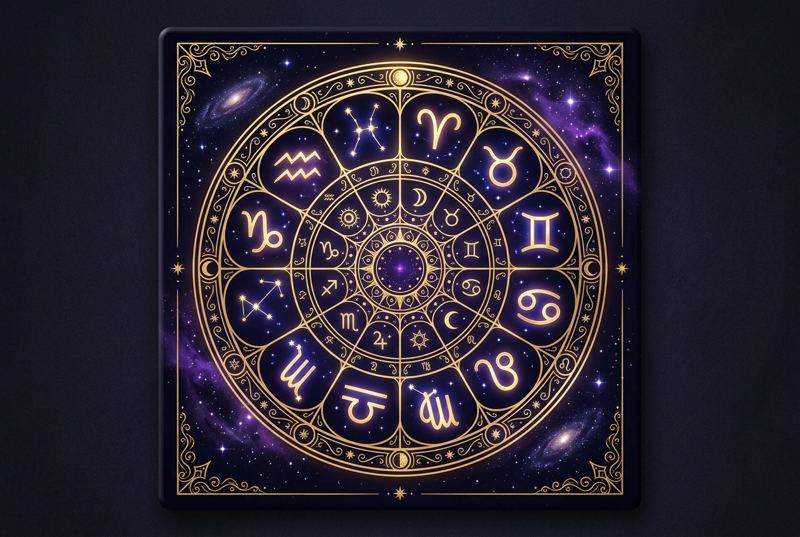
The Barnum Effect makes general personality descriptions seem like they were crafted just for you. How does psychology clarify the allure of horoscopes, and how can you engage with astrology in a truly conscious way?
Why a horoscope always 'fits': the first question you should ask yourself
Imagine you receive an envelope containing a personality description crafted by an expert. You read: 'You need others to like and admire you, but at the same time you are critical of your own work. There is untapped potential within you that has yet to be harnessed. Although you appear composed on the outside, you may feel insecure inside.' How accurate is this description? Psychological research provides a clear answer: for most individuals, such a description feels highly accurate, almost custom-made. The only catch is that everyone received the same text.
This is where the story of the Barnum effect begins. But before delving into the research, it’s worth considering the question: why do we wish for a horoscope to resonate? Because it provides something we seek: a language to articulate our feelings, a structure for the unclear, and the sensation that someone or something acknowledges us. This is a very human need. This is precisely why astrology, tarot cards, numerology, and other symbolic systems have been part of human experience for thousands of years. Not out of naivety, but because these tools address genuine existential inquiries.
The Barnum effect (Forer effect): the psychological mechanism, history of discovery, and definition
In 1949, psychologist Bertram R. Forer conducted a simple yet revolutionary experiment. He asked his students to complete a personality test and then provided each of them with an individual, supposedly personalized description. In reality, everyone received the same text, composed of vague statements derived from horoscopes and fortune-telling manuals. He then asked the students to rate the accuracy of the description on a scale from 0 to 5. The average score was 4.26. The vast majority deemed the vague description a remarkably accurate reflection of their personalities.
This discovery led to the concept of the Forer effect, also known as the Barnum effect, named after the famous showman P. T. Barnum, who claimed that there was something for everyone in his show. The mechanism works like this: when a description is phrased broadly enough to apply to almost anyone, while also containing elements that sound insightful or flattering, the reader has a strong tendency to accept it as a reflection of themselves. Key features of statements that foster this effect include:
- High generality of a statement that applies to most people (e.g. 'sometimes you feel underappreciated').
- A gentle internal contradiction that gives an impression of depth (e.g. 'you seem calm, but inside you carry storms').
- A flattering element or something that enhances self-esteem.
- An appeal to hidden potential that has not yet fully manifested.
- An apparently precise observation, yet worded in a way that can resonate with millions.
The Barnum effect is one of the most extensively documented phenomena in cognitive and social psychology. It elucidates why horoscopes, numerology profiles, tarot card descriptions, and nearly any other symbolic system can seem astonishingly precise, even if they are entirely random or created without knowledge of the individual.
What science says
Psychological and statistical research has approached astrology from various perspectives. The results are not definitively uniform, but in several areas, the conclusions are clear, and it is beneficial to understand them if you wish to engage with horoscopes thoughtfully.
Forer’s classic experiment (Forer, 1949) has been replicated numerous times under differing conditions and cultures. The effect proved surprisingly resilient: people consistently rate vague personality descriptions as accurate when they believe they were specifically tailored for them. Notably, the strength of the effect increases when the description is attributed to someone perceived as an expert or authority.
Snyder, Shenkel, and Lowery (1977) demonstrated that acceptance of general descriptions is significantly higher when presented as personalized and when the source is regarded as competent. The credibility of the source amplifies the Barnum effect. This finding has serious implications for all contexts in which someone reads a horoscope for another, draws tarot cards, or interprets a numerology chart: the very role of the 'knower' makes the recipient more inclined to accept vague content as accurate.
Regarding the predictive accuracy of astrology as a system, the most pivotal study remains Shawn Carlson’s experiment published in Nature (Carlson, 1985). It was one of the most renowned double-blind tests in the field. Experienced astrologers were tasked with matching birth charts to personality profiles described using a standardized questionnaire. The results were unequivocal: astrologers did not match the charts better than chance. This serves as a compelling argument against the predictive accuracy of natal astrology as a method for describing personality.
Dean and Mather (1977) conducted a critical review of several decades of research on natal astrology, covering literature from 1900 to 1976. The conclusions were consistent: no reproducible, statistically significant correlations were found between birth dates and personality traits or life events. This does not mean that such relationships do not exist; rather, it indicates that reliable science has not yet confirmed them.
A notable exception that prevents the picture from being entirely black and white is the controversy surrounding the so-called Mars effect described by Michel Gauquelin (1955). Gauquelin claimed to have observed a statistical correlation between Mars’s position in the sky at birth and subsequent athletic achievement. The results generated considerable interest within the scientific community. However, independent attempts to replicate the findings yielded mixed outcomes: some studies confirmed the effect, while others did not. The matter remains unresolved, and to be fair, it serves as an example of an area where science has not yet delivered a conclusive verdict.
It is also worth noting the study by Glick, Gottesman, and Jolton (1989), which revealed a surprising finding: both skeptics and believers in astrology were similarly susceptible to the Barnum effect when descriptions were framed as 'astrological.' Belief in astrology slightly, yet significantly, heightened acceptance of vague characterizations. This observation is important: declared skepticism does not always translate into resistance against the cognitive mechanisms activated by the Barnum effect.
From books
“Astrology is not a science in the empirical sense. It is a language of images that speaks to the unconscious. The question is not whether the planets truly influence human character, but rather what planetary symbols awaken within the human psyche.” This succinctly captures Carl Gustav Jung’s perspective presented in Psychologie und Alchemie (Jung, 1944).
Jung argued that symbolic systems, including astrology, alchemy, and tarot, do not operate as empirical sciences, but rather as a language of archetypes within the collective unconscious. The value of these systems does not depend on whether they 'predict' anything with statistical accuracy. Instead, it lies in their ability to evoke images and associations that help individuals gain deeper self-understanding. This perspective is essential for grasping why astrology, tarot cards, and other symbolic tools can be beneficial, even when science does not validate their predictive capabilities.
Richard Nisbett and Lee Ross, in the classic work Human Inference: Strategies and Shortcomings of Social Judgment (Nisbett and Ross, 1980), demonstrated that people systematically overestimate the accuracy of information that confirms their self-image. This mechanism, known as confirmation bias, implies that when we read a horoscope, we naturally concentrate on the statements that resonate with us and disregard those that do not. Memory is selective and favors affirming our beliefs.
Daniel Kahneman, in Thinking, Fast and Slow (Kahneman, 2011), elucidates the same mechanism through the lens of two thinking systems. System 1, which is fast and intuitive, immediately recognizes its own reflection in vague descriptions because that is its nature: it seeks patterns and affirmation. System 2, which is slow and analytical, must consciously slow down and ask: 'Would this description apply to anyone else?' Most of us do not engage System 2 when reading a horoscope, as that is not our intention. We read it to feel understood, not to verify statistical hypotheses.
Where questions remain open: personality, archetypes, and symbolism
Science is undoubtedly skeptical about astrology's predictive power. However, it remains silent or open in several other domains that deserve honest acknowledgment.
First, there is no reliable research establishing whether regular reflection through symbolic systems like astrology or tarot can enhance self-awareness and decision-making. This is an empirical question that has yet to be explored on a sufficient scale.
Second, the debate surrounding Gauquelin’s Mars effect (1955) illustrates that not everything is resolved, even if the prevailing findings are skeptical. Honest science does not assert that something does not exist solely because it hasn't been confirmed. It claims there isn't enough evidence.
Third, the symbolic and archetypal dimensions of astrology, as described by Jung, lie beyond traditional scientific methodology's grasp. This is not due to their lack of importance, but because they are questions of a different nature, concerning meaning rather than causality.
Psychology and symbolism: Jung, archetypes, and why people return to horoscopes despite knowing about the Barnum effect
Knowledge of the Barnum effect rarely alters human behavior toward horoscopes. The study by Glick and colleagues (1989) indicated that skeptics are nearly as susceptible to this effect as believers in astrology. Why?
The answer partly resides in what people seek from horoscopes. They are not looking for a physical theory that explains the influence of celestial bodies. They seek a language for their experiences. They desire a rhythm that helps organize their time. They yearn for a mirror in which to see themselves. In that sense, astrology, regardless of its predictive reliability, offers something psychologically tangible: a framework for self-reflection.
Jung portrayed planets and zodiac signs as projections of archetypes, which are transpersonal patterns of the psyche that shape the way we experience the world. Mars is not merely a planet exerting physical influence on a person, but an archetypal representation of will, aggression, and drive. Venus symbolizes beauty, love, and connection. When you read that 'Mars is transiting your sign,' you can interpret it not as an astronomical event with a causal impact on your life, but as a prompt for introspection: where am I expressing my will and assertive energy right now?
That is precisely why astrology has endured for centuries despite the lack of empirical confirmation. It has not persisted as a science, but rather as a language.
From the experiences of practitioners
The insights gained from individuals who work professionally with symbols and engage in self-development provide valuable perspectives on how the Barnum effect and deep engagement with symbolic tools can coexist.
A psychotherapist combining symbolic work, including tarot cards and astrology, with a humanistic approach describes how clients often bring a horoscope or a tarot reading to a session as a starting point for discussion. They do this not because they believe in fatalistic determinism, but because the symbols offer them a ready-made language for emotions they have struggled to express directly. The therapist uses this material as a basis for conversation, not as a diagnosis. A horoscope is not a verdict; it serves as a prompt for inquiry.
A meditation and mindfulness teacher working with groups of women observes that participants who regularly read horoscopes are often not seeking predictions. Instead, they are looking for rhythm and structure. The question, “What does this month bring?” gives them a sense of agency and space for reflection, much like the practice of setting intentions on the new moon. The issue arises when the symbol replaces a decision instead of guiding it. When a horoscope states, “Do not act on this now,” and the individual chooses to abandon an important action, the tool has ceased to facilitate reflection and has become an escape from responsibility.
A tarot reader working in a coaching context has frequently encountered situations where a client, after drawing a card, exclaims, “This perfectly describes my situation,” only to discover through discussion that nearly any card could have evoked a similar reflection. According to the Author of the Cards, within the energy of the Ezostylia deck, cards do not dictate the truth of fate; they awaken the inner knowledge that already resides within the individual. The tarot reader considers this confirmation that the Barnum effect and deep symbolic work can coexist, provided that both parties understand the nature of their interaction. If you wish to experience this for yourself, you can visit the tarot and oracle cards section in the Ezostylia app.
A herbalist and plant therapist leading self-discovery workshops notices that individuals who are strongly identified with “their sign” and the personality traits it supposedly encapsulates often struggle to see themselves beyond that label. When someone says, “I’m a Capricorn; that’s why I’m so rigid,” it's worth asking: where does Capricorn end, and where do your history, choices, and habits begin? Engaging with plants and the body is often more effective than debate: being grounded in concrete sensory experience can break the cycle of identity confirmation through the horoscope.
How to implement this in practice
Since we understand that the Barnum effect is real, that science remains skeptical about astrology’s predictive powers, and that symbolic systems can still hold genuine psychological value, how can you utilize astrology, tarot cards, numerology, or the matrix of destiny in a truly conscious manner?
Here are seven questions worth contemplating before reading a horoscope or any other symbolic interpretation:
- What am I currently seeking? Am I looking for validation of something I already know, or am I genuinely open to a new perspective?
- Would this description apply to someone else? Read the horoscope and try to envision whether it would also resonate with a friend who has a completely different sign. If it does, consider it an invitation to reflection rather than a precise description of yourself.
- What in this description moves me, and why? An emotional response is valuable insight, regardless of whether the description is deemed “true.” What did it reveal within me?
- Does this interpretation expand my possibilities or constrain them? Effective work with symbols opens doors. If a horoscope tells you that you “cannot” do something and you accept that without thought, it's worth taking a moment to pause.
- Am I making a choice based on the symbol or my own judgment? A symbol can serve as inspiration, an impulse, or a question. It should never replace your responsibility for making choices.
- Where does the interpretation originate, and what qualifications does the author have? Remember that the prestige of the source enhances the Barnum effect (Snyder et al., 1977). The more someone appears to be an authority, the more carefully you should scrutinize what they are saying.
- What does my life look like, irrespective of the horoscope? No symbolic interpretation can substitute for observing your own life, engaging in conversations with your loved ones, and working with a therapist or coach during moments of crisis.
If you are interested in reflection aligned with the lunar cycle, you can explore our moon and new moon section, which views the monthly rhythm as a framework for intentions rather than predictions. For those inclined to delve into the symbolism of dreams, we recommend the Ezostylia dream dictionary,which, like astrology, provides a language of images rather than determinism.
Symbolic tools as a mirror, not a decree: the ethics of working with them
When we grasp the psychological mechanisms that drive the allure of horoscopes, an ethical question emerges: how should professionals who work with symbols conduct themselves?
Above all: with honesty. This means that a tarot reader, astrologer, or numerologist needs to differentiate between their interpretation of a symbol and the knowledge they have about the individual seeking assistance. Interpreting a card is not a psychological diagnosis. A horoscope is not a decree of fate. Any suggestive statement like, “your cards advise you not to do this,” fosters dependence in the client rather than autonomy.
Best practices in working with symbols include:
- Clearly distinguishing between symbolic descriptions and factual predictions.
- Asking open-ended questions instead of making absolute statements.
- Encouraging clients to interpret the symbol for themselves before sharing your own insights.
- Referring individuals to specialists (therapists, doctors) in situations that require professional assistance.
- Being clear about the nature of the tool: tarot and astrology are instruments for self-reflection, not predictive systems with scientifically validated effectiveness.
Ezostylia operates in this spirit: the live fortune teller resources within the app serve as a guide for introspection, not as an oracle of fate. The tools you will discover in the app are an invitation to engage in a conversation with yourself.
FAQ
Does the Barnum effect mean that astrology is useless?
No. The Barnum effect explains part of the appeal of horoscopes as personality descriptions, but it doesn't determine the value of astrology as a symbolic system. Astrology can be a valuable tool for reflection and self-discovery, even if science hasn't validated its predictive abilities. The key is to engage with it mindfully and understand its purpose and limitations.
Are skeptics immune to the Barnum effect?
Unfortunately, no. Research by Glick, Gottesman, and Jolton (1989) showed that both skeptics and believers in astrology are equally susceptible to the Barnum effect when descriptions are presented as "astrological." Simply claiming skepticism does not inherently protect one from the cognitive mechanisms activated by this effect.
Is there anything science has not ruled out in astrology?
Yes. The debate surrounding Gauquelin’s Mars effect (1955) remains unresolved due to mixed results in replication attempts. Science hasn’t given its final verdict on this issue. Furthermore, the psychological value of utilizing astrological symbols as a tool for introspection has not been adequately empirically investigated.
How can you use tarot or astrology without falling into the trap of determinism?
Approach every interpretation as a question rather than an answer. Ask yourself: What does this symbol awaken in me? How do I want to respond to it? What decision will I make, guided by my values and circumstances, rather than the judgment of a card or a planet? According to the Author of the Cards, in the energy of the Ezostylia deck, the cards don’t predict your future; they help you listen to what you already know.
What should you do if you start making serious decisions based only on horoscopes?
That’s a sign that the tool has started to assume a role it shouldn’t: it’s replacing your own judgment and responsibility. It might be beneficial to consult with a therapist or psychologist at this point. Using symbols as a reflective mirror is valuable, but relying on symbols as oracles can become a way to avoid making tough decisions. Ezostylia advocates for using symbolic tools as support for reflection, not as substitutes for personal agency.
Summary: skepticism and openness as two sides of the same coin
The Barnum effect is real and well-documented. Science is understandably skeptical about astrology’s predictive power. However, this does not end the discussion regarding the value of symbolic systems. Jung was correct in asserting that the worth of these systems does not stem from their predictive accuracy, but from their capacity to provide a language for the inner processes that are otherwise challenging to articulate.
Skepticism and openness need not be adversaries. Skepticism guards us against naively relinquishing our responsibility for our lives to a system that does not meet empirical standards. Openness enables us to recognize the value of symbolic language, rhythm, and reflection that have guided humanity’s quest for meaning for millennia.
You can read horoscopes while being aware of the Barnum effect. You can use tarot cards while knowing that science hasn't confirmed their predictive power. You can engage in self-reflection through runes or meditations and simultaneously make decisions based on your own judgment and knowledge. This isn’t a contradiction; it represents a conscious utilization of a tool.
Symbolic tools act as mirrors. They can reveal something significant about yourself if you allow them to pose questions rather than demand prepackaged answers from them.
Sources
- Forer, B. R. (1949). The fallacy of personal validation: A classroom demonstration of gullibility. Journal of Abnormal and Social Psychology..
- Snyder, C. R., Shenkel, R. J., Lowery, C. R. (1977). Acceptance of personality interpretations: The “Barnum effect” and beyond. Journal of Consulting and Clinical Psychology..
- Carlson, S. (1985). A double-blind test of astrology. Nature.
- Dean, G., Mather, A. (1977). Recent Advances in Natal Astrology: A Critical Review 1900-1976.Analogic, Subiaco, Australia.
- Gauquelin, M. (1955). L'influence des astres: étude critique et expérimentale.Éditions du Dauphin.
- Glick, P., Gottesman, D., Jolton, J. (1989). The fault is not in the stars: Susceptibility of skeptics and believers in astrology to the Barnum effect. Personality and Social Psychology Bulletin..
- Jung, C. G. (1944). Psychologie und AlchemieRascher Verlag.
- Nisbett, R., Ross, L. (1980). Human Inference: Strategies and Shortcomings of Social JudgmentPrentice-Hall.
- Kahneman, D. (2011). Thinking, Fast and SlowFarrar, Straus and Giroux.