
✦ Ezoteryka · Kobiecy Szamanizm












Medycyna Kobiecego Szamanizmu
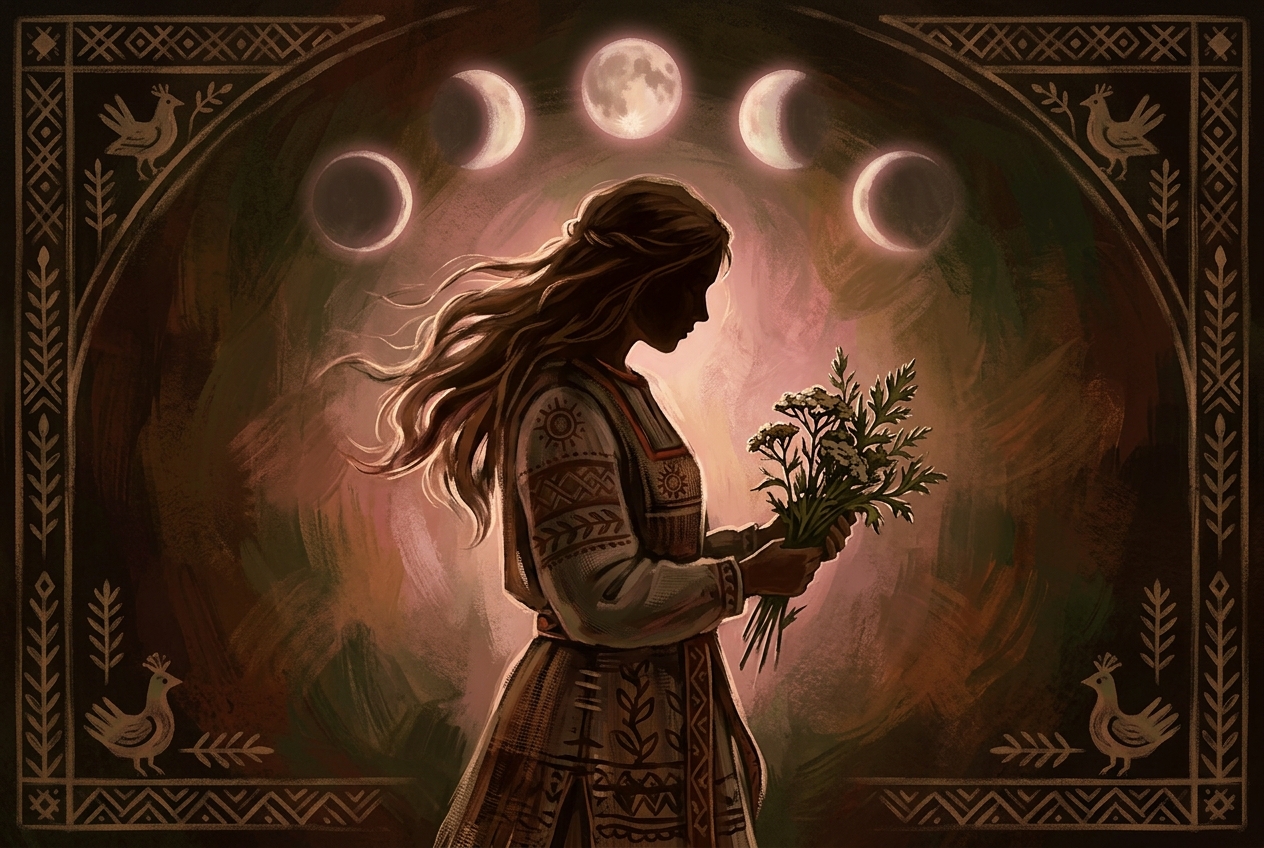
Zanim powstały gabinety, kobiety leczyły kobiety — szeptem, ziołem, kręgiem i rytmem Księżyca. Ta wiedza nie zginęła. Przetrwała w chatach szeptuch na Podlasiu, w przepisach babć i w ciele każdej kobiety, które wciąż pamięta swój cykl. Oto jej mapa.
Cztery kobiety w jednej — archetypy cyklu
W medycynie kobiecej cykl menstruacyjny to wewnętrzny Księżyc: co miesiąc przechodzisz przez cztery archetypy. Znając je, przestajesz walczyć ze swoim ciałem — zaczynasz z nim współpracować.
Czas siania intencji. Energia rośnie jak światło Księżyca — to moment na rozpoczynanie projektów, naukę i decyzje.
Szczyt energii życiowej. W tradycji szamańskiej to czas rytuałów wdzięczności, uzdrawiania innych i manifestacji.
Zasłona między światami cienieje. Sny stają się wyraźniejsze, intuicja ostra jak nóż — czas na pracę z cieniem.
Święty czas zatrzymania. Szeptuchy nazywały go „czasem między światami” — ciało oczyszcza, dusza podpowiada.
Sześć filarów medycyny kobiecej
Kobieta żyje w rytmie Księżyca — 4 fazy cyklu to 4 pory roku w ciele. Medycyna kobieca uczy działać Z cyklem, nie przeciw niemu.
W szamanizmie kobiecym łono (nie głowa) jest źródłem kreacji, intuicji i decyzji. Praktyki oddechowe i taniec przywracają z nim kontakt.
Siła płynie przez linię matek — babka, prababka, dalej. Praca z przodkiniami uzdrawia dziedziczone wzorce: lęk, milczenie, poświęcenie.
Szeptuchy z Podlasia łączyły zioła z modlitwą szeptaną nad chorym. Słowo wypowiedziane z intencją jest lekarstwem — to serce tej tradycji.
Kobiety od tysiącleci siadały w kręgu — przy ogniu, przy porodzie, przy śmierci. Krąg daje to, czego nie da terapia: bycie widzianą bez oceny.
Obfitość w tej tradycji to nie „przyciąganie pieniędzy”, lecz odblokowanie przepływu: wdzięczność, otwarte dłonie i odwaga przyjmowania.
Dwa rytuały na początek
Rytuał magii obfitości
- 1Na rosnącym Księżycu przygotuj zieloną świecę, miskę z ziarnem (ryż, pszenica) i monetę.
- 2Zapal świecę i wypowiedz szeptem, czego naprawdę potrzebujesz — nie sumy, lecz stanu („bezpieczeństwo”, „przepływ”).
- 3Przesyp ziarno trzy razy z dłoni do dłoni, mówiąc: „Przyjmuję tyle, ile jestem gotowa unieść — i dzielę się nadmiarem”.
- 4Monetę połóż pod ziarnem na 3 dni, potem oddaj ją komuś lub zostaw w miejscu, gdzie ktoś ją znajdzie — obfitość musi krążyć.
Rytuał linii przodkiń
- 1Wieczorem zapal białą świecę i postaw zdjęcie (lub napisz imię) swojej mamy, babci, prababki.
- 2Wypowiedz na głos ich imiona — tak daleko wstecz, jak pamiętasz. Za nieznane powiedz: „i wszystkie, których imion nie znam”.
- 3Podziękuj za jedną siłę, którą po nich nosisz, i nazwij jeden ciężar, który oddajesz: „To nosiłyście wy — ja już nie muszę”.
- 4Zgaś świecę dłonią (nie dmuchaj) i zapisz w dzienniku jedno zdanie, które przyszło ci podczas rytuału.
Apteczka szeptuchy — zioła kobiece
- Krwawnik — „ziele kobiece” — na skurcze i regulację cyklu; szeptuchy okadzały nim dom po kłótni
- Bylica pospolita — zioło Czarodziejki: wzmacnia sny i intuicję, tradycyjnie palona przed wróżeniem
- Liść maliny — tonik macicy — pity w naparach przez kobiety w każdym wieku, szczególnie przed porodem
- Szałwia — oczyszcza ciało i przestrzeń; łagodzi uderzenia gorąca w czasie przejścia Mędrczyni
- Dziurawiec — „słońce w zielu” — na smutek i ciemne miesiące; zbierany w okolicy nocy Kupały
Zioła to wsparcie, nie lek — przy dolegliwościach skonsultuj się z lekarzem lub zielarzem.
Najczęstsze pytania
To tradycja uzdrawiania oparta na cykliczności kobiecego ciała, pracy z Księżycem, ziołach, szepcie (modlitwie intencyjnej) i kręgach kobiet. W Polsce jej strażniczkami były szeptuchy z Podlasia — łączyły zioła, wodę i słowo wypowiadane szeptem nad potrzebującym.
Wiejskie uzdrowicielki z pogranicza polsko-białoruskiego (Podlasie), które leczyły szeptaną modlitwą, ziołami i rytuałami przekazywanymi z babki na wnuczkę. Ostatnie prawdziwe szeptuchy przyjmowały jeszcze w XXI wieku.
Praktyka odblokowania przepływu dostatku: wdzięczność za to, co jest, rytuały na rosnącym Księżycu, dzielenie się nadmiarem i praca z przekonaniami o „braku” dziedziczonymi po przodkiniach. To nie „szybkie pieniądze”, lecz zmiana relacji z przyjmowaniem.
Nie. Medycyna kobieca to praktyka duchowa i wspierająca — nie zastępuje lekarza ani terapii. Działa na poziomie intencji, rytmu życia i emocji.
Prywatność i pliki cookie
Do działania serwisu używamy tylko niezbędnych plików cookie i pamięci lokalnej (logowanie, język, stan gry). Nie wyświetlamy reklam. Za Twoją zgodą włączymy dodatkowo:
- Analitykę (PostHog, USA) — anonimowe odsłony stron, bez nagrywania sesji i bez treści rozmów.
- Reklamy — pomiar skuteczności kampanii (piksel OpenAI): rejestracja, zakup, wejście do gry. Bez profilowania treści ezoterycznych.
Zgodę możesz zmienić w każdej chwili: Regulamin → Ustawienia cookies. Szczegóły w Polityce prywatności.