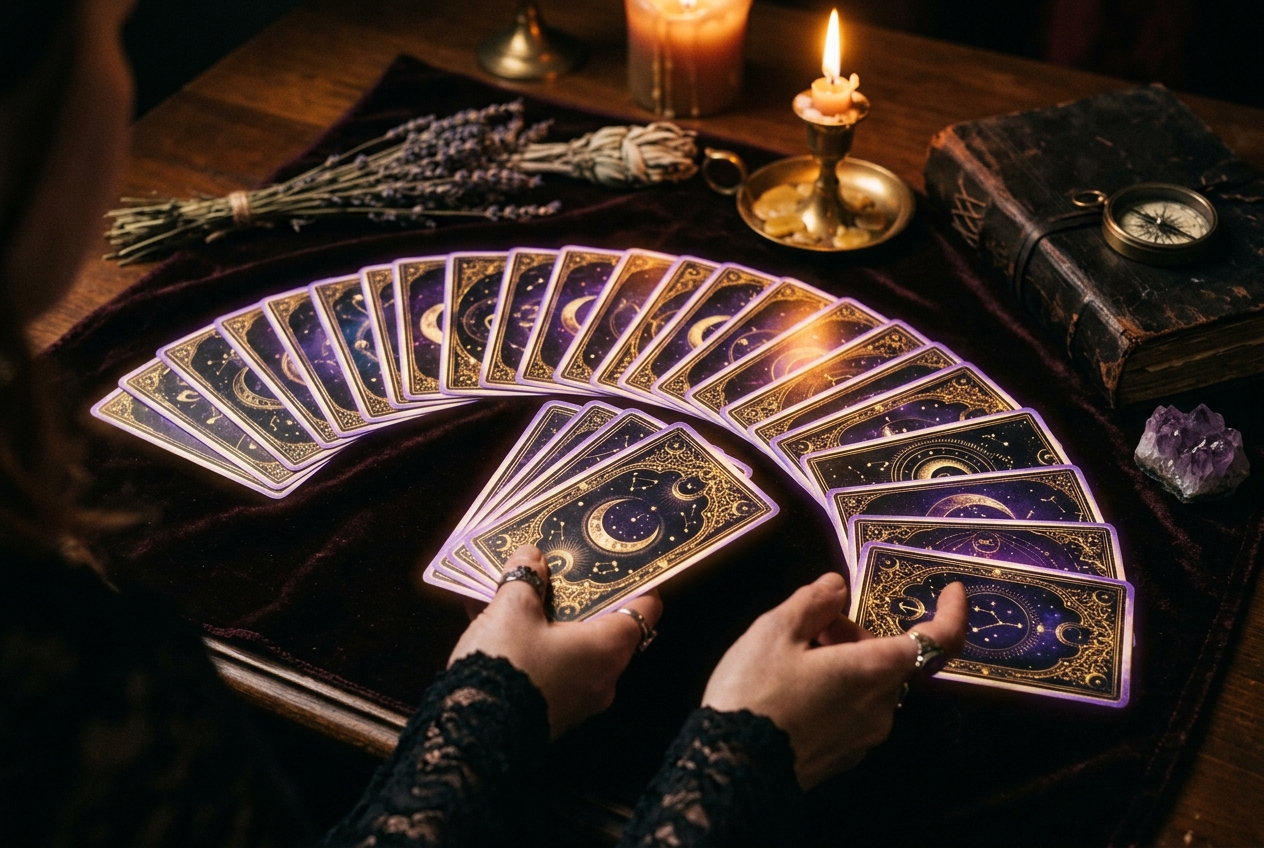
Minor arcana tarot cards carry much symbolism and meaning. Understanding their energy can help in daily life and uncover hidden truths.
The Meaning of Minor Arcana Tarot Cards – Discover the Secrets of Symbols
What is Minor Arcana?
Minor arcana, or the lesser cards, is part of the tarot deck that describes everyday experiences, emotions, relationships, and ordinary decisions. These are the cards that reveal what is happening here and now: a conversation that shifts the mood of the day, tension at work, a minor success, a moment of hesitation, or the need for rest. If you're interested in the meaning of minor arcana tarot cards, it's worth starting from this layer, as it often speaks about real situations rather than just major breakthroughs.
In practice, minor arcana often appears when the question is specific. For example: will a conversation with a loved one go smoothly, how will the day at work unfold, is it worth starting a new plan right now, or what helps to regain calmness. In such situations, the card does not speak about the distant future but rather about the current energy and how it can be wisely utilized.
Unlike major arcana, which carries groundbreaking and more universal themes, minor arcana shows the practical dimension of life. It is not less important; it simply operates closer to everyday experiences. It's like the difference between a large road map and directions for the next turn. This allows for a fuller reading: for instance, the Ace of Cups may show a new impulse in a relationship, while the Eight of Swords indicates a moment of inner tension that hinders action. If you wish to delve deeper into tarot, it's good to combine this knowledge with practice and observation of your own reactions, for example, while working with tarot.
Symbolism of Minor Arcana Cards
The symbolism of minor arcana is based on the four elements and their corresponding colors, which give the cards their directional meaning. Each suit speaks to a different area of life: emotions, actions, thoughts, or material matters. This way, the cards are not random. Their images, numbers, and arrangement of figures create a cohesive language that helps to understand the energy of the situation and its natural course.
In everyday life, minor arcana reveals what often goes unnoticed yet has a real impact on well-being and decisions. Cups may tell of a conversation with someone close, about tenderness, but also about disappointment after an unfulfilled promise. Swords often indicate difficult exchanges of views, being overwhelmed by thoughts, or the need for a clear choice. Wands bring movement, initiative, and action, for instance, when someone finally starts a new project or takes an important step. Pentacles relate to material matters, responsibilities, and stability, so they may concern household budgets, organizing the day, or patiently building something step by step.
The numbers and court cards are also significant. Aces open up potential, Twos speak about choice or cooperation, while the higher cards often show growth, an attempt, or the closing of a stage. Court cards describe roles and attitudes, for example, someone acting impulsively, calmly, responsibly, or with distance. In interpretation, not only the card itself matters, but also its position in the spread and the proximity of other symbols, which may amplify, soften, or alter the message.
How to Read Minor Arcana Cards?
When interpreting minor arcana cards, it's best to start with a simple assumption: each card shows a specific fragment of daily life. You don't need to immediately look for grand declarations of fate, as this part of the deck often speaks about emotions, relationships, work, money, and small decisions. In practice, the meaning of minor arcana tarot cards reveals itself most clearly when you view the card as a scene from life, rather than as an isolated sign. Tone, number, color, element, and the question you ask all count.
The context of the entire spread is also important. The same card in a relationship question may speak about dynamics between people, while in a work-related question, it may refer to responsibilities, tension, or pace of action. Minor arcana does not operate in a vacuum, which is why it's always worth comparing it with the adjacent cards, its position in the spread, and the intention of the person asking. Only then does the interpretation become complete and fair, without excessive simplifications and forced guesses.
For beginners, the best approach is the method of small steps. First, learn the elements, then the meanings of the numbers, and only later combine everything into a whole. A good habit is to record your own observations after each spread and compare them with what actually happens afterward. If you want to practice calmly and without chaos, start with simple questions, one spread, and regular practice. Basic resources available in the tarot section may also be helpful.
Minor Arcana Cards and Their Meaning in Tarot
Minor arcana builds the daily context of the entire reading and often gives it a practical rhythm. Major arcana shows the direction, important lessons, and broader meaning, while minor arcana elaborates on how this direction reveals itself in ordinary circumstances. This way, the spread is not just a collection of symbols, but becomes a story about specific situations, emotions, and decisions. That’s why the meaning of minor arcana tarot cards is so important: they show the details that most often determine how energy aligns in reality.
When reading, it’s worth looking for recurring patterns, but without excessive simplification. If several cards of one element appear in the spread, it can indicate a predominance of emotions, actions, thinking, or stabilization. For example, Cups emphasize the area of feelings, Swords indicate tension or the need for decisions, Wands bring movement and initiative, while Pentacles show material matters and daily order. Two or three cards from the same area can describe one dominant theme of the day, week, or a specific relationship.
The meaning of minor arcana also changes depending on the question. In professional matters, one card may show the pace of work, collaboration, or overload with responsibilities. In emotional topics, the same card may speak about the need for closeness, distance, or a sincere conversation. In spreads for personal development, minor arcana often suggests where to slow down, where to act more mindfully, and where to return to balance. This makes the reading more concrete, and the interpretation better responds to the real needs of the person asking.
Frequently Asked Questions About Minor Arcana Cards
One of the most common questions is which minor arcana cards are most important. The answer is: it depends on the question and the layout. In a work-related spread, Pentacle cards may resonate particularly strongly, in emotional matters, Cups, and in decisions and conflicts, Swords. There is no single list of cards that are more important than others, as each carries a different kind of information. Meaning reveals itself in conjunction with the context, rather than just in the name of the card.
The second frequent question concerns combining cards. Yes, you can and should combine them, as a single card rarely provides a complete picture. Two or three cards create a relationship that shows direction, obstacle, and possible outcome. This is when it becomes easier to see nuances, for example, whether emotions support action or block it. It's important to remember that cards do not speak separately but comment on each other. This is a fundamental principle of calm and reliable interpretation.
The third question is about errors to avoid. The most common mistake is reading each card too literally or too generally. The second is ignoring the question and the card's position in the spread. The third is overinterpretation, that is, adding a story that is not present in the cards. Better results come from patience, simple language, and checking what the layout actually shows. This way, learning tarot becomes clear and safe for beginners.
Why is it Worth Exploring the Meaning of Minor Arcana Cards?
Learning about minor arcana cards enhances your awareness of daily signals. When you understand the symbols, it's easier to notice that tarot isn’t just about major plot twists, but also about small choices that build day by day. That’s where the most information often lies hidden. Over time, you learn to read situations more calmly, more consciously, and with greater respect for the context. Such practice strengthens intuition and teaches a patient view of reality.
In personal life, this knowledge can help you better understand emotions, relationships, and your own reactions. When you see that a certain card indicates tension, a need for rest, or an impulse to act, it becomes easier to pause before making a hasty decision. Minor arcana doesn’t replace experience; it organizes and labels it. This allows you to look at your own matters with more distance and sometimes greater kindness towards yourself and others.
From a spiritual and personal development perspective, minor arcana teaches systematicity. This is not knowledge that you absorb in one day. The more often you return to the cards, the better you recognize their rhythm, language, and interdependencies. You gain a tool for reflection, not just for a one-time answer. For many people, this is where the greatest value of tarot lies: in calmly observing life and discovering meaning in ordinary moments.
Summary and Reflections
Minor arcana cards reveal the daily dimension of tarot and help to notice what happens between significant events. Their strength lies in detail, the relationship with the inquiry, and their position in the spread. If you want to truly understand the meaning of minor arcana tarot cards, look at them as a language of experience, not a collection of isolated phrases. Then each card becomes clearer, and the entire deck begins to speak more coherently and naturally.
The most important conclusion is simple: minor arcana is not meant to scare or make grand declarations, but to describe what is happening at the level of daily emotions, decisions, and actions. That's why one card may speak of a conversation, another about working on oneself, and yet another about organizing household matters. In practice, it is these small signals that often show which direction the situation is truly heading.
It's worth returning to this part of the tarot regularly, as over time it teaches patience, observation, and making sense of connections between cards. When you combine knowledge with practice, it becomes easier to use minor arcana as a tool for reflection, rather than a ready answer. This provides the most useful effect: greater clarity, better awareness, and a calmer approach to daily choices.