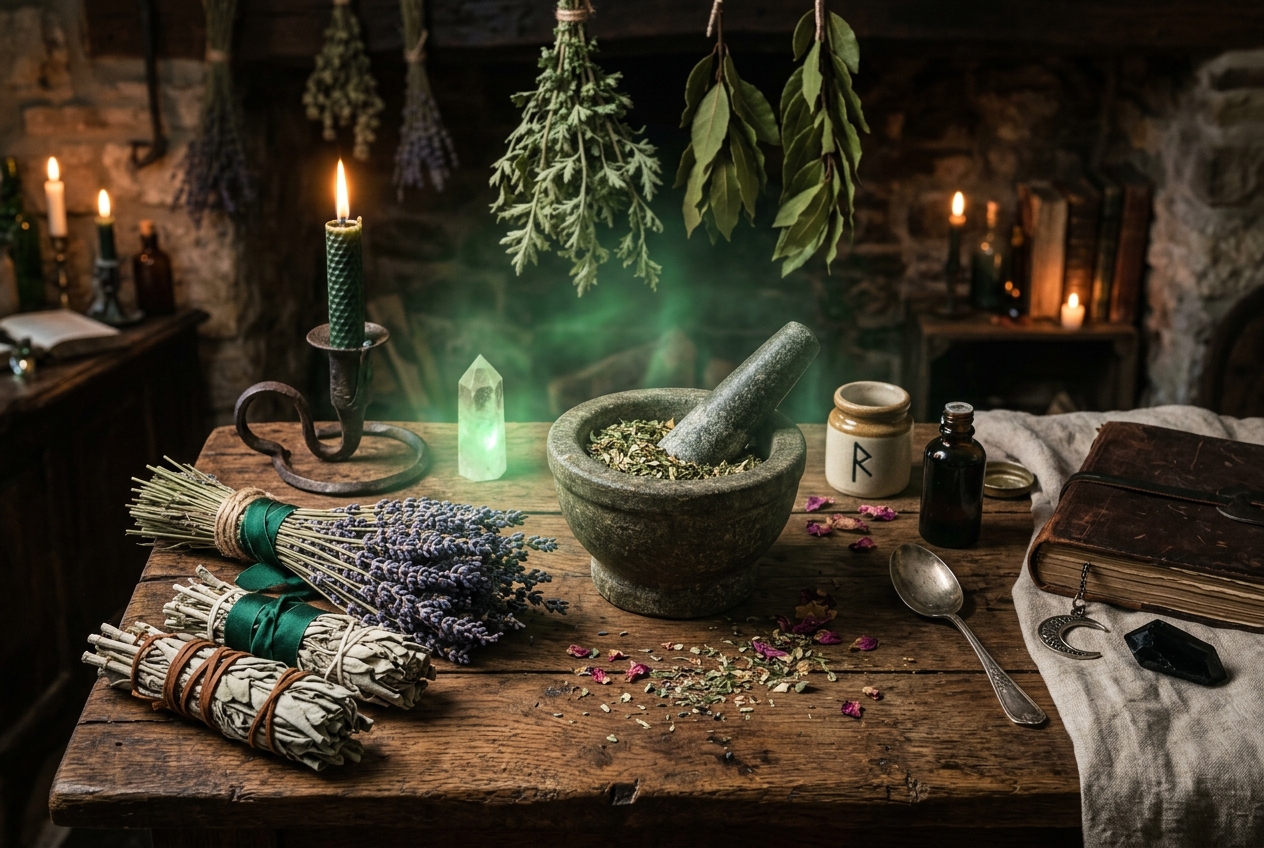
Discover five magical herbs that have supported rituals for centuries. Learn about their esoteric properties and how to use them in spiritual practices.
Magical Herbs in Rituals — 10 Herbs and Their Unique Properties
Introduction to Herb Magic
Herbs have held an important place in spiritual practices and home rituals for centuries. In esotericism, they are regarded not only as plants with pleasant scents or culinary uses but also as carriers of symbolic energy. Their presence in ceremonies emphasizes intention, organizes space, and supports focus. For many, it is the simplicity of herbs that makes them so valued: they are close to nature, easily accessible, and deeply rooted in tradition.
In herb magic, conscious use is paramount. Some choose them for cleansing their home, others for working with intention, meditation, or a peaceful evening ritual. Each herb carries its own symbolism, but the most important aspect is how one connects them to their purpose. This is not a mechanical set of actions, but a mindful process. Therefore, in practice, it is beneficial to match the herb to a specific need: lavender for calming, sage for space cleansing, mint for refreshing energy, and rosemary for enhancing concentration. This selection makes the ritual simple yet deeply personal.
Herbs can be incorporated into daily activities in many ways. They often find their way into intention bags, ritual baths, infusions for symbolic cleansing of space, bowls of dried herbs placed around the home, or for burning during brief cleansings of a room. Just a few mindful gestures are enough to give them meaning: lighting a candle, stating an intention, breathing deeply, and focusing attention on a single goal. If you want to build your own practice in a more conscious way, tarot can also be helpful, allowing you to clarify the energy of the situation and better select the type of ritual. Herbs and symbols can complement each other, creating a cohesive, personal language of working with energy.
Sage — Cleansing and Protection
Sage has long held an important place in cleansing rituals, as its energy is associated with organizing space and quieting what is unnecessary. In spiritual practices, it is used when one wishes to refresh the atmosphere in their home, workplace, or during meditation. Its presence is often linked to the intention of cutting off from heavy emotions and restoring inner balance.
In a symbolic sense, sage supports protection against influences that disrupt peace. This is not about promises of immediate change but about a conscious ritual in which scent and gesture help focus attention on one's own goal. Such action can become a simple, daily way to build a sense of security and a better connection with one’s intuition.
If you want to work with sage mindfully, combine it with a brief intention and calm breathing. Such a ritual does not need to be elaborate to be meaningful. Consistency, respect for the plant, and a clear intention are what matter. In Ezostylia, similar practices are well supported by other spiritual tools, such as tarot, when you want to better name the energy you are working with.
Rose — Love and Harmony
The rose has been a symbol of love, delicacy, and beauty for centuries, often appearing in rituals related to relationships. Its energy is associated with opening the heart, easing tensions, and reminding us that closeness requires mindfulness. In spiritual work, the rose helps focus on what is warm, supportive, and trust-building.
In rituals, the rose can serve to strengthen harmony between people, but also to build a gentler connection with oneself. Its significance is not limited to romantic love. It is also a symbol of acceptance, gratitude, and the ability to see beauty in everyday life. This energy well supports intentions related to reconciliation and peace.
Working with the rose becomes more valuable when accompanied by a simple, sincere intention. You can use petals, an infusion, or the mere presence of the flower as a focal point during meditation. The most important thing is that the ritual strengthens good emotions without pressure and without expectation of immediate results. In this form, the rose best shows its subtle power.
Lavender — Calm and Relaxation
Lavender is one of those herbs that naturally evokes silence, rest, and a soft soothing of emotions. In esoteric practices, it is used when gentle energy supporting relaxation, meditation, and a moment of breath from daily tension is needed. Its scent promotes quietness, and it is often present in spaces where clarity of thought is sought.
Symbolically, lavender helps ground attention in the present moment. It is a good herb for evening rituals, for work before sleep, or when you want to organize your emotions after a busy day. In practice, you can prepare a small sachet to place under your pillow, add a few dried flowers to a warm bath, set a bowl of lavender beside your meditation spot, or use it as an ingredient in a gentle cleansing ritual before sleep. It's not about artificially blocking feelings but creating a safe space where they can settle and be noticed with greater calm. Such practice supports gentleness towards oneself.
In your daily ritual, lavender can also appear as an element of aromatic inhalation or a simple cleansing of the bedroom. Just a little dried herb, a few calm breaths, and a clear intention are enough to give this gesture meaning. Its action is best understood as an invitation to slow down and regain contact with your breath. When the energy of the day becomes too intense, lavender reminds us that soothing does not have to be spectacular to be effective and needed.
Cinnamon — Attracting Positive Energies
Cinnamon symbolizes warmth, activity, and attracting favorable energy flow in rituals. Its intense aroma immediately gives spiritual work a clear direction, which is why it is often associated with intentions related to success, motivation, and opening up to new possibilities. In many practices, this herb or spice helps infuse the ritual with dynamism and clarity.
In esoteric meaning, cinnamon is used when one wants to strengthen a positive attitude and invite more lightness into life. In practice, it works well in rituals for the beginning of a new month, when setting intentions for professional growth, when symbolically opening a wallet for abundance, or during work with success affirmations. You can sprinkle a pinch of cinnamon into an intention bag, lightly dust it onto a written request, add it to a ritual candle, or use it in a brief morning ritual to give your day an energetic boost. Its energy does not replace action but can support concentration on what is constructive.
It's best to treat cinnamon as an accent rather than the sole foundation of a ritual. It works best when connected to a specific goal and calm, conscious gesture. This could be a scent, a symbolic jar of intention, an addition to affirmation work, or an element of a ritual when changing intentions, such as after a challenging week. This form helps focus attention on what facilitates growth and a good flow of energy.
Marigold — Healing Power
In spiritual symbolism, marigold is associated with warmth, care, and gently supporting renewal processes. Its golden color invokes the energy of the sun, so it is often chosen for protective and strengthening rituals. In esoteric practices, marigold is regarded as a plant that helps restore inner harmony and order where fatigue or distraction has appeared.
Its healing power is primarily symbolic. It is an invitation to care for oneself, to be mindful, and to gently support one's own path. Marigold can be present during ritual baths, in herbal sachets, or in simple protective intentions. Such use allows for the combination of practicality with spiritual significance and gives everyday gestures greater depth.
When working with marigold, it is important to remember that the coherence of intention is key. When you want to support peace, regeneration, and protection, this symbolic ally can help give the ritual a warm, stable tone. This herb serves as a good reminder that healing often begins with small steps, simple gestures, and patient connection with one’s energy.
FAQ
What are the best ways to use herbs in magic?
It is best to start with simple forms that do not require elaborate preparations. Herbs can be used in sachets, ritual baths, aromatic meditations, or as a symbolic element of an intention written on paper. In practice, simple cleansing rituals work well too, like placing a bowl of lavender in the bedroom, burning a bit of sage before meditation, or preparing a mixture of herbs for evening calmness. It is important that each practice is calm, conscious, and suited to the goal. In esotericism, not only the herb matters but also your attention, mood, and clear intention.
Which herbs to choose as a beginner?
For starters, plants with clear meanings work well, such as sage, lavender, rose, or marigold. They are intuitive, easy to connect with a simple ritual, and support various areas of spiritual work. If you seek calmness, choose lavender. If you wish to work with protection, turn to sage. For heart harmony, the rose will be helpful. Marigold is often chosen for work with warmth, renewal, and symbolically enhancing daily energy. Initially, it’s best to use one herb at a time to easier sense its character and match it to your own intention.
Does every herb have its own properties?
In esotericism, each herb can carry its own symbol and energy, but its meaning also depends on the intention of the person using it. One plant may be used for protection, another for relaxation, and yet another for boosting motivation. Sage is often linked with cleansing, mint with refreshment and lightness, rosemary with concentration and memory, and chamomile with soothing and calmness. It is best to view herbs not as ready-made solutions, but as tools supporting a conscious practice and personal ritual.