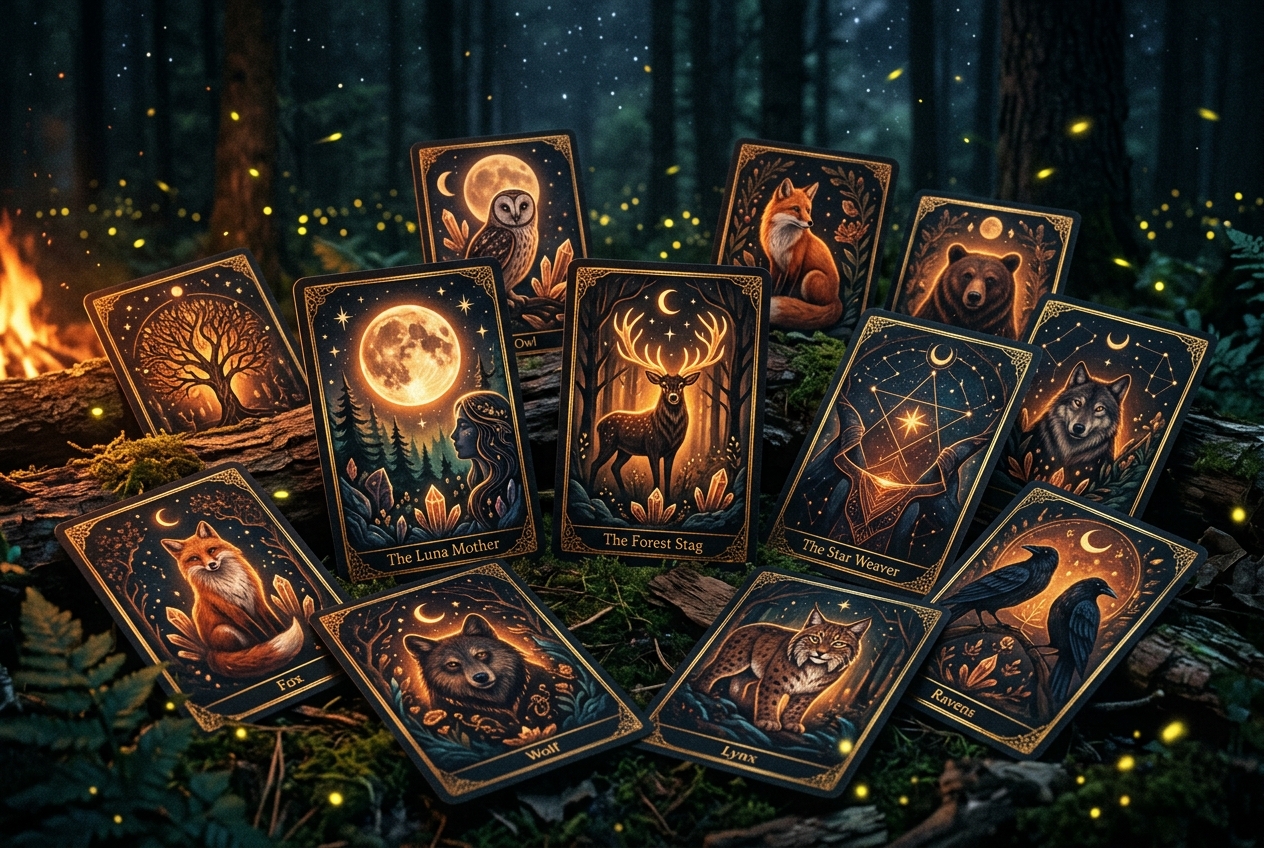
Are you wondering how to combine tarot and runes? Here are practical tips to help you integrate both systems in one reading, enriching your esoteric practice.
How to Combine Tarot and Runes in One Reading
Introduction to Tarot and Runes
Tarot and runes are two different systems of symbols that operate on different levels, yet they can complement each other well. Tarot shows the situation through images, emotions, relationships, and processes. Runes often carry a brief, strong impulse, a direction, or an energetic action. If you want to understand how to combine tarot and runes together, start by getting to know each of these systems separately. Only then will you more easily notice where one layer complements the other.
In practice, tarot provides a broader context, while a rune emphasizes the most significant point of the reading. One card may reveal a blockage, intention, or emotion, and the rune will clarify what is currently most alive. This requires mindfulness, as it’s not about mechanically adding symbols, but about reading them together. In Ezostylia, you can start with tarot cards, using tarot as a foundation for further interpretation.
It’s best to think of this as a conversation between two perspectives. Tarot tells a story, while the rune indicates its strong tone. Sometimes it will be support, sometimes a warning, and sometimes a signal to slow down. By giving both systems space, the reading becomes fuller and more personal. This is why it’s valuable to first feel the energy of the tarot and runes separately before combining them in one question.
Why Combine Tarot and Runes?
Combining tarot and runes provides a broader picture than working with just one system. Tarot helps to name the situation, showing relationships, tensions, and possible directions. Runes can add a simple signal of where the energy flows. As a result, the reading becomes less one-dimensional. Instead of one answer, you receive a set of clues that better illustrate the dynamics of the question.
For example, if a card related to movement or change appears in tarot, and the rune emphasizes courage, you clearly see that the time is ripe for action. If tarot shows tension in a relationship, and the rune highlights boundary protection, it’s easier to understand that self-peace must be prioritized first. Such clarity helps avoid vague interpretations and better relates the message to everyday life.
This combination also supports intuition. When one card speaks about emotions and the rune about action, it's easier to notice what truly matters. There’s no need for forced guessing. Just look for consistency between the signs. This is the value of combining: one system doesn’t replace the other, but brings forth additional meanings and helps read the situation more accurately.
Basic Rules for Combining Tarot and Runes
If you want to work with the phrase how to combine tarot and runes, start with a simple premise: both systems should support the reading and not compete with each other. Tarot provides an image of the situation, showing dynamics, emotions, and the direction of events, while runes clarify the energy, tension, or resource that operates in the background. In practice, it is advisable to establish one main language of interpretation and treat the other as a supplement, so the reading remains coherent and clear.
It’s safest to combine them layer by layer. First, read the tarot card according to the Author of the Cards' interpretation, and only then add the rune as a comment, hint, or filter. For example, a card may describe the situation, while the rune indicates whether the energy is open, blocked, needs patience, or action. This arrangement avoids chaos and the excess of meanings that often occurs when people start working with both systems at once.
Intention is also essential. Before you begin, name the question as specifically as possible and avoid mixing several topics in one spread. A short, clear question facilitates connecting cards with runes without over-interpretation. If you are working with the Ezostylia deck, stick to the energy of this deck and the interpretations of the Author of the Cards. Then, the runes become an additional key rather than an attempt to replace the tarot message with something foreign or random.
Examples of Readings Using Both Systems
When asking about work, you might draw a card that shows a phase of change, and alongside it, add a rune that defines the pace of the process. If tarot indicates a transition, and the rune speaks of the need for movement or courage, the reading becomes more specific. You gain not just an image of the situation but also a hint about whether it’s a good time for action, conversation, or calmly organizing plans.
In relationships, tarot often describes the state of the bond, while runes help recognize the quality of the exchange between the two parties. A card might indicate closeness, tension, or the need for honesty, while the rune adds whether the energy favors reconciliation, boundary protection, or step-by-step building of trust. This connection works well when you’re not looking for simple answers but aim to understand what strengthens the relationship and what weakens it.
For personal questions, you might treat one tarot card as the main message and the rune as advice for today. For example, if the card speaks of stopping and reflection, and the rune emphasizes perseverance, the reading indicates a need for patient action without pressure. If you want to see more examples of working with cards, also check out the tarot section, then compare how runes change the accent of the entire message. This is a good way to learn through practice.
How to Prepare for a Joint Reading?
Preparing for a joint reading starts with calming yourself. It’s not about a complicated ritual but a moment of focus, where you cut yourself off from haste and external noise. A tidy space, a brief breath, and a clear intention are enough. This way, tarot and runes don’t become a random set of symbols, but a coherent tool for working with the question you truly want to ask.
It’s also beneficial to have a simple order of work. You can shuffle the cards first and then choose a rune or vice versa, depending on what best suits your style. There’s no single right method, but it’s good to maintain consistency. If you always start with one breath, one question, and one spread, the mind learns more quickly to recognize the subtle differences between the energy of the cards and runes.
It can also be helpful to write down the reading. A note with the question, card, rune, and a brief conclusion allows you to return to the results over time and check how the energy unfolded in practice. This is especially important for beginners who want to build their own language of interpretation without guessing. There’s no need to create elaborate rituals for the combination to work well. The most important factors are attention, calmness, and a clear intent for the work.
Practical Tips for Users
At first, stick to simple layouts. One tarot card and one rune are enough to see how both systems speak to each other. A profusion of symbols can overwhelm and make the reading foggy. It’s better to build confidence in small steps than to attempt interpreting complex spreads without experience. Simplicity offers more clarity than complexity.
Don’t force compatibility between the card and the rune. Sometimes one indicates movement while the other suggests caution. This is when the most intriguing layer of the reading emerges. Such an arrangement doesn’t indicate a mistake, but rather showcases the tension worth noting. Tarot and runes combine best when you let them meaningfully complement each other rather than forcefully seeking one answer at any cost.
A good practice is also to listen to your own intuition. Pay attention to which card or rune attracts your attention the most, what association comes to mind first, and whether the reading sounds natural to you. Everyone has a slightly different work style. Some prefer to start with tarot, others with runes. Some first look at emotions, others at actions. It’s worthwhile to discover what works best for you. Over time, you’ll notice which combinations are the most readable and in which areas runes best complement tarot.
FAQ
Which Runes are Best to Combine with Tarot?
It’s best to start with runes that have clear and understandable meanings for you. There’s no need to choose the “strongest” symbols, but rather those you understand intuitively and can relate to your questions. In practice, runes associated with movement, protection, communication, or stabilization often serve to clarify the card’s message. The most important thing is that the chosen rune helps rather than complicates the reading.
Can Any Tarot Cards be Interpreted with Runes?
Yes, but not every card requires the same level of support. Very expressive cards often carry a strong message on their own, so the rune may serve merely as a brief comment. For more complex or ambiguous cards, the rune can be particularly helpful as it sheds light on the energy direction. It’s best to approach both systems flexibly and check how they work in your practice rather than applying a rigid rule.
What are the Best Methods for Working with Both Systems?
The simplest method is one tarot card and one rune for one question. You can also use the card as the main image, and the runes as advice, obstacles, or additional signals. Writing down readings and comparing them after a few days also works well, as you’ll then notice recurring patterns more easily. The best method is the one that gives you a consistent, calm, and understandable message.